Eversource Rewards Pittsfield $140K for Energy Efficiency Upgrades to Wastewater Plant
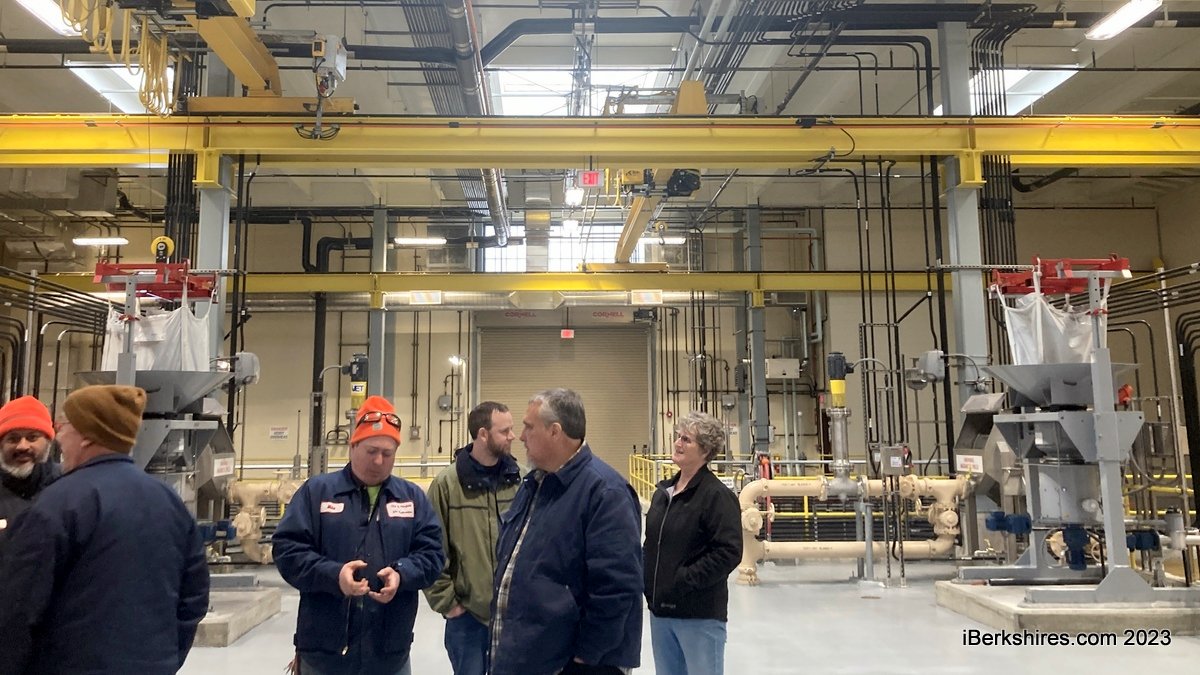
PITTSFIELD, Mass. — The city has been rewarded for its commitment to energy efficiency.
Eversource presented a $140,000 check to city officials on Wednesday for the wastewater treatment plant's energy-saving makeover that began in 2020. This is the first of two check presentations from the incentive program.
With lighting upgrades, heat pumps, variable frequency drives on heating, ventilation, and air conditioning equipment, aeration ammonia controls, new aeration blowers, and a compressed air mixing system, the plant saw an annual reduction of 560,000 kilowatt-hours of energy consumption.
In 13 years, the upgrades are expected to save 6.8 million kWh.
While the project aids global efforts in reducing the carbon footprint, cost-saving benefits are said to extend to residents.
"That program is a clear example of the initiatives to promote a sustainable environment while providing benefits to the customers, the community in this case," Commissioner of Public Services and Utilities Ricardo Morales said.
The final result is a culmination of about five years of work between city staff, engineering companies Kleinfelder and JK Muir, and some help from the energy company.
Eversource's Matt McTigue, energy efficiency project manager, said the Mass Save program, which the utility sponsors, is also available to small businesses, large businesses, and residents.
"The Mass Save program has been around a long time," Tim Simmonds, account executive, added.
"And we try to go as deep as we can into a facility like this and try to capture all of the energy efficiency measures that seem reasonable at the time."
Benefits of the design upgrades include efficiency of controls in the heating and ventilating, and lighting as well as more efficient treatment of the wastewater. Representatives from Kleinfelder detailed the impacts.
"On the process side, aerating the activated sludge is one of the biggest energy uses at a wastewater treatment plant and this project included new high-efficiency blowers that provide air to that system," senior professional Pam Westgate said.
"And in addition to that, we provided extra controllers to measure ammonia in the system, which we can then use to control the blowers and it can provide a more efficient process."
Senior program manager Neil Kulikauskas said the largest energy consumers in a municipality are typically water and wastewater treatment facilities.
The firm looked at every element it could to reduce electricity expenditures.
"All these smaller things combine to reduce consumption at the plant, which basically translated to better rates, more electricity available, better rates for the overall service customers of Eversource," he said.
Morales' breakdown of the 560,000 kWh savings
• The average annual electricity consumption of a U.S. household is around 10,972 kWh. Dividing 560,000 by 10,972 gives approximately 51, which means that the savings of 560,000 kWh could power 51 homes for a year.
• According to the Environmental Protection Agency, the average carbon footprint of one kWh of electricity is 0.97 pounds of CO2. So, saving 560,000 kWh of electricity would reduce carbon emissions by 543,200 pounds (i.e., 560,000 x 0.97). This is equivalent to offsetting the carbon emissions from driving 595,385 miles in an average car.
• One barrel of oil contains approximately 1,700 kWh of energy. Therefore, saving 560,000 kWh of electricity is equivalent to the energy from 329.41 barrels of oil.
• A typical solar panel produces about 250 watts of electricity per hour, or 2,190 kWh per year. Therefore, the savings of 560,000 kWh of electricity would be equivalent to the annual energy output of approximately 255 solar panels.
• The average annual energy consumption of a commercial building in the U.S. is around 68,000 kWh. Dividing 560,000 by 68,000 gives approximately 8, which means that the savings of 560,000 kWh could power 8 commercial buildings for a year.
Tags: energy efficiency, eversource, wastewater,