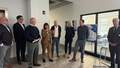
Berkshire Planning Commission, Senator Talk Rural Affairs
PITTSFIELD, Mass. — State Sen. Paul Mark and the Berkshire Regional Planning Commission say the governor's creation of a statewide director of rural affairs is a good sign for the region.
The senator was thanked for his support of rural communities over the years.
"I think that's a very big step for our small towns across Massachusetts," Executive Director Thomas Matuszko said at last week's meeting.
The position, which is housed in the Executive Office of Economic Development, will cultivate rural economic development and coordinate with secretariats and state agencies to ensure that state government is attuned to the unique needs of rural communities.
"I think it's a really strong signal from [Gov. Maura Healey] that she is committed to actually paying attention to us actually, making sure that rural communities aren't forgotten," Mark said.
"And hopefully this person, as it will exist, will be a direct interface with both the Rural Policy Advisory Commission and with the members of the rural caucus in the legislature, and then with town and regional governments as well."
He was one of the co-sponsors of a 2015 bill filed by the late Stephen Kulik, former representative of the First Franklin District, to establish an office of rural policy. This session, the bill is filed in the House and Senate.
"Long story short, the bill would have created this office of rural policy with a rural policy executive director, and they would report to the board of directors that would be the Rural Policy Advisory Commission," Mark explained.
He has heard that actions as simple as helping small towns access grants and resources, which was the intention of the bill that was filed.
"I am still going to push for that bill, but we'll see how the first year or two goes," he said. "I imagine the governor is going to want to test it out the way she wants to test it out at first and we'll see how that goes."
Sheffield alternate Rene Wood asked if Mark has input on the position's duties as an appointee to the Rural Policy Advisory Commission.
He believes that Healey wants the position to work as closely with people who are well versed in rural affairs to be as successful as possible and imagines that the person will become a member of the RPAC.
"I guess what I would hope from people I serve is, as we give this a chance, if we find it to be useful to let us in the Legislature know what is going well and if there are things that they're not doing that we want to fix," Mark said.
"We don't want this to become just nonsense. We don't want this to become just lip service. This is either going to be effective or it's not worth doing."
The panel also discussed Chapter 90 funding, the struggles of grant writing in smaller communities, and the countywide housing crisis, and transportation issues.
"We used to have county government like other counties throughout the commonwealth and no longer have that and I feel that the BRPC has kind of filled some of that void as a county government type of entity," Chair John Duval said.
"It really is the one place where all the communities come together and have these discussions and grants we work on."
He wondered if there is anything more that the planning commission can do to aid the issues that were raised in the meeting.
Mark said that the organization does a great job and urged members to maintain and build connections to the executive branch of state government.
There was also talk about the state of virtual meetings after the provision that allowed virtual meetings under the open meeting law expires at the end of this month. Mark explained that the governor’s supplemental budget includes an extension until 2025.
"It’s as definite as it can be until it happens that this is going to be extended till 2025 and then the conversation continues about continuing indefinitely," Mark said. "I support it continuing. I think, especially in our area, it's extremely helpful."
The House and Senate have extended remote participation in committee hearings.
Tags: BRPC, rural policy,