Pittsfield Housing Trust Explores Relationship Between Energy Efficiency and Affordability
PITTSFIELD, Mass. — Housing affordability goes beyond the direct costs of a mortgage or rent.
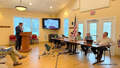
On Wednesday, the Affordable Housing Trust looked into energy costs as a challenge of affordable housing with presentations from the Berkshire Community Action Council and the Berkshire Environmental Action Team.
"Generally speaking, up to this point we've mostly been talking about the financial considerations of development whether the cost to build or rent or to renovate or to buy and we've also maybe touched a little bit on the social costs of a lack of development," member Kamaar Taliaferro explained.
"I think tonight I'm asking that we kind of set that to the side for a second and consider the question of affordability from a slightly different perspective and that's the cost of not investing in energy efficiency, in decarbonizing or electrifying our home, heating, and cooling systems."
BCAC offers fuel assistance, heating system repair and replacement, energy efficiency, and weatherization programs to people in need. Weatherization director Renee Schmidt explained that heating equipment replacements are one of the major things that the organization does.
"In the winter months, we get 30 phone calls a day or more of people with no heat who have no resources to get heat in their house," she said.
"They may have bad credit so they can't use a credit card, various reasons where they really need help. They have not even $400 in their pocketbook left to pay the heating guy to come service the heating system or fix what's wrong."
An overarching issue that Schmidt has seen is crumbling housing infrastructure.
"That's something we're battling every day like, yes, we could insulate your home but before we do that, you need $20,000 worth of knob and tube [electric wire] removal, you gotta get the asbestos out, get the water out of the basement," she said.
"The amount of housing issues we see, it seems to be growing. I hate to say that and be the downer but I feel like it's getting worse. It's getting harder and harder to do the work just because of the rundown conditions on some of the buildings."
Last year, BCAC received $500,000 in American Rescue Plan Act funds to increase the capacity of its Weatherization Remediation Assistance Program for under-resourced Pittsfield residents with home weatherization and heating system needs.
Schmidt said this is the biggest piece of relief BCAC has gotten in years to address structural issues in buildings. The money goes quickly, she added, but helps tremendously.
According to the National Low Income Housing Coalition, there is no size of apartment from studio to four-bedroom where making the minimum wage in Pittsfield is enough to not be considered rent burdened.
"I regularly see that people are having a very hard time paying the rent, paying the utility bills and they do get help through us paying the utility bills it however doesn't work for everyone. Paying those utility bills is rough," Schmidt said.
"We give some assistance, but even that is never enough and how the funding comes in is very awkward, I'll have to say, from the state. It's not timely."
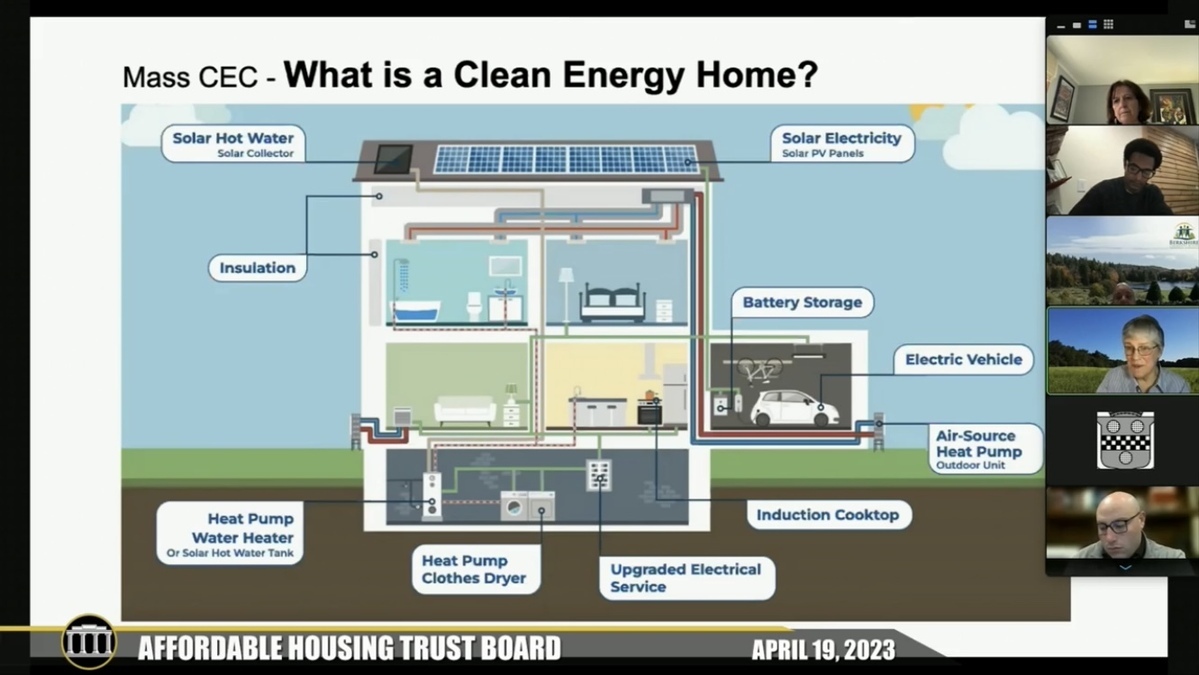
She coined heat pumps, a device that transfers thermal energy from the outside using a refrigeration cycle, as the trend of the future
Heat pumps are being championed by environmentalists as a transition away from fossil fuels. Grid storage is also supported in energy efficiency efforts and electrification.
BEAT's No Fracked Gas in Mass Program Director Rosemary Wessel explained that renovating homes conserves much more energy than new construction.
"I was really interested in looking at renovation versus new construction and the embodied energy, as it's called, where the carbon emissions sit in renovations compared to new construction," she said.
"And it turns out six about 60 percent of the energy that's in an existing building is conserved if you renovate an existing building versus bulldozing an old one and constructing new. The majority of the embodied energy is in the frame and in the foundation, and the roof and certain parts of the building that don't get touched, those get preserved in what's called a deep energy retrofit."
Most of the funding available for this type of work applies to renovations.
Wessel also pointed to the difference between efficiency and electrification.
"Efficiency is upgrading ductwork, insulation, and air sealing for weatherization, and that helps reduce the cost needed for electrification," she explained.
"So if you need less energy if your home is more efficient, you can go with a smaller heat pump system, you're going to probably use less light. Heat Pump also is air conditioning, so you would use less for air conditioning if a house is well insulated."
Possible funding resources include:
-
The Climate Ready Housing program, a MassHousing program in partnership with the state Department of Housing and Community Development, has earmarked an annual 1.6 million investment to be leveraged competitively to support two to three highly rate projects that represent achievable and replicable approaches to very low carbon emissions focused on existing building renovations.
-
A $50 million low to middle-income electrocution program to improve energy efficiency, install solar panels, make improvements like roof repairs and electrical updates, and electrify buildings through ground and air source heat pumps and other electrical appliances for low- or moderate-income housing.
- A proposed Zero Carbon Renovation Fund administered by the Massachusetts Clean Energy Center seeks to allocate $300 million from the state legislature to jump-start zero-carbon renovations in existing buildings.
Taliaferro asked where the trust should begin, wondering if it could be a catalyst, a conduit, or an applicant to bring such initiatives to the city.
"One way to look is to say that it's going to take forever or 'Oh my gosh, that well is really deep,'" he said.
"I think the other way to look at that is to say that if it's really deep, then it's probably going to be giving us water for a while."
The panel supported Taliaferro's proposal to reach out to state Rep. Tricia Farley-Bouvier and state Sen. Paul Mark to inquire about their support for the Zero Carbon Renovation Fund and express support.
Tags: affordable housing trust, energy efficiency,