Exorbitant Housing Prices, Limited Options for Pittsfield Residents
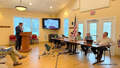
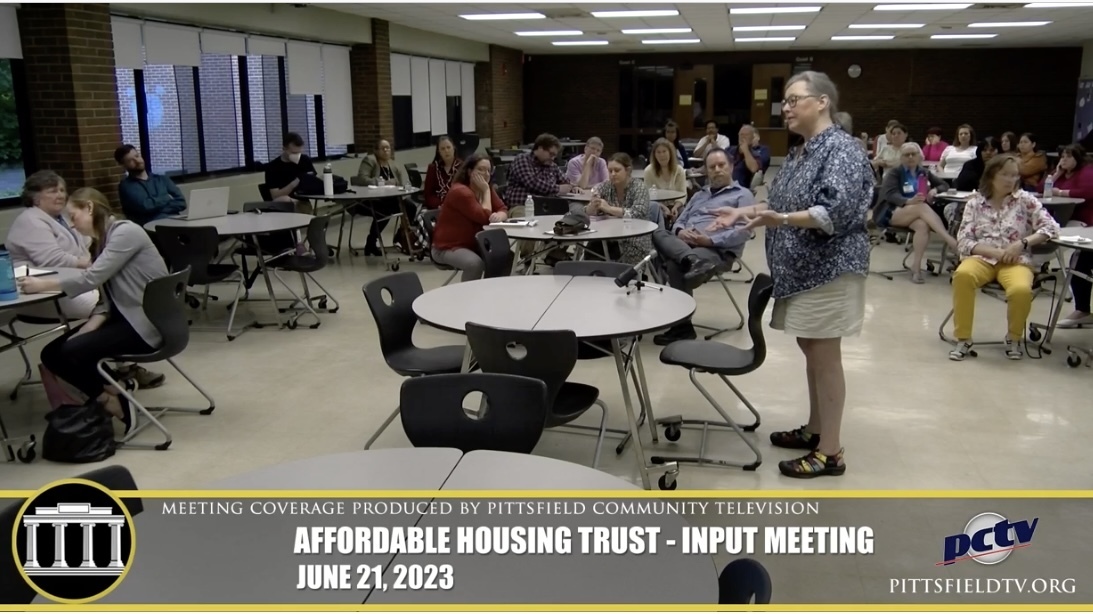
PITTSFIELD, Mass. — Local leaders highlighted housing needs at a public input meeting with the Affordable Housing Trust on Wednesday.
During the public hearing, trustees also heard of residents' struggles with housing that ranged from homelessness to being locked into long-term renting because they cannot afford a home.
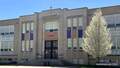
This was the body's first event of this kind at Conte Elementary School.
The city allocated an initial $500,000 in American Rescue Plan Act funds for the trust and was allocated $150,000 in Community Preservation Act funds for the fiscal 2024.
"I think affordable housing at this point, in the country honestly, too, is an oxymoron," said Chair Betsy Sherman, also executive director of the Christian Center. "It depends on how you define that."
She said the trustees looking to have safe and comfortable housing for residents and that a home is the first step of movement for an individual or a family.
"And safety for me, that's one of the prime things that I look for," she added. "People can have a life. That this will allow somebody to move into whatever is built and be able to live comfortably. Be able to afford transportation, be able to move up in terms of getting a job, getting a better job, getting child care, all the things that go around living a life."
Michael Hitchcock, co-director of non-profit Roots and Dreams and Mustard Seeds, said the median income is $60,000 a year, so half of the population is below that.
He believes that there should be an investment in cooperatively owned housing along with zoning changes that should allow taller buildings to accommodate more housing units.
Hitchcock pointed out that a vast majority of people are earning something close to minimum wage, taking in around $450 a week.
"So you're talking about $1,824 a month. Everybody who's ever tried to rent, notices that you have to earn three times the rental income to be approved and you need a good credit score. So guess what? An apartment for a person earning minimum wage working 32 hours a week has to be $600 a month," he said.
"What's the average apartment going for right now in Pittsfield? $800 to $1,200. I saw one on Brown Street for $2,400."
Hitchcock said these prices make housing inaccessible to many citizens while if you're above the $60,000 a year, "most of these things will be invisible to you. You just cannot see them and it's not your fault. You need to be told because you haven't experienced it."
He added that people below the median are left with only a few hundred dollars for expendable income at the end of the month after paying the costs of living.
"So when you're talking about affordable housing, you have to remember you're talking about people. You are making a policy for the vast majority of people who have no choice," Hitchcock said.
His solution is cooperative housing because it allows for public/private investment and gives those involved the benefit of stability of ownership without the extreme high price because it's a shared cost.
School Committee member Sara Hathaway she's been trying to come up with ideas for school employee housing.
The district is currently undertaking a restructuring study to assess the physical and educational needs of Pittsfield Public Schools. It could result in consolidating schools due to enrollment changes and redistricting, after hearings for community input.
"We do not need as many buildings as we have. Probably this building. This could be your living room," she said. "Obviously we want to have the right buildings to serve the population and a fair distribution around the city but likely some buildings will become vacant, some buildings will be repurposed. ...
"What we would like to do is to redevelop some of these surplus buildings as housing for Pittsfield teachers, paras, and maintenance administrators."
School officials are interested in speaking with the decision-makers on the housing side to understand how such a project could be funded.
The former mayor moved to Pittsfield decades ago from Nantucket and rented a two-bedroom apartment on Boylston Street for $385 a month.
"I remember thinking I'll take two [bedrooms] because it was so inexpensive and I know that that's just not happening anymore," she explained. "I'd be curious to knock on the door and ask the people who live there now 'What are you paying?' as I know that's just impossible."
The Elizabeth Freeman Center's Director of Programs Jennifer Goewey asked the board to consider the economic impact of violence and what it means for survivors when they flee.
"Every day we are working with people in this community who we either have to push into a sheltering system or we need to relocate into another community and they can't stay in their own community and rebuild and live a life that's free of violence," she said.
"The affordable housing shortage in Pittsfield and Berkshire County, we are countywide, has been an enormous strain on us and our clients, which also intersects with so many of the people I recognize here today."
She pointed out that if a person's basic needs are not met, they cannot do anything else.
"And so whether you're doing our work, which is helping people to live a life that is safe and free from violence, or mental health is your niche or you're an educator, housing, whatever it is, food stability, it doesn't matter," Goewey said.
"It starts with housing."
One of the biggest reasons that a person stays in an abusive situation is the threat of not having a place to stay, she said, or having children taken away because they don't have a home after leaving an abusive partner.
"So just keep in mind not only the economic impact of islands and the trade-offs when someone is trying to obtain safety but also, please remember that for those who are most oppressed and vulnerable, including being homeless, the rates of victimization is really really high," she said.
Social worker Soncere Williams, who has taken out papers to run for City Council in Ward 2, spoke to the rising tax rates that affect homeowners on a fixed income.
"A lot of these ideas that we're talking about, these plans are really great but theoretically how long are they going to take and what are we going to do in the next five, six, seven years, 10 years while we develop these plans?" she asked.
"People are still going to remain houseless, people are still going to be struggling, being evicted. People are going to be doubling, tripling, and quadrupling up."
Alisa Costa, another City Council candidate, for a at-large seat, said the housing is "very different" from Albany, N.Y., where she previously lived.
"I was fresh out of college able to get three roommates and move into the bottom half of a Victorian house and share living expenses in the apartment. I don't think I have seen any places that have four bedrooms that aren't single-family homes in Pittsfield," she said.
"We were able to share the rent so thinking about different housing models. Right now I think we're only building up to two-bedroom apartments and given the wages in the area, it isn't sustainable and so we have to think of different housing models and not that we're going to be living alone or just our family."
She also asked the board to think about equity in terms of applying for housing, pointing out that credit scores, application questionnaires, and high upfront costs that often exclude people from the process.
"Those are huge barriers to even entering any kind of housing opportunity," Costa said.
Tags: affordable housing trust,