BRPC's Public Health Program Announces Recent Hires
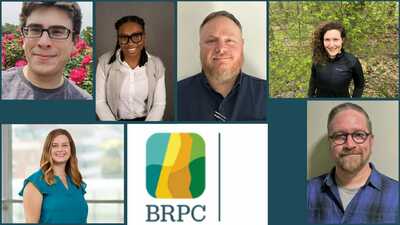 |
| Matthew Bryan, Monasia Ceasar, Daniel Hassett, Sophie Carnes Jannen and Nikki Lewis |
PITTSFIELD, Mass. — Berkshire Regional Planning Commission (BRPC) announced the expansion of its Public Health Program through the recent hiring of staff members Matthew Bryan, Monasia Ceasar, Daniel Hassett, Sophie Carnes Jannen, Nikki Lewis, and Jazu Stine.
The BRPC Public Health Program supports Berkshire County and its municipalities in areas including emergency preparedness and response, substance use prevention and harm reduction, community health planning and education, climate resilience, and infectious and chronic disease prevention.
BRPC also provides public health inspectional services and public health nursing to municipalities through the Berkshire Public Health Alliance, applied local public health training through the Berkshire-Hampden Training Hub, and supports the local boards of health through Berkshire County Boards of Health Association (BCBOHA).
Matthew Bryan
Matthew Bryan has joined BRPC as a senior planner in the Public Health Program. He holds a BS in Behavioral Neuroscience, a BA in German, and recently acquired a master's in public health, with a concentration in Rural Health. With previous experience in infectious disease field epidemiology, toxic hazards epidemiology, and state-wide Public Health Emergency Response planning, Matthew now manages BRPC's Emergency Preparedness and Healthy Aging projects and will manage the Berkshire and Franklin County Medical Reserve Corps (MRC) starting in FY 25.
Monasia Ceasar
Monasia Ceasar works as a public health trainer for the Berkshire-Hampden Training Hub hosted by BRPC. In this role, Monasia facilitates training efforts for Hampden County communities in accordance with the Massachusetts Department of Public Health's workforce standards. She holds a bachelor's degree in environmental science and a master's degree in public health from the University of Bridgeport and is a Registered Sanitarian (RS).
Daniel Hassett
Daniel Hassett is the Public Health Housing Specialist within the Berkshire Public Health Alliance. Thanks to a state Public Health Excellence (PHE) grant, Hassett is available to Berkshire Public Health Alliance member municipalities for assistance in conducting environmental health inspections and enforcing the housing code and local regulations. He also helps to administer the Berkshire Country Board of Health Association septic installer certification program and assists with the Berkshire-Hampden Training Hub. He earned a bachelor's degree in biology with a chemistry minor from Massachusetts College of Liberal Arts and is currently pursuing his designation as a Registered Sanitarian.
Sophie Carnes Jannen
Sophie Carnes Jannen is a public health nurse educator at BRPC. She holds bachelor's degrees in psychology and nursing and a master's degree in nursing. As a nurse, Sophie has worked in community health, with experience in mobile health and harm reduction. She has also taught health and nursing classes at the college level. In her current position, Sophie will assist in county-wide health promotion through local education and wellness programs.
Nikki Lewis
Nikki Lewis has been hired as a senior planner at BRPC. Lewis holds a bachelor's degree in health science and a Master of Public Health degree in biostatistics and epidemiology. For the past five years, she's worked with community coalitions on substance use initiatives, including in her previous role as the Community Data Manager for the HEALing Communities Study in Pittsfield and North Adams. In her current role, Lewis co-manages substance use initiatives, including grants focused on youth substance use prevention and overdose prevention and cofacilitates the Berkshire Overdose Addiction Prevention Collaborative (BOAPC).
Jazu Stine
Jazu Stine recently joined BRPC as a Public Health Food Specialist, Inspector, and ServSafe instructor. In addition to providing health inspections to Berkshire Public Health Alliance member municipalities, Jazu will concentrate on food safety training with the Berkshire-Hampden Training Hub. With 15+ years in the restaurant and food service/retail industry, he brings a wide range of food handling experience. He previously owned a small, regionally sourced, whole-animal butcher shop that was USDA-inspected and State Certified for restaurant wholesale. He has spent most of his life educating, from home building to studio arts. As a food specialist, he has taught topics including knife skills, cooking techniques, charcuterie production, and whole animal processing, always prioritizing safety and the pursuit of knowledge.
Tags: BRPC,