Pittsfield Subcommittee OKs ADU Ordinance
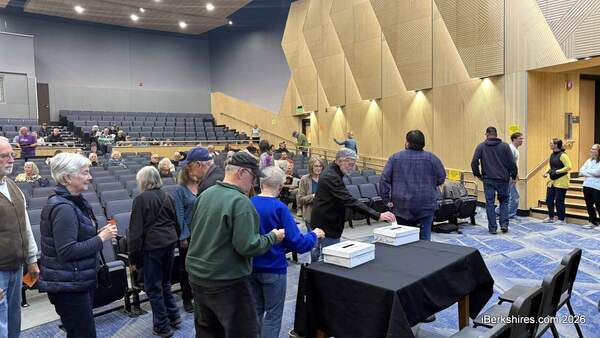
PITTSFIELD, Mass. — Ordinance changes that make way for accessory dwelling units will soon go before the City Council.
On Monday, the Ordinances and Rules Subcommittee supported a petition from the Community Development Board to establish an ordinance allowing the creation of ADUs. As a part of the $5.1 billion Affordable Homes Act signed into law over the summer, ADUs up to 900 square feet can be built by right in single-family zoning districts.
It will go to the council on Feb. 11 for a final vote.
Ward 5 Councilor Patrick Kavey said this is great for multi-generational families and hopes that it provides some relief to the housing crisis.
"I know that some people might hesitate because they'll think, 'OK all of the garages in a single-family neighborhood are going to become an apartment over the garage and then they're going to have more people in the neighborhood.' But I think of this more as when my parents get older, I want them to have a place to live and it would have been hard for me to permit and do certain things," he said.
Proposed changes and additions will be in Article 23-2 Section 2.2 and Article 23-9 Section 9.101. If approved, ADUs will be added to definitions as "An additional dwelling unit added on a lot that is accessory to a principal dwelling unit" and the city’s accessory use ordinance will amended to accommodate ADUs.
City Planner Kevin Rayner reported that the state narrowed dimensional standards.
"The draft regulation said the dimensional standards can be no more prohibitive than the principal structure on the lot," he explained.
"Now they're saying that it can't be more restrictive than the principal dwelling unit or the accessory use in that zoning district so they're essentially saying that whatever the most permissive dimensional standards, they will be applied to the ADU."
Director of Community Development Justine Dodds added that the state had to do a 30-day comment period and came out with the final regulation on Friday while saying communities have to be in compliance by February.
"It’s kind of an ever-changing goalpost here that we're trying to keep up with," she said.
This ordinance allows one ADU by right in any 1-2 family residential use within the city, provides a special permit process and criteria for additional ADUs, and provides a size requirement for ADUs that matches state legislation.
The state mandates that an ADU can be half the gross floor area of the principal dwelling on a lot or 900 square feet, whichever is smaller.
"The special permit granting authority will be the Zoning Board of Appeals unless that property is within the Downtown Creative District, then it will be the Community Development Board," Rayner explained.
"That's just to keep things consistent, because generally speaking, in the Downtown Creative District, it's the Community Development Board that would handle special permit applications so we just want to make sure that things are consistent with our permitting process."
Under the current code, an ADU in a residential district cannot exceed 15 feet in height, cannot be located closer than 10 feet to the principal building, and cannot occupy more than 10 percent of the total lot.
The Community Development Board became the petitioner for this effort in November.
Ward 6 Councilor Dina Lampiasi observed that much of the concern around ADUs has to do with short-term rentals, which the city is also working on addressing. Rayner reported that the state gave the option to prohibit short-term rentals in ADUs but the city has chosen not to.
Pittsfield currently has no ordinance for short-term rentals.
"And the logic behind that was, if there's an ADU and it was to be used as a short-term rental, in my mind, the incentive would be on the homeowner," he said.
"They would want to rent out the bigger house as a short-term rental because they could rent it for more money and then use the ADU as a longer-term residence."
Tags: ADU,