Small Hospital/Nursing Facility Reopens In Cambridge, NY
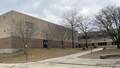
On the west side of Cambridge, N.Y., at the crest of a hill, stands a grand brick hospital. Attached to the building's left side is a brick nursing home, and to the right a more modern looking wing that was added on in the 1980s. Together, this complex makes up the Mary McClellan Hospital and Skilled Nursing Facility."It was founded by a philanthropist. His name was Edwin McClellan," explained Natalie Slohm of the hospital's community relations office. "He built this hospital for this community. He was a very wealthy man who left the community, made his fortune and then came back and built this hospital. It was built as a self-sufficient entity, it had its own power plant, its own laundry; really self-sufficient."
Located on 130 acres, Mary McClellan is a small hospital that serves the towns in the Route 22 corridor, and some of the Vermont border towns. If the hospital were not in operation, patients would have to drive about a half hour to the nearest facilities in Bennington, Vt., or Saratoga Springs, N.Y.
This almost became the case this summer, as the hospital was forced to close its inpatient care facility for a few months due to a shortage of nurses.
"We run a skilled nursing facility and a regular hospital, and we have 40 patients in our skilled nursing facility - the long-term residents," said Slohm. "There was a real nursing shortage on that side of the house, so we transferred a lot of nurses from the inpatient side of the hospital over to the skilled nursing program. That created a real shortage and the quality would be impacted so we closed. And we just reopened it on Nov. 29 ... after an intensive recruitment program."
That program, and salary increases, were funded through a $2 million non-interest bearing loan the hospital received in September through the New York State Dormitory Authority, part of the Department of Health.
"The money was for the use of recruitment and retention, and improved salary packages, to make us competitive with other area facilities," said Deborah Manley, director of acute care services.
"We worked very closely with our legislators; Senator Stafford and Senator Bruno," said Slohm. "We had to present a business plan to the Department of Health. ... It was a transition plan: we were in the middle of a transition and we needed money to help us through that transition, and we got it. We're still in transition, but we're getting closer to our goal."
"Our goal is to try to break even from operations by the middle of next year."
"We really hadn't kept our salary and benefits packages up to snuff," said Manley. "Our salaries were really not competitive with the other area hospitals. So we put together a package where we're very competitive with the other area hospitals as far as salaries, and we also put a bonus package in place, which is pretty common, most of the other hospitals have a sign-on bonus package."
Manley said a competitive wage is around $15 an hour for a registered nurse "just coming out of school," and up to $24 an hour for "an RN with experience and credentials."
"Between rehires we have about a total of 22 new staff members there," said Manley. "Some are new, some are shifted from other departments back to nursing." She said about 60 percent of the new staff had worked at the hospital previously.
A small hospital, Mary McClellan has room for about 15 patients in its inpatient unit, located on the second floor of the newer building. The unit was averaging about 10 to 11 patients before it closed in July, according to Slohm.
Manley said the most common types of inpatient services are for "surgical patients, cardiac patients, respiratory patients, and then surgical patients from general surgery."
Like many small-town hospitals that struggle to make ends meet, Mary McClellan has a long history of community involvement and giving. Besides being built by Edwin McClellan, in the 1920s "McClellan's brother and his wife built a school of nursing that was connected to Skidmore College," according to Slohm. That facility closed in the 1970s.
And Cambridge residents once enjoyed cutting-edge medical treatment in their own backyard. "Mr. McClellan was very well connected in New York and in Albany, and he would invite specialists to come up here for two-week rotations, from Manhattan," explained Slohm. :And they would take care of the patients and then turn them over to the local physicians when they left. There was a building built for them, a residence where the doctors stayed."
"The hospital is very much a part of the community. Most of the people who work here live within the area. There are generations, grandmothers and grandchildren, of families who have been working here at one time," she added.
The staff of about 30 physicians - many of whom work only part-time for the hospital - were not affected by the closing last summer. Nor were the four family health centers, outpatient services operated through the hospital.
Recruitment was done "mostly through newspapers: the Post Star, the Albany Times Union, local newspapers," said Slohm.
"We also did it word of mouth as well," said Manley. "We had some physicians who really actively recruited staff that they knew who had worked here before."
The opening was punctuated on Nov. 29 when the hospital held a community open house to show off the newly opened - and newly repainted - inpatient facility.
"We put a big ad in the paper and invited people to come up," said Slohm. "It was to show the changes, cosmetic changes that had taken place, which were really minimal, but did a great deal to impact visually. The place looks really nice." She noted that the cosmetic work done on that floor was not funded through the loan.
"We had board members, the press, community members, the physicians all came and met with the new nursing staff," she said.
"It was informal but it was very effective, it worked very nice."
"The hospital is very much a part of the community. Most of the people who work here live within the area. There are generations, grandmothers and grandchildren, of families who have been working here at one time," said Slohm.
"It's very family oriented," said Manley.
Slohm pointed out that "There's a very active auxiliary that raises money for the hospital. In fact, they were organized before the very first patient was admitted to this hospital. They're a major fund-raising arm." She said they raise about $30,000 a year, money that goes to upgrading equipment.
And there's the 85 volunteers, "women and men who come in and give four hours a week in various departments of the hospitals," said Slohm.
"When the hospital was closed, the impact was terrific on the community," said Slohm. "Before we reopened it, we had a series of community meetings ... with the towns that we service, and got a lot of feedback from them, and gave them a status report of what was happening. And by and large, everybody just couldn't wait 'till we told them we were reopening."
"Anyone who needed to be admitted [during that time] had to be transferred to one of the other hospitals," said Manley.
"I came here around 10 months ago, and I think of the biggest things that impressed me when I got here was the sense of loyalty to this institution, by the people who worked here," said Manley. "I came in knowing financially what shape the hospital was in ... but the thing that hit me between the eyes was that people had a true sense of commitment to this organization and would do what they needed to do to help this hospital survive.
"So the hospital is real upbeat right now. It's a real cause for celebration."