image description
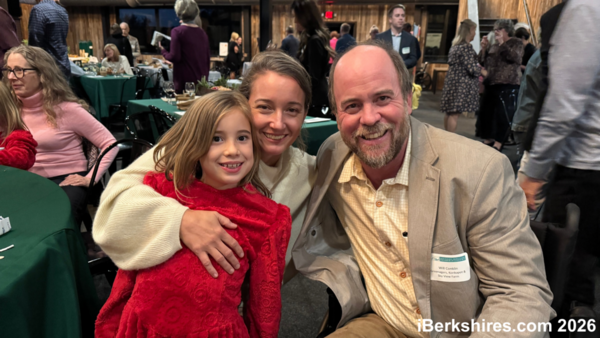
Lt. Gov. Kim Driscoll takes a selfie with Coco's Candy owner Elise Contarsy on Thursday during a tour of Great Barrington's small-business community.
image description
Craig Bero, left, owner of Pleasant and Main Cafe and General Store, tells state officials the story of how he came to the Berkshires.
image description
A group picture at the eclectic organic restaurant.
image description
Driscoll speaks with with Rob Brannock of Rob's Records.
image description
Robbie Robles of Robbie's Community Market with Driscoll and Leigh.

Lt. Governor Driscoll Visits Great Barrington Businesses
By Brittany PolitoiBerkshires Staff
Print Story | Email Story

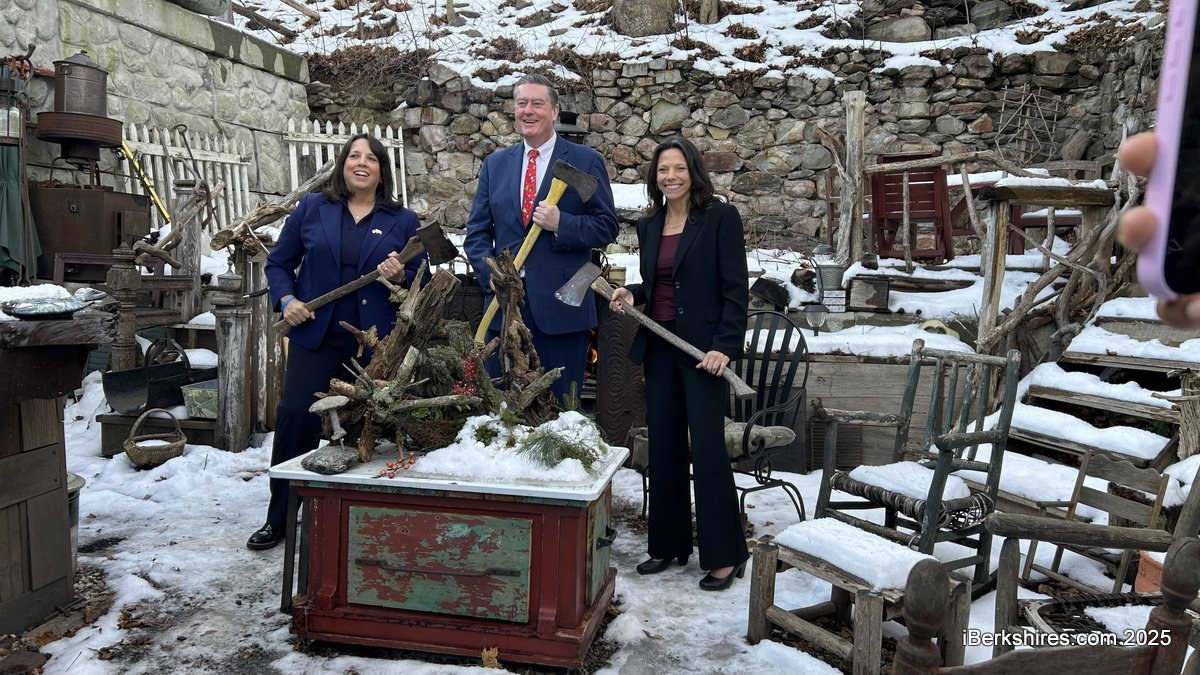
Lt. Gov. Kim Driscoll, Housing Secretary Ed Augustus and state Rep. Leigh Davis are ready to chop wood out back of Pleasant and Main. 

GREAT BARRINGTON, Mass. — Lt. Gov. Kim Driscoll did some holiday shopping on Main Street last week after announcing millions of federal Community Development Block Grant funds. 

She was glad to see an array of small-business owners thriving, and the eclectic items that Great Barrington has to offer. 

"We know that the vibrancy of communities can often be defined by what's happening on Main Street," she said. 

"It's great to be here in Great Barrington and see so many independent entrepreneurs who are running really, not only fun, but businesses that are doing well, and we want to try and find ways to uplift and support that work moving forward." 

State Rep. Leigh Davis coordinated a business tour with Pleasant and Main Cafe and General Store, Robbie's Community Market, and Butternut Ski Mountain. While downtown, Driscoll also stopped at Coco's Candy and Rob's Records and Audio. 

Earlier that day, the Healey-Driscoll administration announced $33.5 million in federal CDBG funds at the Housatonic Community Center. Great Barrington, in conjunction with Egremont and Stockbridge, has been allocated $ 1.25 million to rehabilitate approximately 14 housing units.  A new Rural and Small Town Housing Choice Community designation for its Housing Choice Initiative was also launched. 

Davis emphasized the significance of the state announcing these dollars in the small village of Housatonic.  


Craig Bero, founder of Pleasant and Main, prepared desserts and hors d'oeuvres for the group at his cozy cafe across the street from the Housatonic Community Center. Bero opened more than a decade ago after migrating from New York City, and Pleasant and Main offers sustainable, organic meals for an affordable price while enjoying the museum of antiques that is the restaurant. 

He would come to the Berkshires to get wood and produce, and eventually, wanted to do something on a more human level and work with the local community. 

"There's never been a delivery truck that's pulled up here. We harvest, we grow our own food. I'm out every morning foraging our mushrooms, our berries, 90 percent of what we do is sustainable and organic, and we just tied it into the community where we started a community supper where, for 15-20 bucks, you come in, you get soup, salad, choice of three main courses, meat, fish or fowl, nice, organic vegetables," Bero said, explaining that this model calls back to his upbringing on a farm in northern Wisconsin. 

Massachusetts needs more than 200,000 additional housing units to meet demand, and housing is expensive to build. Driscoll said communities are stronger when younger and older adults can afford to stay there. 

"That's for us a key goal right now," she said. 

"So many people, young adults, in particular, are migrating out of the state because they can't find the housing they need or housing that's affordable, and so building more housing, we think, can really help ensure we keep people here. We allow people to age in place and continue to support strong community vibrancy and a high quality of life." 

Shopping local supports the individuals who give to Little League, give teenagers their first jobs, and who lean in when there is a need in the community, the lieutenant governor pointed out, "So having the housing we need to support the local talent and keep people here, it becomes a perpetual cycle, supporting the local economy, supporting jobs, and creating that vibrancy." 

She recognized that it is difficult being a small business owner, and said Great Barrington is working hard to drive a strong local economy that then supports a vibrant commonwealth. 

Correction: The identification for Coco's Candy store and its owner was incorrect in the initial version of this article. Elise Contarsy purchased the former Robin's Candy in June. iBerkshires regrets the error. 


Tags: driscoll,   small business,   state officials,   
If you would like to contribute information on this article, contact us at info@iberkshires.com.

Becket Looks to Wind Power for Energy Savings

By Breanna SteeleiBerkshires Staff

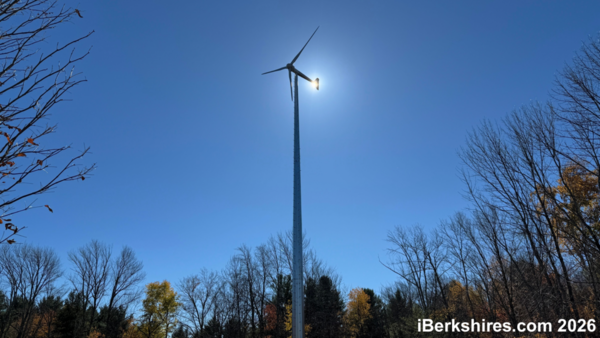
The single turbine is a low maintenance and has a 50-year life. The town went with wind power after finding a solar installation would be too difficult. 

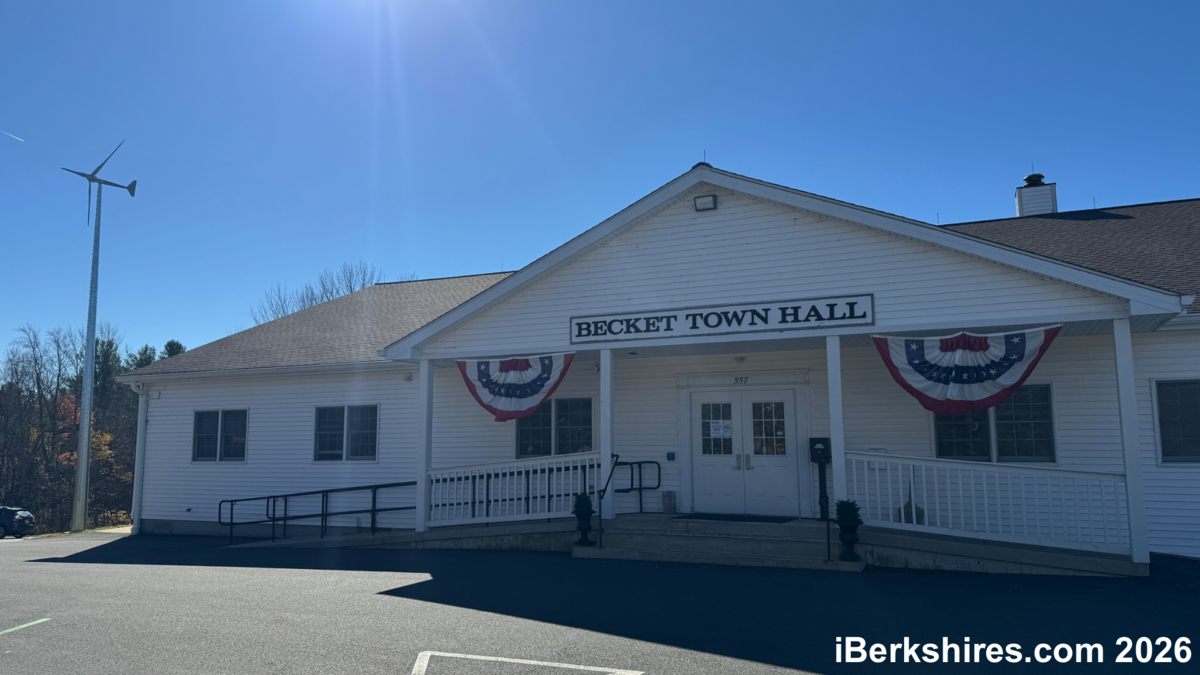
BECKET, Mass. — The town unveiled a wind turbine Monday that will reduce electricity costs and show the benefits of renewable energy produced by wind.

Residents, town and state officials gathered outside the Town Hall for the ribbon cutting on a project first conceived nearly a dozen years ago.

The wind turbine stands 100-feet tall next to Town Hall and is from Oklahoma manufacturer Bergey Wind Power. It has a 50-year life and is a direct-drive permanent-magnet design, meaning it has no gearbox, making it low maintenance.

According to Garth Klimchuk, chair of the Becket Energy Committee, the town started discussions about a wind turbine in 2014. The turbine is expected to generate about 36,000 kilowatt-hours. Klimchuk said Town Hall uses about 24,000 kilowatt-hours, with excess power expected to go to the Highway Department. This is expected to save $9,000 annually from the electricity cost.

"This turbine is just going to be such a good thing for the town. It is really incredible. Zero-cost electricity. Zero cost to the town. Carbon free. Just a huge, huge milestone for us," he said.

The town received a grant from the state Department of Energy Resources totaling $139,500. The remaining funding for the project will come from a direct-pay investment tax credit under the federal Inflation Reduction Act. If the town does not receive the funding, voters at the annual town allocated $100,000 just in case, but Klimchuk said the town will only need about $60,000 to $70,000 if necessary.

"It's going to help the community. Hopefully, it'll lower our tax bills. And as we look at everything going around around the world right now, energy volatility has been with us for a long time. It's going to stay with us for a long time," said state Sen. Paul Mark. "So any move we can make as a community, whether as Becket specifically, as Berkshire County as a whole, but anything we can do to bring some of the reliability into our own hands, to produce a bit on our own, and just guarantee that in a renewable, safe way moving into the future, I think is going to pay off dividends."

The town has spent more than a decade reducing municipal energy consumption in a variety of ways including HVAC upgrades and LED street light conversions, bringing it to a Level 2 Green Community status.

While solar had been considered, interconnection constraints and limited grant opportunities made it harder to achieve. But the high elevation of Town Hall and a Small Wind Site evaluation done in 2023 and 2024 found the site was perfect for a turbine with favorably high winds.

State Rep. Leigh Davis praised the project as an example of a small town addressing a larger energy challenge through persistence and collaboration. She stressed that the single turbine represents a practical step toward reducing reliance on fossil fuels and said Becket's effort could serve as a model for communities across the commonwealth. 

"You hear about all these kind of big wind farms and solar farms and all these ways that we're gonna you know create green energy, but at the same time what we're not being sensitive to the landscape, and what I appreciate about this is that this is it's a single turbine, but it represents so much more," she said. "You're right. It's really adding to the ability for this town to contribute to green energy and to bringing our reliance on gasoline fuels back down to solving big problems."

Mark Rabinsky, deputy director of DOER's Green Communities Division, said the state supports municipalities with technical assistance and grants, and that reducing municipal energy costs can leave more resources for other local priorities. He presented the turbine as an example of state support working alongside local knowledge and decision-making. 

"I think that this is a really a great example of what green communities can do," he said. "I'm obviously a really big fan of the green communities program, but I think that connection between the state, what we're doing at the state, and that local level, and relying on the local knowledge here with Becket is a true testament to what we're doing."

Select Board Chair William Elovirta thanked everyone for being here and shared his memories of first coming tp Becket in 1946 before utility electricity arrived. His family and neighbors used small 32-volt generating plants and batteries. He recalled utility workers installing poles and wires by hand around 1947.  

View Full Story

More South Berkshire Stories