Congressman Neal, BHS Talk Local Health Care in 2026
PITTSFIELD, Mass. — In a time of federal funding uncertainties, community members are encouraged to maintain preventative health care, such as doctor visits.
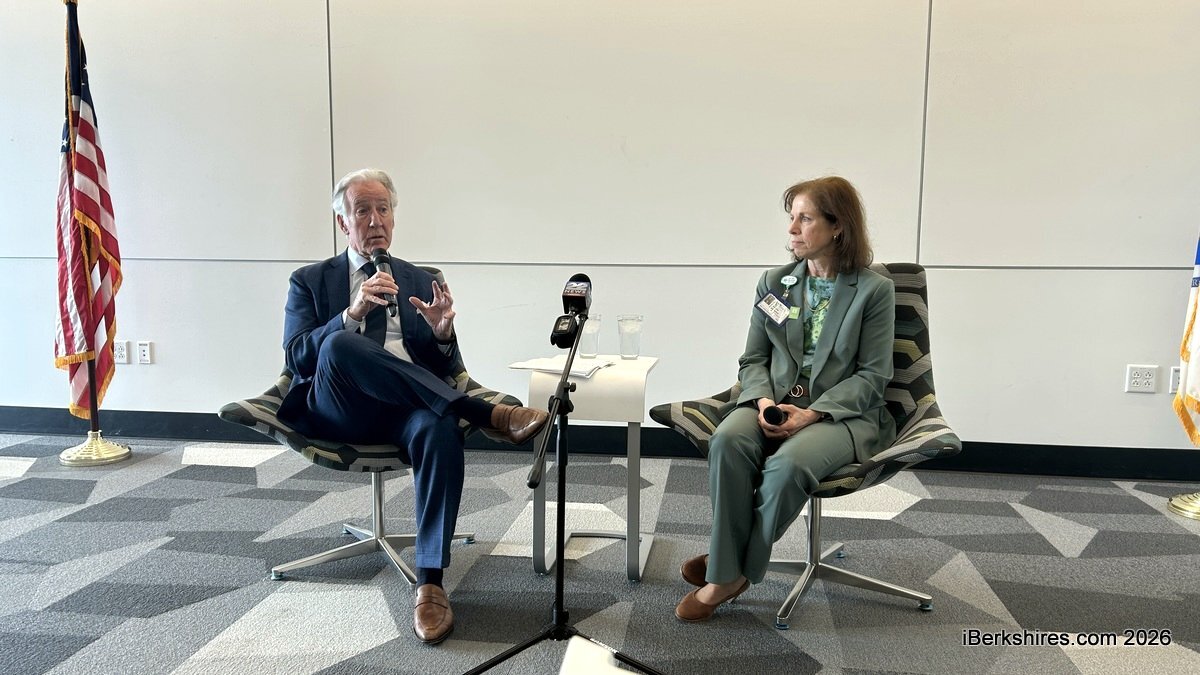
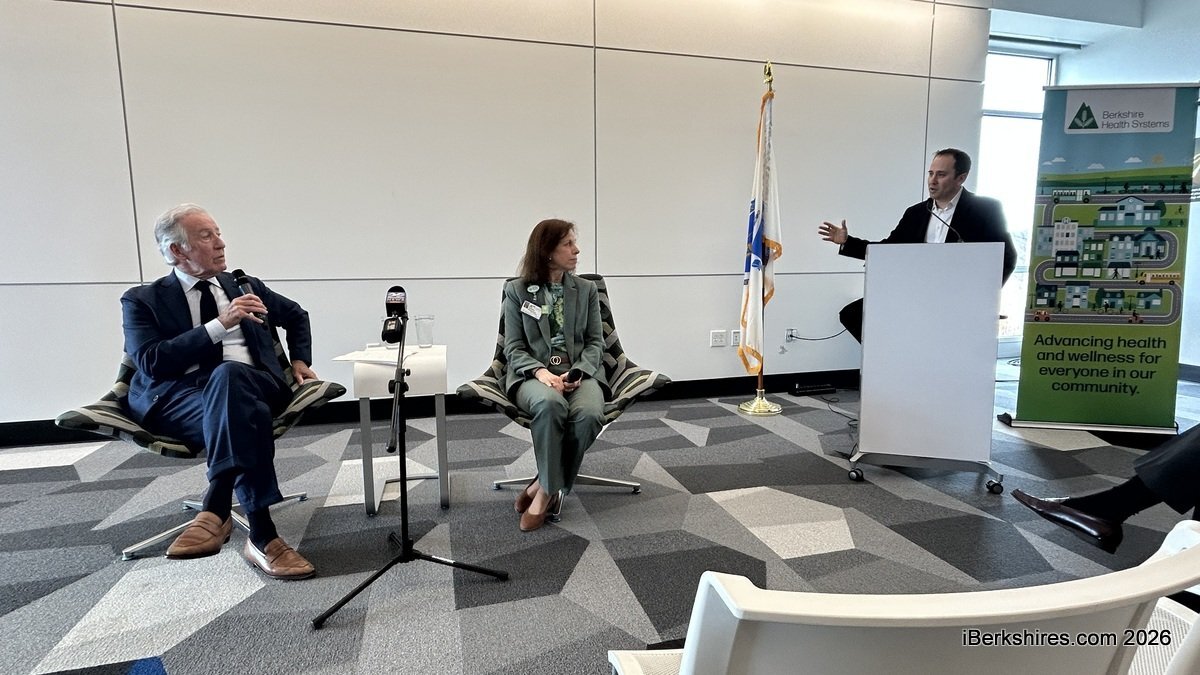
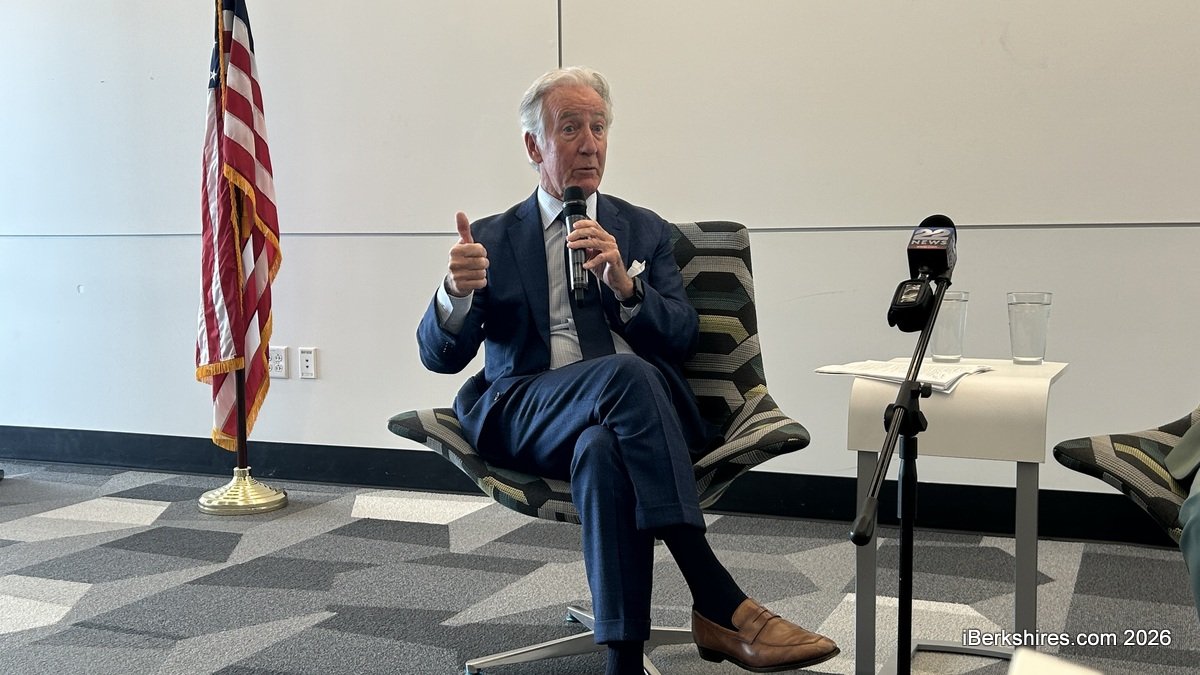
On Wednesday, U.S. Rep. Richard Neal joined Darlene Rodowicz, president and CEO of Berkshire Health Systems, to discuss the state of health care in Western Massachusetts. With upcoming federal changes to Medicare and Medicaid this fall, Rodowicz said BHS will see some "significant" hits that will go into effect January 2027.
People are urged to continue bringing health concerns to primary-care physicians before they reach emergency room-level urgency, if possible.
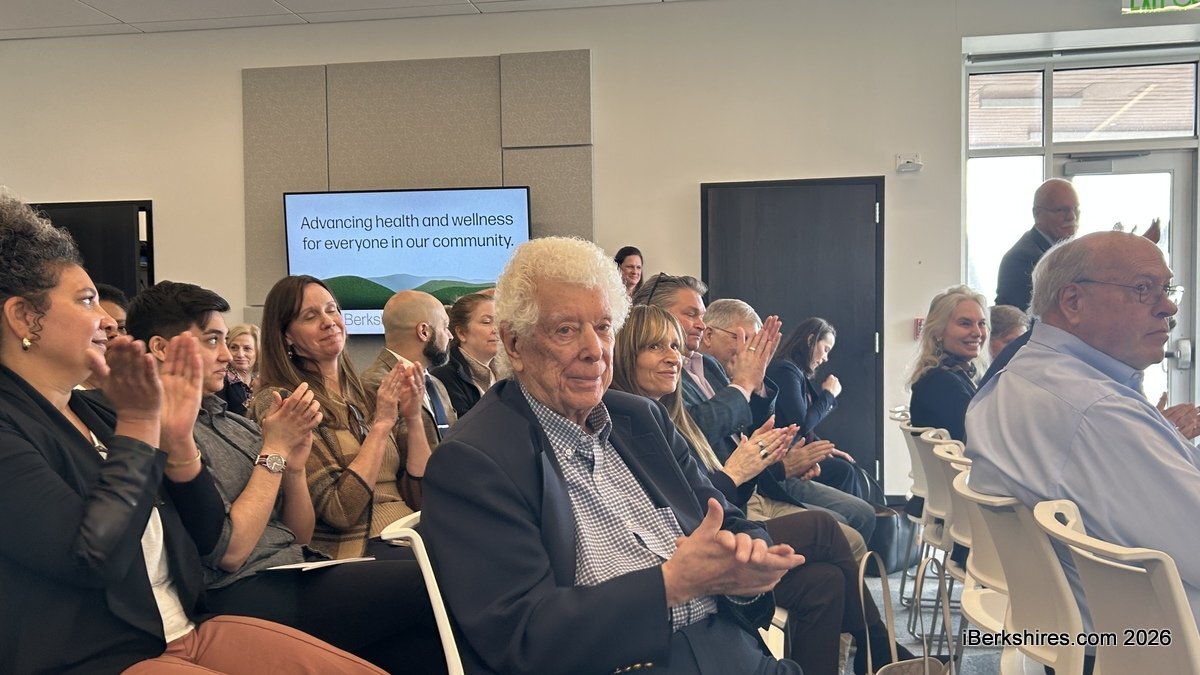
"I've not given an inch on our hospitals. This is how families make decisions to locate, this is how businesses grow around the ancillary services that come, the process for goods and services that are bid that come out of it," Neal said to a sizable audience at the Berkshire Innovation Center.
"More than 4,000 people work at Berkshire Health Systems. That's an astounding number for a relatively small community, but it's also one of stellar reputation. That's the big deal."
This is the second discussion Neal has hosted to highlight the impacts of "sweeping" cuts to Medicaid and other programs included in President Donald Trump's "One Big Beautiful Bill Act of 2025," which Neal described as "One Big, Ugly Bill," and the administration's immigration policies related to H-1B visas, a category of visa rural hospitals especially rely on.
Ben Sosne, executive director of the Berkshire Innovation Center, referred to the bill as OB3, as it is "just less painful to say."
In a July 2025 article, AP News reported that the bill, signed into law last year, will cut more than $1 trillion over a decade from federal health care and food assistance, largely by imposing work requirements on those receiving aid and by shifting certain federal costs onto the states.
The White House, in a June 2025 article, said the bill doesn't cut Medicare but "removes illegal aliens, enforces work requirements, and protects Medicaid for the truly vulnerable." Undocumented immigrants are not eligible for Medicaid, which provides health-care coverage for low-income children and adults.
Neal said 75 percent of BHS's revenue comes from Medicare and Medicaid, with Medicare being the largest employer in Massachusetts.
The bill will change pay eligibility for legal immigrants, now having to make between 100 and 400 percent of the federal poverty limit, Rodowicz explained, and will require people to revalidate their income every six months instead of yearly.
To her, "The way we're going about it really chops people up at the knees," and comes at one of the worst times for health care, which is still experiencing workforce shortages.
"The part that bothers me the most about this bill is the majority of the cuts don't happen until this fall, when the midterms are done," Rodowicz said.
"That's by design, and that's when the big hits come, and that's when the churn comes for us."
Medicaid Limited will be offered to those who don't meet income requirements, which only grants access to emergency care. State law mandates emergency rooms resolve payments after the treatment takes place, and with 75 percent of revenue coming from Medicare or Medicaid, Neal said that is a small private payer base to negotiate with afterwards, and premiums for private health care will go up.
Rodowicz also shared that sentiment, explaining that it will ultimately transfer to commercial payers in some way because that is the reality of how a health system is sustained.
"The emergency room is a bad way to get health care, and it tends to evoke a lot of emotions in the emergency room, and it creates a lot of tension in the emergency room," Neal said.
"But it also has the [unintended] problem that people who are worried about losing their health care, they stop showing up anywhere until they have an emergency, so they postpone diabetes treatments. They postpone hypertension, which is linked to diabetes. They just don't go. They avoid their doctor as well, and then they end up in the emergency room with a much bigger problem."
Berkshire Medical Center alone sees about 50,000 ER visits per year, some people using the department as a primary care provider because they have a hard time getting to a doctor's office, Rodowicz reported.
"It's a very busy emergency department. It rivals what happens in large urban areas, quite honestly," she said.
What is BHS doing to prepare for these changes? Rodowicz said it is about remembering its mission of advancing health and wellness for everyone in the community, "And if we're true to that mission, we don't plan on closing our doors or saying no to anyone who shows up."
BMC is a teaching hospital, and was approved to increase its internal medicine program and add six more slots for residents on the primary care track. Medicare is relied on to cover those slots.
"We're being very pragmatic," Rodowicz said, noting that contracted labor costs almost three times the salary BHS pays.
Neal said teaching hospitals are generally in Boston, and it adds to the reputational value to the community.
In 2024, North Adams Regional Hospital was designated as a federally recognized Critical Access Hospital, and inpatient beds were re-established. Neal was able to secure a slight change in the regulations regarding the federal government's definition of a connecting highway that made Route 7 a "secondary road" and dropped the maximum distance to 15 miles.
Rodowicz thanked Neal for the "important" role he played in reopening North Adams Regional, explaining that they waited a full decade to change the regulations in the law.
"We are still one of the few places, I think, in the country that has actually reopened a hospital. A lot of them are doing standalone emergency services, but not full hospital care," she said.
" And I will say that the care is different in North County now that we are a full licensed hospital."
Tags: BHS, medicare/medicaid, Neal,