Biz Briefs: Jacob's Pillow Archive Site Builds on Successful Season
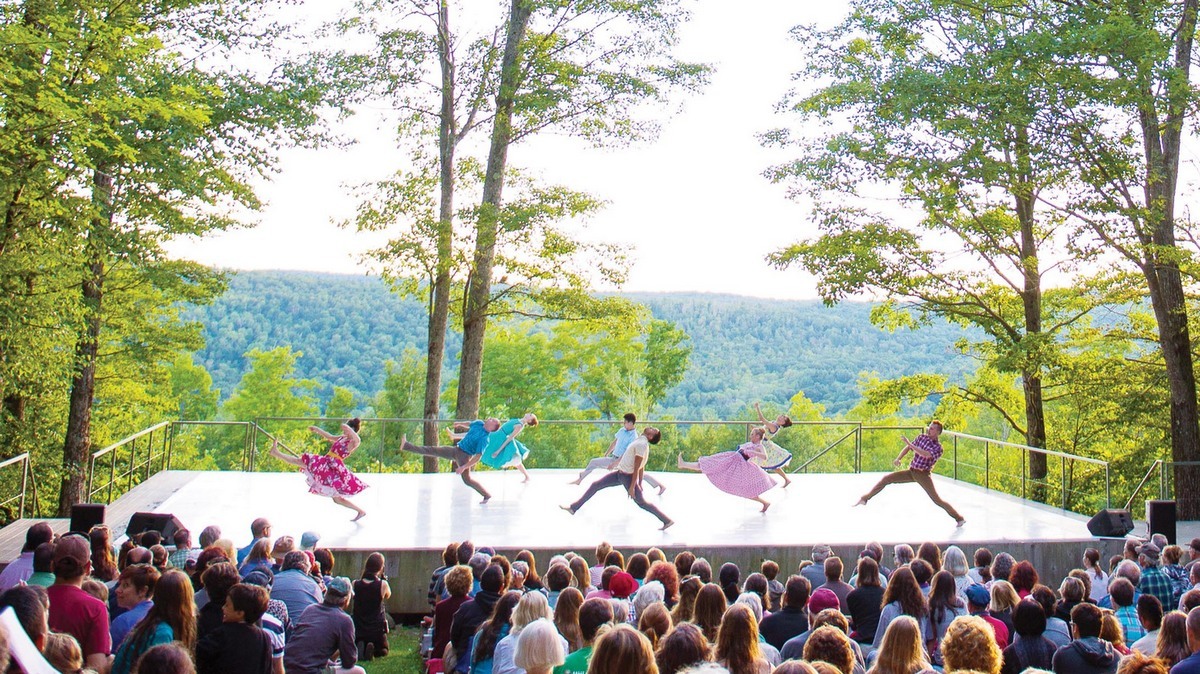
Door to the past: Following the record-breaking success of Festival 2016 and the increased demand for its resources, Jacob's Pillow Dance announces year-round online access to its impressive archives through a new website. Beginning this year, digitized content and a large amount of information is available to the public, offering an unprecedented resource to the global dance community.
Festival 2016 was one of the most successful seasons on record for Jacob’s Pillow, a National Historic Landmark, National Medal of Arts recipient, and home to America’s longest-running dance festival. The Pillow hosted a record-breaking 108,000 visitor experiences throughout the summer, including ticketed performances, free performances, free talks, tours, dance classes, film screenings, exhibits, and various other community events. In addition to landmark attendance at these events, the Pillow exceeded the highest budget goal total to date totaling more than $2.3 million in ticket revenue.
In wake of the record-breaking surge in visits to the archives and its programs during Festival 2016, Jacob’s Pillow announces dramatically-expanded online access to one of the most eminent collections of archival material within the dance field. After 20 years of public access solely during the Festival (and by appointment throughout the year), the archives are now available through a new user-friendly site, offering an ever-growing portion of this important collection to the public at archives.jacobspillow.org.
Among the features of the new site is a complete set of digitized programs from throughout the Pillow’s 84-season history. These documents include everything from the first performance in the Ted Shawn Theatre (a 1942 premiere by Agnes deMille) to this past season’s programs including commissioned essays from Pillow Scholars-in-Residence.
The new site utilizes the same open-source CollectiveAccess software widely used by prominent arts organizations including the Brooklyn Academy of Music, The New Museum and National Public Radio. The project has been made possible through a two-year Archives Advancement Initiative funded by the Andrew W. Mellon Foundation and also incorporates digitization work supported by Save America’s Treasures and the Leir Charitable Foundations in memory of Henry J. Leir and the Leir Charitable Trusts, in memory of Henry J. and Erna D. Leir.
Back to basics: Co+op Basics was developed with the help of the National Cooperative Grocers and features the Field Day brand, that focuses on organic and natural products with a commitment to non-GMO. Co-ops around the country, including Wild Oats, have adopted Field Day as their store brand and it is the mainstay of the Co+op Basics program. Wild Oats has chosen to expanded its offerings to include meat, cheese, fruits and vegetables in order to make it easier for families to access a wide variety of healthy foods.
There are more than 100 items — most are organic — in Wild Oats’ Co+op Basics program, including staples like beans, pasta sauce, salsa, cereal, olive oil and peanut butter, as well as household products like dish detergent, bath tissue and more. The list will grow over time as the program evolves and new items are introduced.
Cancer directory: The team at Southwestern Vermont Regional Cancer Center is always looking for ways to enhance the care they provide to their patients. From recent feedback, Cancer Center staff learned that patients appreciate receiving complementary and alternative therapies in addition to their care at the Cancer Center.
SVRCC is reaching out to practitioners of acupuncture, aromatherapy, chiropractic medicine, herbalism, massage, Qi gong, reflexology, Reiki, Tai Chi, and others in southern Vermont, eastern Rensselaer County in New York, and northern Berkshire County in Massachusetts in order to meet this request. All are encouraged to register for inclusion in the directory at svhealthcare.org/cam by Nov. 1.
A directory based on the registrants will be compiled and distributed to cancer patients starting in December. Inclusion in the guide is not an endorsement by Southwestern Vermont Medical Center or SVRCC of the services listed. Those listed will be asked to update their information once yearly. For questions about the directory, go online or call Rebecca Hewson-Steller at 802-440-4244.