Williamstown, Williams College to Fund Ambulance Service Merger
WILLIAMSTOWN, Mass. — The Finance Committee on Tuesday committed to spend up to $75,000 to help defray the cost of Village Ambulance Service’s merger with North Adams Ambulance Service.
The actual cost of that move may end up being north of $200,000, and the town and Williams College are committed to sharing the cost of the merger, which a yearlong town-gown study found to be the best option available for maintaining ambulance service in the Village Beautiful.
In 2016, the non-profit went public with financial woes that were threatening the viability of the service. In January, a task force began looking at long-term solutions, a road that eventually led to the merger with the North Adams service that the two non-profits announced in September.
“I have to admit, the merger with North Adams was the least likely possibility I was thinking of when we started this,” VAS Board President Dr. Erwin Stuebner told the Fin Comm.
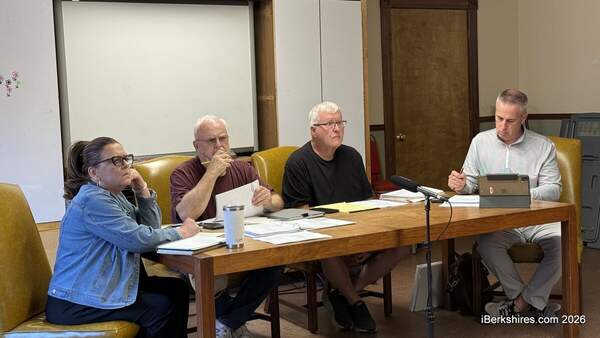
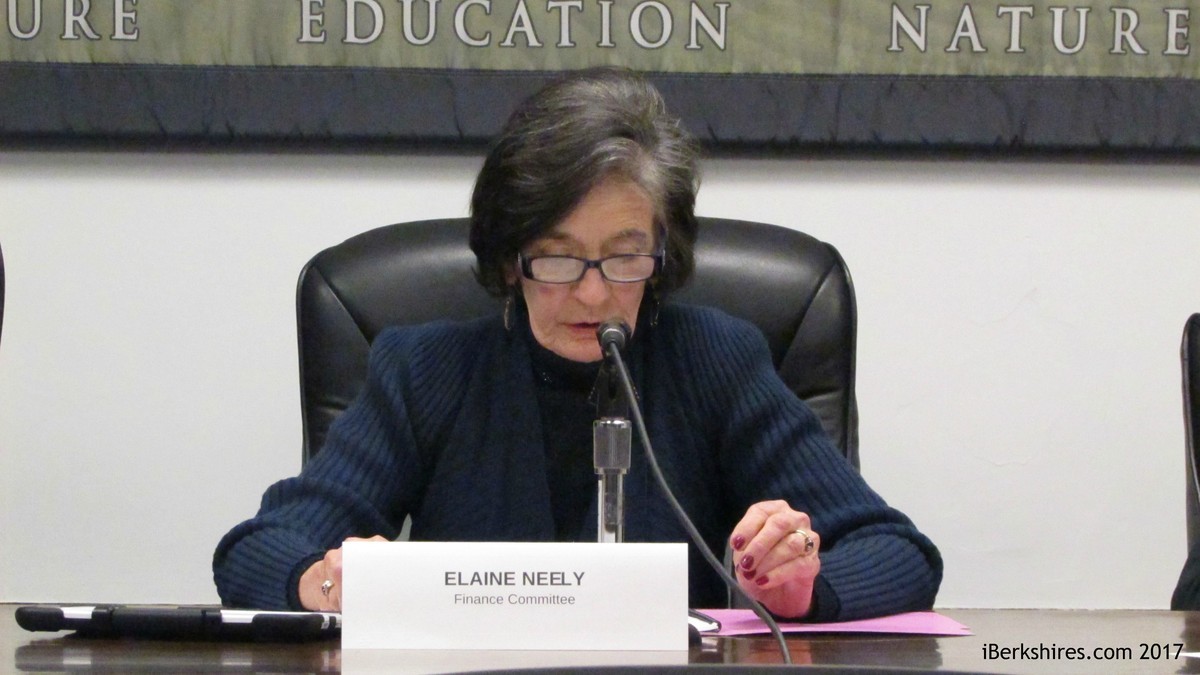
Stuebner, Town Manager Jason Hoch, Fin Comm member Elaine Neely and Williams vice president Jim Kolesar, who served on the study group, explained the reasons behind the merger, the costs involved in making the transition and the way the town and college have agreed to finance it.
Stuebner presented the board with a conservative estimate of the merger’s cost that put the figure just under $249,000, but everyone in the room on Tuesday agreed it will likely end up costing far below that.
The $75,000 helps to get the ball rolling for the Jan. 1 merger and comes from the Finance Committee Reserve Fund, a sum appropriated each year at Annual Town Meeting that usually goes unspent.
It is the first time in Hoch’s two-year tenure that he has proposed the Fin Comm spend any of the reserve fund, intended to be a reserve for unforeseen expenses between town meetings.
“It could be, in most years, a little unsettling to come mid-fiscal year and ask you to commit the entirety of it,” Hoch said. “This is the kind of extraordinary event for which we have a reserve fund, and they don’t always happen in May at the end of the fiscal year.
“The second thing is, from a town perspective, if God forbid, we have something come up that would otherwise send us to the fund, we are uniquely positioned this year. … As you recall, we didn’t budget any savings or revenue from the solar project [at the capped town landfill], not knowing when it could come online.
“That project is now online and generating credits as of November. We will have about six months of those credits remaining in our operating budget as unspent appropriation.”
Village Ambulance’s financial woes have been well documented in previous discussions before the Fin Comm and the Board of Selectmen. The non-profit has suffered from changes to the insurance industry, issues with its billing service and, more generally, a lack of the economies of scale needed to survive as a service that only covers Williamstown and the much smaller populations of New Ashford and Hancock.
“Small medical providers can’t deal with the medical bureaucracy we have,” Neely said. “Ambulances are merging all over the place,” Neely noted. “There may be other services that merge with this one.”
Fin Comm Chairwoman Elisabeth Goodman asked how the committee could be assured that a merged Village-North Adams Ambulance Service would be any more solvent than the VAS in the long run.
Stuebner said that in addition to creating an entity with more than double VAS' call volume, the merged service will continue to use the billing service currently used by NAAS, which has been more efficient at collecting on bills.
He also noted that while VAS has run into problems with patients refusing to pay higher deductibles charged by insurance companies in the post-Affordable Care Act era, that is less of a factor for North Adams.
“Because of their demographics, they can budget with more certainty,” Stuebner said. “Medicare and Medicaid pay a set amount [for ambulance transport]. We’ve had situations in town where several people who could afford to pay deductibles have flatly refused to do so. They say, ‘Talk to my insurance company.’
“[NAAS] can budget and know with more certainty what they’re getting.”
Fin Comm member Susan Clarke asked whether Village Ambulance had looked at the intermediate step of using the same billing company used in North Adams, which might address part of the cause of the VAS’ financial woes.
Neely said that is not a viable solution.
“As you change billing services, you have to change provider numbers, and it’s a three-month changeover,” she said. “They couldn’t survive three months without income.”
The $249,205 “worst case” budget for the transition includes up to $80,000 to help pay for the former VAS employees during the first month of the transition.
“The billing will be done through December with our billing company,” Stuebner said. “Our billing company takes [money] in in December, and it will probably trickle through for the next three months.”
It also includes a lot of “hard costs” like the equipment that will be needed to re-equip the VAS rigs so they mirror those used by the North Adams Ambulance Service.
“On Dec. 31, all of Village’s ambulances will go to North Adams, be stripped bare and have compatible equipment put in,” Stuebner said. “Crews will be switching back and forth, and the rigs will be exactly alike.”
Although the one-time cost of the merger will hit the town coffers, at least one of the alternatives studied would have meant an ongoing liability for taxpayers. The members of the task force noted that Vermont ambulance services, like Bennington, which also made a proposal to VAS, charge municipalities an annual fee based on population.
As for the other two towns in Village Ambulance’s coverage area, Hancock and New Ashford are aware of the merger but were not asked to contribute to its costs, Stuebner said, noting that the plan to merge the two services was developed from a study led by Williamstown and Williams College.
The merger will create a sustainable economic model and continue to give the towns covered by Village the same service they have come to expect, Stuebner said. In fact, he noted that response times could come down; currently if VAS’ two in-service rigs are on calls and a call comes in, it has to put out a call to North Adams for mutual aid. Now, with one dispatcher covering the wider Northern Berkshire region, North Adams ambulances automatically can be sent west before calls come in case a third rig in the area is needed.
“This has been an ongoing financial crisis for quite a while,” VAS Board member David Rempell told the Fin Comm. “Now, we’re moving into what looks like a very financially stable situation.
“We had our final VAS Board meeting this morning. The feeling of everyone around the table is we have worked hard. Win [Stuebner] has worked especially hard. But now we have seen the light at the end of the tunnel.”
Tags: North Adams ambulance,