Williamstown Town Manager: 'Less Pessimism' About State Funding
WILLIAMSTOWN, Mass. — The town came through the first year of the COVID-19 pandemic in good financial shape and is cautiously optimistic heading into the next fiscal year, the town manager said on Monday night.
Jason Hoch reported to the Select Board that the town's free cash as of July 1, 2020, was certified by the Department of Revenue last week, effectively closing the books on fiscal year 2020.
"The free cash approval for the general fund is about $1.3 million, which is up a bit from last year," Hoch said. "I offer that just as a way of saying we made it through the fiscal year and the budget hits without dramatically impacting our ability to have flexibility for future hits in the general budget.
"We basically get to free cash by spending somewhat below appropriations and having revenues that overperform. We've been fairly consistent at this range the last few years, so it's certainly a good stable place. If that number starts getting higher, that would be a concern. And if it gets significantly lower, it really boxes in our flexibility."
Historically, the town each year has applied a portion of its free cash (or "unreserved fund balance") toward the next fiscal year's budget, thereby lowering the burden for town operations that falls on taxpayers. In August, town meeting approved using $250,000 from free cash toward the FY21 budget.
Plans for the FY22 budget are underway. Hoch reported that town staff is working on compiling the numbers that will inform the budget proposal he plans to show the Finance Committee the middle of next month.
Hugh Daley asked Hoch what signals he is getting from Boston how the state's budget could impact local spending plans.
"Nothing yet," Hoch said. "It's been interesting that what we have seen, so far, is that state tax revenues are doing surprisingly better than people would have thought recently. There's a bit less pessimism out there then I think we first had, especially looking into a period where we have to get everyone through the next six months and that will not be without its pain and challenges.
"But there is a light at the end of the tunnel now. The initial thinking among my colleagues is: Don't necessarily expect any gains but probably not a loss of ground from where we are this year."
Hoch reminded the board that he budgeted for a 12.5 percent reduction in state funding in FY21, but the town ended up no worse off than it was the previous fiscal year.
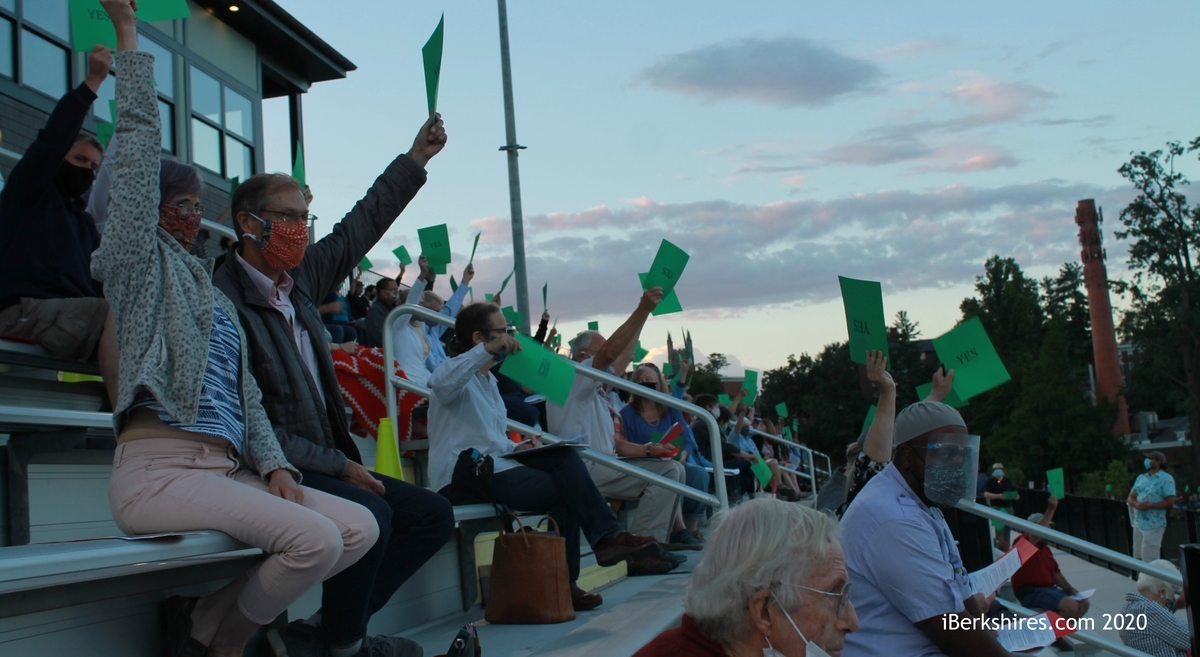
As for final approval of the FY22 budget, Hoch on Monday suggested the town may want to plan its annual town meeting for some time in June at Williams College's Weston Field, the site of August's pandemic-delayed 2020 annual town meeting.
Although the commonwealth has begun to roll out vaccinations for the novel coronavirus, Phase 3 of the vaccination program, which includes the general public, has an April-June time frame according to the state's website, Hoch noted. He said it likely would be problematic for the town to hold an indoor town meeting in May, and the college likely will be using its athletic facility until the end of May. A June meeting would allow for approval of budget measures before the July 1 start to the fiscal year and eliminate the need for "one-twelfth" budgets that several municipalities, including Williamstown, used to start FY21.
In other business on Monday evening, Hoch informed the board that the Legislature at the end of its recently completed session OK'd a provision long espoused by Gov. Charlie Baker that would allow certain housing-related zoning bylaws to be passed by simple majority at town meeting.
According to Section 19 of H.5250, An Act Enabling Partnerships for Growth, two-thirds "supermajorities" no longer will be needed to pass zoning measures like those allowing "multifamily housing or mixed-use development" by right or "an increase in the permissible density of population or intensity of a particular use in a proposed multi-family or mixed use development" by special permit.
The change appears to apply only to housing issues and not other land-use issues, like the cannabis production bylaw currently being developed by the Williamstown Planning Board.
• Select Board Chair Jane Patton opened the meeting with a condemnation of last week's riot and attempted insurrection in Washington, D.C.
"My hope is that everyone, irrespective of if they were banging on the door to get in or banging on the podium telling them to go is held accountable for their actions and punished swiftly and appropriately," she said.
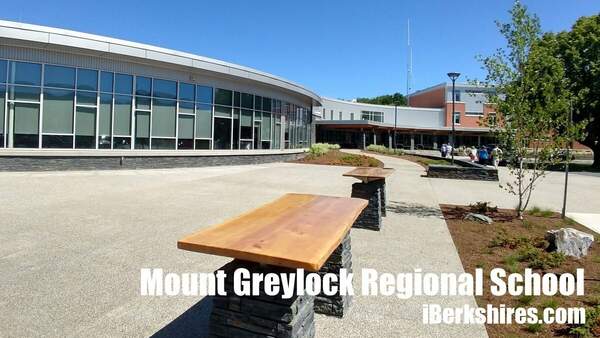
• Hoch recognized the efforts of local Girl Scout Julia Donati, who developed a public awareness campaign about the importance of trees and created a guide for local residents interested in planting trees. Donati, who completed the project to earn the Gold Award, the highest honor in Girl Scouts, planted a tree at Mount Greylock Regional School as part of her effort.
• Resident Janice Loux addressed the board from the floor of the virtual meeting to renew her calls for the termination of Hoch and a police officer alleged in a recently withdrawn federal lawsuit to have sexually assaulted a resident in her home.
Although Patton made a point of saying at the outset that the board would not be addressing next steps for the Williamstown Police Department at Monday's meeting but would address the issue at its Jan. 25 meeting, Loux told the panel that she would never stop raising the issues every chance she got.
In response to Loux, Patton also said Monday that the board will discuss the process for its regular annual review of the town manager at the Jan. 25 meeting.
On Tuesday afternoon, Patton said she was concerned about the tone of Monday's meeting, which included raised voices and references to 10-year-old allegations of an assault against an unnamed town resident.
"I respect and value everyone's right to state their opinion and their piece," Patton said. "However, I am growing ever mindful of the impact our words can have on individuals, and I'd ask that we think about that when we choose to speak publicly."
Tags: fiscal 2021, municipal finances,