Pittsfield Public Health & Safety Panel Opts Out of Mosquito Control Project
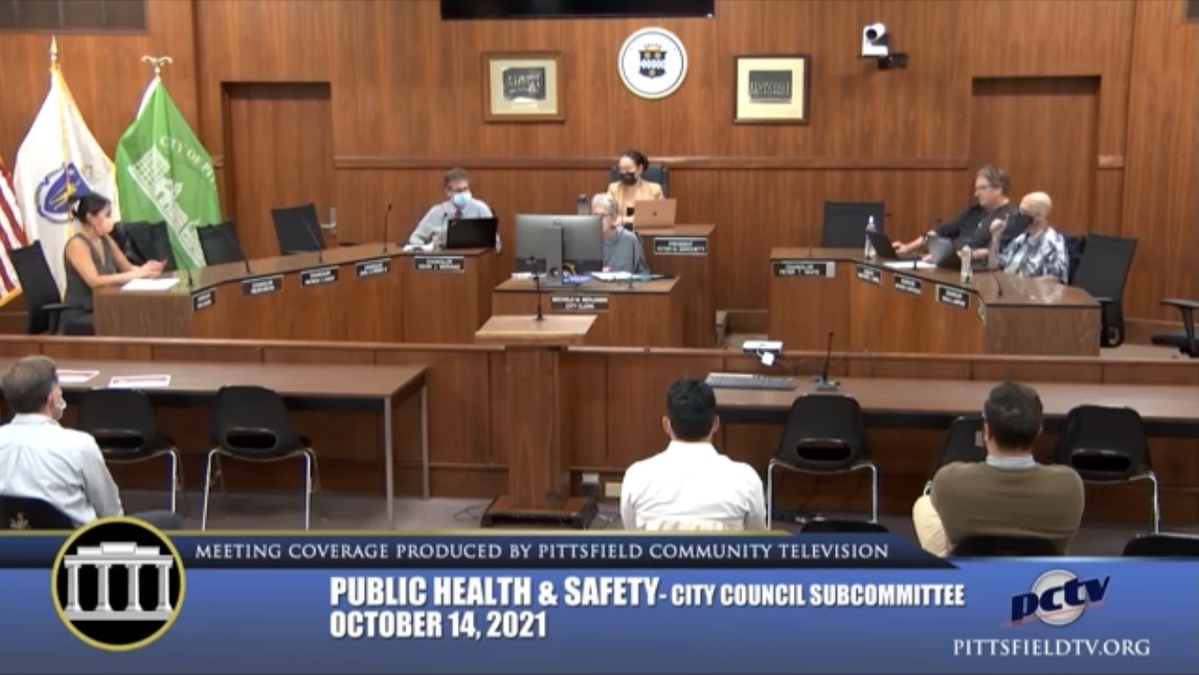
PITTSFIELD, Mass. — The Public Health and Safety Subcommittee last week voted to opt out of the Berkshire County Mosquito Control Project.
The petition was put forward by Ward 7 Councilor Anthony Maffuccio, who said the program is inefficient and cited concern safety concerns with the chemicals used for mosquito mitigation. It passed in a 3-2 vote with Ward 2 Councilor Kevin Morandi and Ward 4 Councilor Chris Connell in opposition.
Connell said he has been pleased with the program and Morandi was not comfortable voting to opt out of it without another plan.
In April, the council voted "no" on the adulticide mosquito spraying portion of the Berkshire County Mosquito Control Project. This vote only eliminated the mosquito spraying aspect of the project; the pre-emptive larval control and catch basin operations remained.
The subcommittee had also voted to discontinue the spraying in April.
Because of heavy rainfalls and flooding that occurred in the county, there was a significant amount of mosquitos in the community this summer.
Despite a large number of mosquitos, it was not an active year mosquito-borne viruses West Nile virus and Triple E (eastern equine encephalitis.) A majority of the councilors in support of opting out of the program used this reasoning to back up their decisions.
Interim Director of Public Health Andrew Cambi defended the Board of Health on the mosquito spraying project.
"The first item that I want to discuss is the petition in itself, which states that the Berkshire County Mosquito Control Project program is a failed program and not environmentally safe, toxic and demonstrates corrupt scam, that statement I feel is completely out of line, because the Berkshire County mosquito control project program works directly with the city of Pittsfield Board of Health members and the city Department for Health, specifically our previous health director Gina Armstrong," he said.
"They started this in 2012, and they work collaboratively together to make sure that there's a comprehensive mosquito program, so when this has been stated that it's a corrupt scam you're essentially saying that the Board of Health's work that's been done throughout the years is a corrupt scam, which is not true and I feel is out of line and should be corrected."
Cambi brought up the fact that mosquito spraying can still be conducted at the will of the state even though the council voted to opt-out.
He added that it is not done randomly, as there is a process for it that was approved by the Board of Health, which includes identification, surveillance, and monitoring.
In the future, Cambi hopes to have more communication before decisions are made and invited anyone with concerns about the mosquito control program to attend a board meeting and express them so that adjustments can be made.
In 2019, the city gave residents the option to opt out of spraying because of concerns that were brought to its attention.
"First of all, when I said, it's a scam it had no bearing on the staff, or it's plan that you have provided, I am just echoing some of the comments that have been made by other communities that have opted out of this program, calling it a scam," Maffuccio clarified.
"There are many articles written that says it's a scam, it was not a direct attack on Director Armstrong, our Board of Health, or anybody in our Health Department, it's the program itself. The reason I brought forth this petition is because many people have contacted me, or environmental analysts now, about how the program itself is using toxic chemicals the flow into our rivers and streams."
He added that his petition was put on the agenda to start a dialogue.
Pittsfield is assessed at approximately $150,000 of its unrestricted local aid that comes from the state for the program, which is how it is funded.
The current total budget is $260,000 and the city pays about 55 percent of that.
Commissioner of Public Services and Utilities Ricardo Morales said performing just pre-emptive larvae and catch basin treatments would be around $40,000 for three months.
If not accompanied by other forms of treatments, he said it would be a waste of money.
When Morandi asked if the city has an alternative plan to the project, Morales said alternative methods could be sought and put out to bid but there is no current plan.
"At this time in Pittsfield, we do catch basin treatments, wetland larval treatments and then we also have available adult control which is ultra low- volume spray to kill adult mosquitoes," the mosquito project's Superintendent Chris Horton said.
"In addition to that, and when the mosquito season is done, we do what's called source reduction and that's working drainage structures, existing drainage structures to improve flow water quality, which reduces the scope of mosquito breeding habitat."
He said the product they use for larval control is a bacterial agent that is considered non-toxic to animals and most target species, as it is specific to mosquitos, black flies, and midges.
The agent, Horton added, is designed to have a short life in the environment and doesn't transport through the water drainage system.
The amount of mosquito spraying chemicals that are applied to the air is .62 ounces per acre. The program uses DeWitt mosquito spray, which was approved by the U.S. Environmental protection Agency and the Centers for Disease Control.
Horton said the project received so mosquito complaints after halting spraying that voicemails exceeded the capacity of answering machines on Aug. 2, following flooding in July.
Moon said the EPA often turns back on what they consider safe and cited a situation that happened earlier this year where toxic compounds — polyfluoroalkyl substances (PFAS) — were found in sprays used in the state.
The PFAS had leached into the product from the containers and triggered the manufacturers to make different packaging for them.
"Those PFAS, the level was of significance but that being said, EPA has regulations on pesticides that say, there can't be undocumented substances in pesticides, and when they found this trace level, that was a documented substance, and it had to be addressed," Horton said.
"So that's what the issue was, but in terms of safety of mosquito spray, the level of PFOS that was found in the mosquito spray was 1/10 the level that is, if you Google PFOS levels in human blood, it's 10 times the level they found in the actual mosquito product, which is being distributed at point six two ounces per acre."
Moon reiterated that it was supported enough for the company to change the product's containers. She said that part of the problem is that the EPA had determined the product was safe and then found a known component that was leeching into it.
She also pointed out that even though residents had the option to stop spraying on their homes, the areas around them would still be sprayed.
"I feel like I'm hearing two sides of an argument, people are people are saying we need the spray because of safety, but when we look at this year again, we had zero cases of West Nile and we had zero cases of Triple E," Moon said.
Horton explained that the BCMCP does the surveillance for mosquito-borne disease and without mosquito control, the first indication of the disease would be with human infection.
"There are a lot of factors that have to be considered by a town before they get into this, we've had this ongoing controversy, they call me a liar, a bamboozler, and, that colors the whole issue," he said.
"I'd like to know what I have said that has not been true, what I have put forward, that has not been supported by science."
Tags: mosquito spraying,