Pittsfield City Council Votes No on Mosquito Spraying
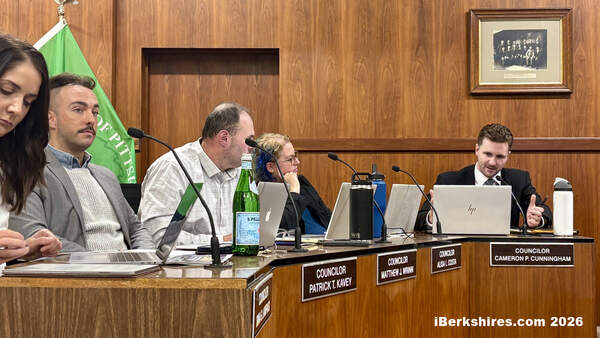
PITTSFIELD, Mass. — The City Council on Tuesday voted to opt out of the adulticide mosquito spraying portion of the Berkshire County Mosquito Control Project in a 7-4 vote.
Ward 1 Councilor Helen Moon, Ward 2 Councilor Kevin Morandi, Ward 4 Councilor Chris Connell and Councilor at Large Earl Persip III voted in opposition. Persip believes the city should opt out of the program as a whole.
This vote will eliminate only the mosquito spraying aspect of the project; the pre-emptive larval control and catch basin operations will remain.
"This program really seems unnecessary to me," Persip said. "I think we've been bamboozled into thinking this is something we need, we're watching other communities opt out and I would support opting out of the whole program."
Connell originally made a motion to table the petition until the panel was able to get more information from the project and Health Department representatives, who were not present at the meeting. This motion failed 7-4 with President Peter Marchetti, Councilor at Large Pete White, Morandi, and Connell voting in favor.
Mosquito spraying has been a topic of debate for about 10 years. Members of the public have expressed ongoing concern regarding the Berkshire County Mosquito Control Project and specifically its use of adulticides to combat the disease prevalence of Triple E (eastern equine encephalitis) and West Nile virus.
The city began spraying in 2010 when the council voted to contract with the project, which serves 10 communities in the Berkshires. According to a working group of city residents, "Residents Against Mosquito Spray," the process was done without formal presentation or consultation with the Pittsfield Department of Public Health or Board of Health.
The following year in 2011, the decision was reversed, and then reversed again. In the summer of 2014, a local petition opposing mosquito spraying with more than 300 signatures was submitted to former Mayor Daniel Bianchi.
Even though the council has opted out of spraying, the state can still mandate mosquito spraying under circumstances such as an outbreak of Triple E. Under MGL Chapter 252 Section 2-A, the State Board has the authority to spray once the Department of Public Health has determined that there's an elevated risk of larva virus for that year.
In this case, the state has the ability to go to the Mosquito Control Board and take action in an effort to address public health concerns associated with a specific outbreak.
"The mosquito control boards are established by state law so they're actually governed by a statute," Finance Director Matthew Kerwood said.
Without opting out of the program entirely, the city will still pay the BCMCP roughly $154,000 for their services in fiscal 2022. Over the last two years, Pittsfield has used about two gallons of the DeWitt mosquito spray.
"Even if we pass this and opt out, there still can be spraying a Pittsfield," Morandi said. "I think we need to make that perfectly clear to the residents, even if we opt out not to spray, the state's going to dictate whether we do or not."
White also questioned if the city should opt out of the program entirely.
"I don't support spraying, residents have been clear with us and we were clear a few years ago about that, I just question if it's financially smart to stay in this program at all for only using the larvicides," he said.
"And I worry that we're paying for something and we're not getting what we're paying for, and as more towns and pull out, I wonder if we're just covering the cost of their staffing more than the cost of their supplies and what it takes."
Many members of the council wished that the project's Superintendent Chris Horton and Director of Public Health Gina Armstrong had been in attendance to answer questions. They found their absence "irritating" because this has been a topic on the city agenda for weeks, as the Public Health and Safety Commission voted against spraying in early April, it went to the Board of Health the following week, and was on the City Council's agenda for their April 13 meeting.
Tags: mosquito spraying,