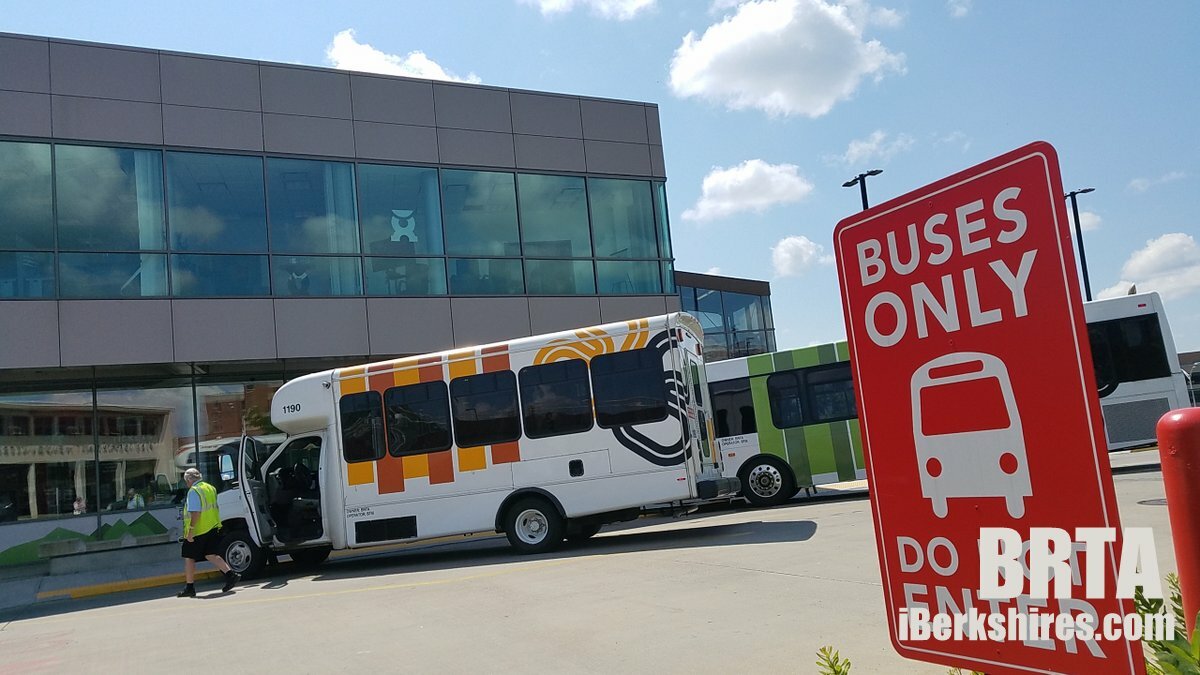
BRTA Gets $3M for Hybrid Buses, HVAC
 |
PITTSFIELD, Mass. — The Berkshire Regional Transit Authority has been awarded $2,457,328 in federal funding for low-emission buses and ventilation systems, with a 20 percent match in state funding bringing the total cost of $3,071,660 for the project.
The funds will go towards the purchase of three hybrid electric 35-foot heavy duty transit buses, replacing three 2014 buses; one 28-foot cutaway bus replacing one 2013 bus and the replacement of the 20-year-old HVAC system at the Intermodal Transportation Center.
The U.S. Department of Transportation's Federal Transit Administration announced this week $1.66 billion in grants to transit agencies, territories, and states across the country to invest in 150 bus fleets and facilities. The bus grant awards – made under FTA's Buses and Bus Facilities and Low- and No-Emission Vehicle programs – are FTA's first competitive grant selections under the Bipartisan Infrastructure Law.
"With today's awards, we're helping communities across America – in cities, suburbs, and rural areas alike – purchase more than 1,800 new buses, and most of them are zero-emission," said U.S. Transportation Secretary Pete Buttigieg. "Funded through President Biden's Bipartisan Infrastructure Law, this announcement means more good jobs for people across the country, cleaner air in our communities, and more affordable and reliable options to help people get to where they need to go."
The three new Gillig Hybrid Electric buses with BAE Series ER will show a reduction of energy consumption annually totaling a savings of 5,231 gallons a fuel per year. The annual emission savings for greenhouse gases are substantial, at 77 tons per year, based upon the MJ Bradley BAE Hybrid Fuel and Emissions saving calculator tool.
Overall, there will be a 30 percent better fuel economy compared to diesel, translating into a 30 percent reduction in fuel usage and CO2. FTA's Low or No Emission (Low-No) Grant Program makes funding available to help transit agencies buy or lease U.S.-built low- or no-emission vehicles, including related equipment or facilities. The Bipartisan Infrastructure Law provides $5.5 billion over five years for the Low-No Program – more than six times greater than the previous five years of funding. For fiscal 2022, approximately $1.1 billion was available for grants under this program.
FTA's Grants for Buses and Bus Facilities Program supports transit agencies in buying and rehabilitating buses and vans and building bus maintenance facilities. The Bipartisan Infrastructure Law provides nearly $2 billion over five years for the program.
For fiscal 2022, approximately $550 million for grants was available under this program.
Tags: BRTA, electric vehicle,