image description
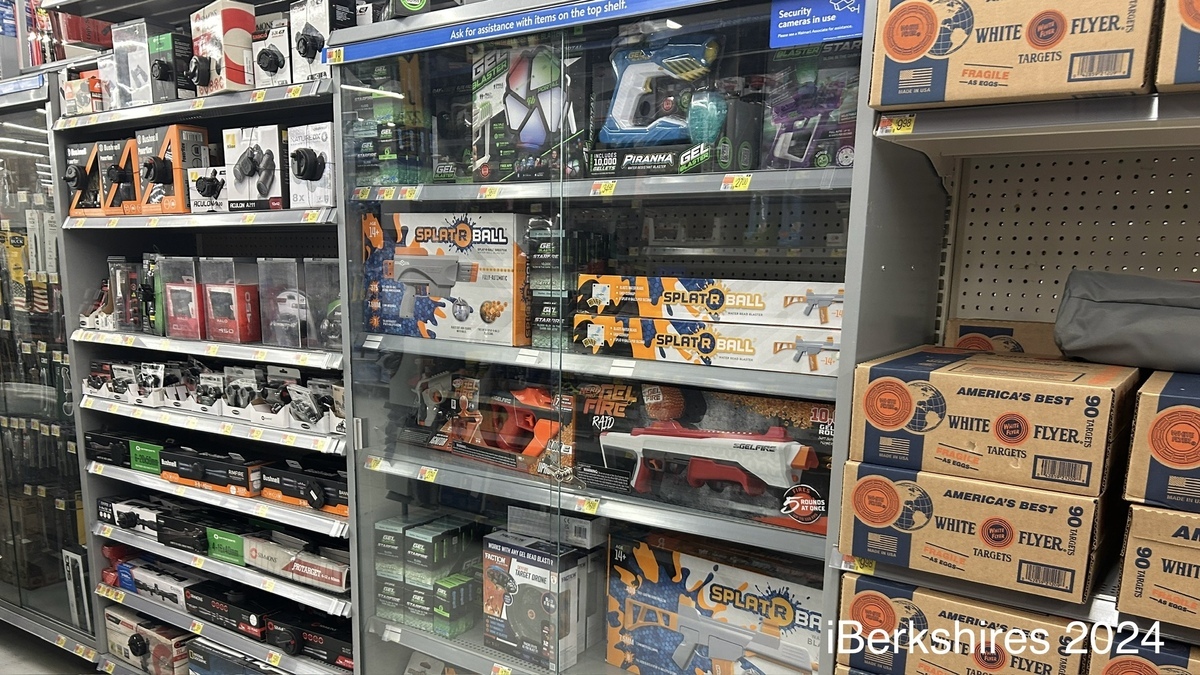
The guns shoot water or gel beads and are made by different manufacturers. They're locked up at Walmart in Pittsfield.

Pittsfield Superintendant Warns of Prohibited Toy Guns

By Brittany PolitoiBerkshires Staff
Print Story | Email Story

PITTSFIELD, Mass. — The district has been alerted of a concerning trend that is prohibited on school grounds: Orby or Orbeez gel guns.

The toy guns shoot gel or water beads and are said to pose a risk of physical harm and being mistaken for a real firearm. They are a violation of the Pittsfield Public School's code of conduct and could result in a suspension of 11 days or more.

"Though these may appear as simple toys, it's crucial to recognize the potential risks tied to their usage. By raising awareness, we aim to educate our community about the possible hazards associated with these items, emphasizing the importance of informed decision-making and responsible behavior," said Superintendent Joseph Curtis in a memo to the Pittsfield Public School community on Friday.

Last fall, someone used a similar gun to target cross-country students and a coach from Lee High. No one was injured in the incident. 

Given the frequency of school shootings nationwide, Curtis said schools cannot afford to accommodate anything that even remotely that resembles a firearm. The toy guns and gel beads are secured behind a locked case in Walmart on Hubbard Avenue, many indicating that they are for ages 14 and older.

"The Pittsfield Public Schools firmly maintains that Orby toy guns and any associated pellets should not be brought onto school premises, including both indoor and outdoor areas. This directive is in place to ensure the safety and well-being of all students, staff, and visitors within our educational environment," he wrote.


"We stress the significance of following this directive to prevent any potential hazards or disruptions that may arise from the presence of these items on school grounds. By upholding this standard, we aim to cultivate a secure and conducive learning environment for everyone within the Pittsfield community."

The superintendent listed three potential hazards of the water-bead guns in the schools:

  • Physical Injuries: The guns have the capacity to propel projectiles at considerable speeds, posing a risk of injury to the eyes, skin, and even teeth, particularly when fired in close proximity.
     
  • Misidentification Risks: Due to their realistic appearance, some Orby guns may be mistaken for genuine firearms. Such misidentification could result in confusion and potentially perilous encounters, especially if law enforcement or bystanders perceive them as real weapons.
     
  • Public Disruption: The act of firing Orby guns in public settings can be highly disruptive and alarming to others. Such behavior may instill fear and panic among individuals nearby, potentially leading to charges of disorderly conduct or harassment.

Tags: toy guns,   
If you would like to contribute information on this article, contact us at info@iberkshires.com.

Youth For The Future: Adwita Arunkumar

By Breanna SteeleiBerkshires Staff

PITTSFIELD, Mass. — Williams Elementary School fourth-grader Adwita Arunkumar has been selected as our April Youth for the Future for her mentoring of a younger child.

Youth for the Future is a 12-month series that honors young individuals that have made an impact on their community. This year's sponsor is Patriot Car Wash. Nominate a youth here

Adwita has cortical visual impairment; she has been working with her teacher, Lynn Shortis, and her, paraprofessional Nadine Henner.

"My journey with CVI means that I learned in a different way. I work hard every day with Miss Henner and Miss Lynn, to show how smart I am," she said.

"Adwita is a remarkable student. She's a remarkable child. She has, as she shared, cortical visual impairment, which is a brain-based visual processing disorder, which means the information coming in through the eyes is interfered with somewhere along the pathways, and we never quite know what's being interpreted and how and how it's being seen," said Shortis.

"So she has a lot of accommodations and specialized instruction to help her learn."

Recently Adwita has chosen to mentor 4-year-old Cayden Ziemba, who is also visually impaired.

"I decided to be a mentor to Cayden so that she can learn some new things. I teach her how to walk with the cane, with the diagonal and tap technique, I am teaching her Braille," she said. "I enjoy spending time with Cayden, playing games and being a good role model."

Shortis said the mentoring opportunity came up when Cayden was entering preschool at Williams, and they introduced her to Adwita. 

"Adwita works really, really hard academically. She's very smart, but there are a lot of challenges in that, because of the way that it's so visual and she's a natural. She's just, it's automatic," Shortis said. "It's kind of like a switch is turned on and she becomes this extremely confident and proud person in this teacher role."

Adwita also has been helping Cayden on how to use her cane on the bus and became a mentor in a unexpected ways.

"Immediately at the start of this year, she would meet Cayden at the bus. She has taught Cayden how to use her cane to go down the bus stairs. Again, Adwita learned that skill, so it wasn't something I had to say to her, this is what you need to have Cayden do. She just automatically picked that up and transferred that information," said Shortis. "Cayden is now going down the bus step steps independently with her cane. And then she really works hard with Adwita in traveling through the hallways, Adwita leads her to her class every morning, helps her put her things away and get ready for her morning."

Adwita said she hopes Cayden can feel excited about school and that other students can feel good about themselves as well.

"I want them to know that Braille is cool to learn. You can feel the bumpiness with your fingers. I want people to know how you can still learn if your brain works differently sometimes. I need to have a lot of patience working with a 3-year-old. I need to be creative and energized," she said.

She hopes to one day take her mentoring skills to the head of the class as a teacher.

"I want to become a teacher and teach other students when I grow up. I might want to teach math, because I am great at it," she said. "I also want to teach others about CVI. CVI doesn't stop me from being able to do anything I want to. I want students to not feel stressed out and know that they can do anything they want by working hard and persevering."

Her one-to-one paraprofessional said she likes seeing the bond that has grown between the two girls, and can picture Adwita being a teacher one day.

"I do see her in the future being a teacher because of her patience, understanding and just natural-born instinctive skills on how to work with young children," Henner said.

Shortis also said their bond is quite special and their relationship has helped to bring out the confidence in each other.

"The beauty of it, there's just something about it their bond is, I don't even really have a word to describe the bond that the two of them have. I think they share something in common, that they're both visually impaired, and regardless of the fact that their visual impairment differs and the you know the cause of it differs," she said.

"They can relate. And they both have the cane. They're both learning some Braille. But there's something else that's there that just the two of them connected immediately, and you see it. You just you see it in their overall relationship."

 
View Full Story

More Pittsfield Stories