Lanesborough Planners, BRPC Review Stormwater Bylaw
LANESBOROUGH, Mass. — The town is reviewing its stormwater bylaw and looking for ways to divide its authority among town boards.
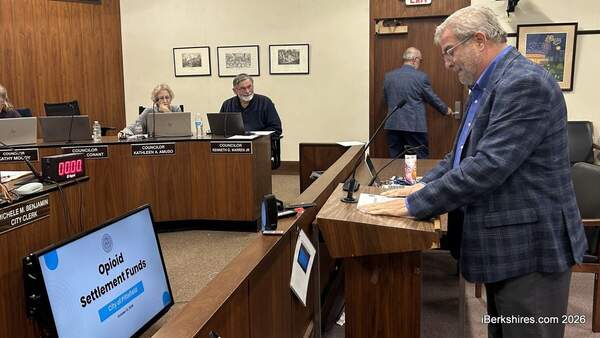
The board heard from Courtney Moorehouse from the Berkshire Regional Planning Commission about the town's stormwater management bylaw. Board Chair Gwen Miller said they hope to determine what aspects of the bylaw should stay under Planning Board authority and what should not.
Moorehouse said it makes sense to keep aspects of the bylaw under control the Planning Board, such as stormwater permitting for larger projects. Other parts, she said, would be better served under the perview of other town boards.
"There's other aspects that don't make as much sense, and I'm thinking, in particular, of the illicit discharge, detection and elimination portion of it," Moorehouse said. "That aspect, I've seen it a little bit more appropriately go under the Conservation Commission if they were amenable to that."
She said it would still make sense for the Planning Board to handle enforcement of the bylaw. However, she added, this part of the bylaw is something BRPC is still trying to determine a best practice for, and BRPC can subcontract to help with enforcement, if needed.
"The Planning Board, similar to any project, is responsible for making sure they follow their stormwater plan that they put forward," she said.
Finance Committee member Ronald Tinkham was in attendance and asked how the bylaw affects the Berkshire Mall property. The board said this would not apply to the property, which existed before the bylaw was passed, until the owners pull permits and have a site plan to review.
Miller said she is happy Lanesborough has been able to keep up with stormwater mandates, such as having the bylaw. She said she is hopeful other communities can follow their success.
"I know it's like an unfunded mandate, but I think it's really cool that We're so ahead of the ball," she said. "And maybe Lanesborough will be a pilot or model for other towns to look at and see how even small towns can do some really awesome green infrastructure projects."
In other business:
• Tinkham proposed two bylaw changes. Tinkham's first suggestion would reduce the lot-size requirement for sewage hookup, referencing issues related to Narragansett Avenue.
Several board members said they are already working with BRPC to determine how to change dimensional requirements for sewer hookup.
Tinkham's second proposal would make several changes to limit short-term rentals in town, which he said should happen sooner rather than later. The changes would change residential zones to specify they are family residential zones.
"As you all know, we've been innundated by Airbnbs. And I believe that the Airbnbs is really a business and is changing the characteristics of our neighborhoods," he said.
Several board members questioned the legality of the town defining "family" in its bylaws. The board said it would take Tinkham's proposals into consideration and review them next meeting.
"I don't think that this should be rushed in," said Planner Joe Trybus. "I think that there should be more thought put into it. We should really analyze other towns, other cities, whatever they're doing."
• Consulting Planner Andrew Groff drafted a bylaw for solar and electric storage, which he said makes distinctions between personal solar use and large-scale solar projects. He said he worked with the town's consulting planner from BRPC and will have KP Law review the draft.
"It's changing how we define these, splitting them to solar you're putting on your land to power what you're already doing there, so rooftop, a farmer putting up an acre of solar panels; versus utility-scale, which is what went on at skyline," he said.
Groff said the proposed bylaw also disallows utility-scale solar projects on the scenic landscape inventory, such as the approach to Mount Greylock and parts of Route 7.
"Also, I added something in here about avoiding disturbance to mature forests to the maximum extent practical," he said.
Groff also updated the board on the master plan, which can be funded by remaining American Rescue Plan Funds. He said the Select Board is supportive, but wants to wait until the new Town Administrator, Gina Dario, begins next month.
• Trybus suggested alterations to the town's accessory dwelling unit bylaw that removes size restrictions. The bylaw currently restricts the size of the accessory unit, and he said he's heard of multiple issues with proposed accessory units that would otherwise follow the bylaw.
• The board is still working on changes to the towns signage bylaws. It will review the issue again at its next meeting.
Tags: stormwater,