Berkshire Fife and Drum Keeping Traditional Cadence Alive
NORTH ADAMS, Mass. — Berkshire Fife and Drum was built on the region's loud heritage, and instructor Michael Eagle wants to keep that tradition thundering into the 21st century.
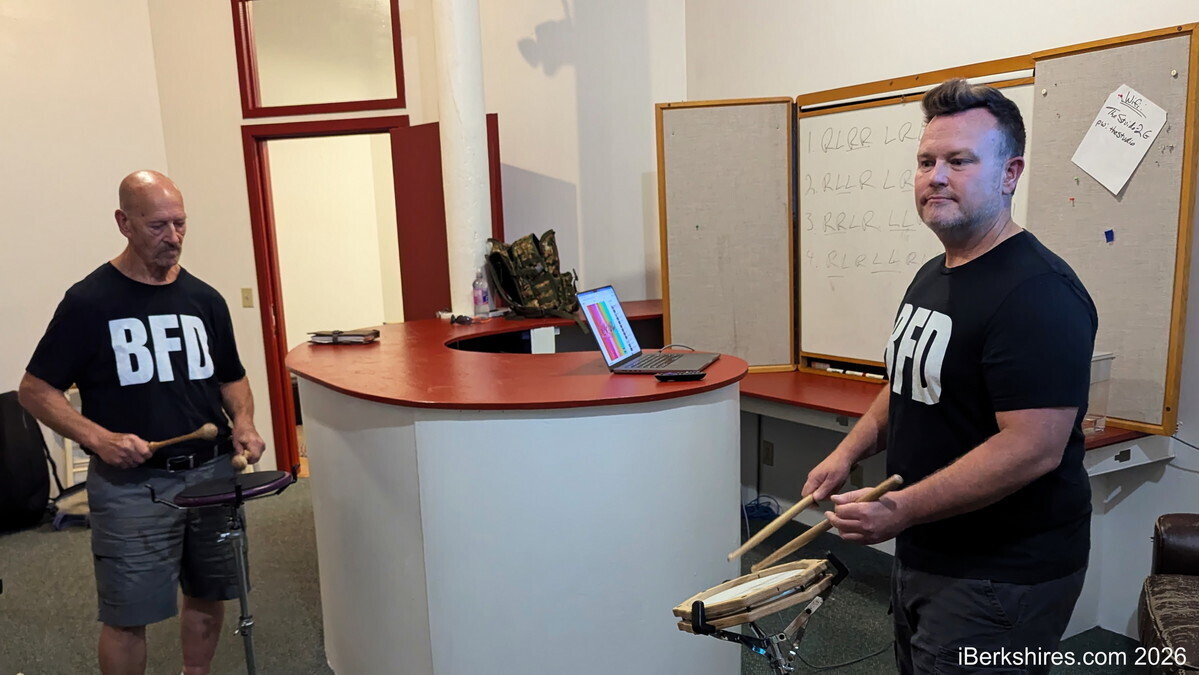
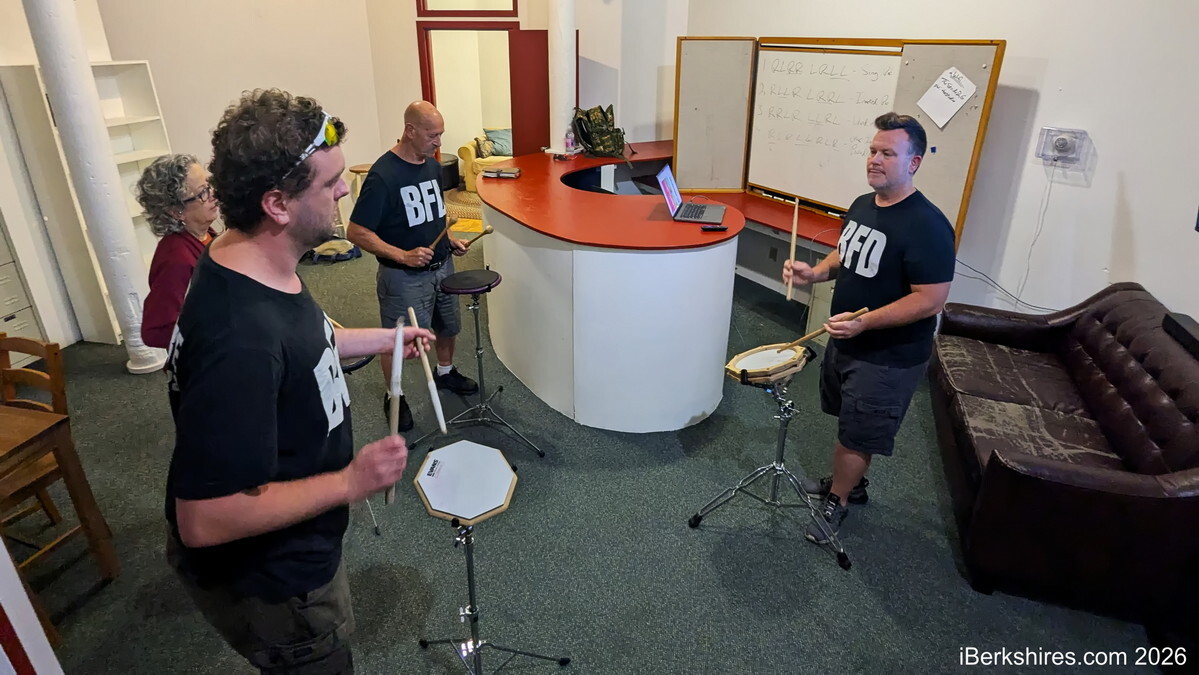
Tucked away on the second floor of the Beaver Mill, dull thuds echoed down the hallway on a recent Tuesday evening. There, Eagle led a practice session for beginners, who slammed rubber and foam pads instead of synthetic Mylar drumheads.
The practice room sounded more like a precision workshop than a historical battlefield — a necessary step for students learning the craft.
Eagle guided the small group through a series of rudiments over the driving audio of a Blink-182 track. The song's relentless backbeat provided an unexpectedly steady canvas for the drummers to stretch out their hands and build muscle memory.
Though the students were simply working through basic patterns, they were literally tapping directly into a deep Berkshire County lineage of rope-tension snare drumming and military cadence.
Eagle noted that Berkshire County was home to dozens of fife and drum corps dating back to 1812. But by the 1880s, the tradition faced a steep decline as musicians shifted toward brass, marching, and swing bands.
Many of those ensembles found homes in local American Legions, Veterans of Foreign Wars posts, and Elks, Lions, or Moose Lodges. As civic club memberships dwindled over the decades, independent fife and drum groups faded even further, eventually being replaced by music programs in public schools and universities.
"Independent ensembles faded away," Eagle said. "So today, nearly every high school and university in the country has a marching band, but most towns no longer have a fife and drum corps. But up here in New England, it's still a thriving thing. There are hundreds across the region."
Recognizing that deep regional footprint, Eagle felt it was time to resurrect a local ensemble.
"So when I learned that, I said if that many people loved this activity for over a hundred years," he said, "There's got to be some juju, some roots, some spirit that still remains, so let's put out the word."
He connected with a fife instructor from Stockbridge, and in 2022, Berkshire Drum and Fife was born. The group started small, gathering once a week to play. By 2024, interest began to build.
"At first it was just, 'let's show up and jam.' I showed them how to move the sticks, and we just rocked out to some rock music, drank beer, and had a good time," Eagle said. "And then, after a while, they started showing a lot of potential. I told them, 'You guys are actually starting to get good, and I need to know if you want to do something with that. Do you just want to drink beer and hang out? If so, that's cool, but I need to manage my expectations.'"
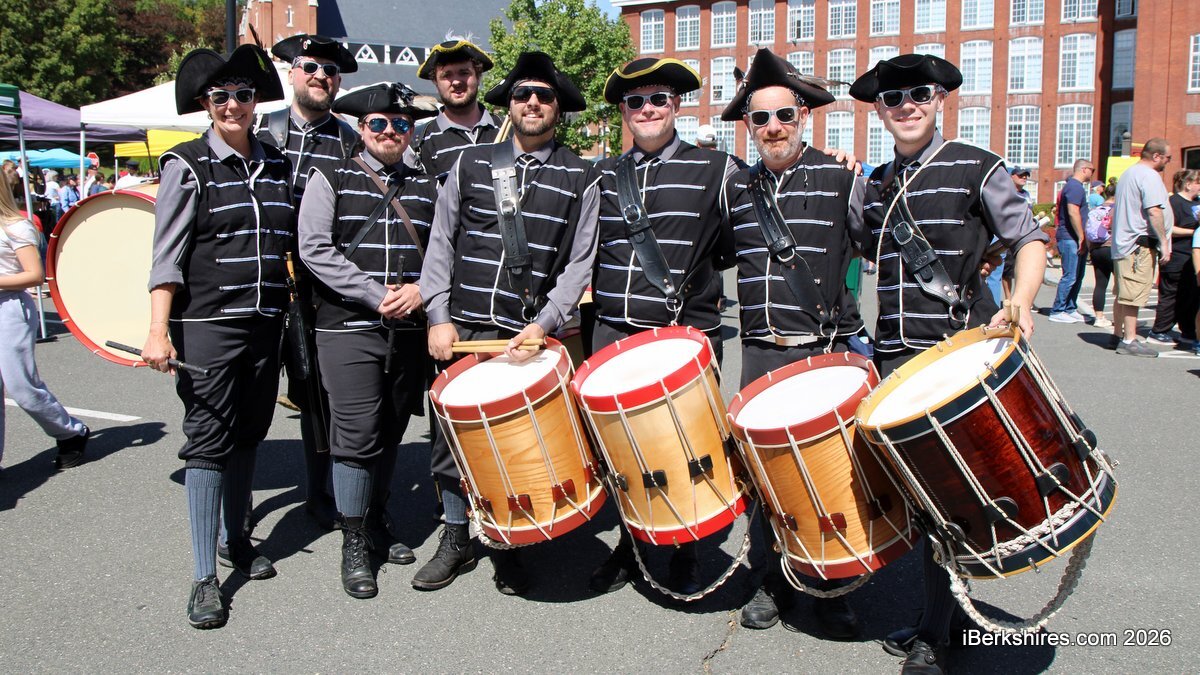
Eagle said he was met with a resounding yes to take things to the next level. So, he set a deadline: In one year, they would be performance-ready. They purchased the proper instruments and the full historic regalia.
"In a year's time, we went from three or four guys showing up to play, to playing at Deep River," Eagle said. "And then we played our second Deep River just last month, and it could not have gone better."
Eagle explained that the Deep River Ancient Muster, held annually in Connecticut, is one of the premier fife and drum gatherings in the country.
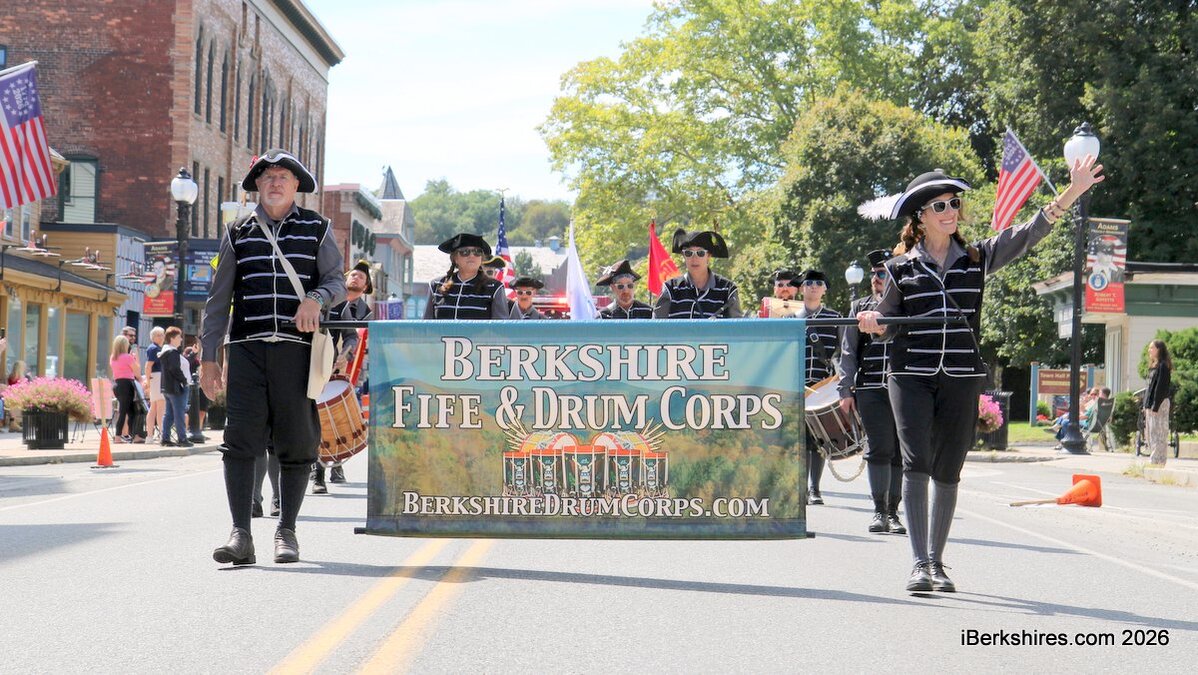
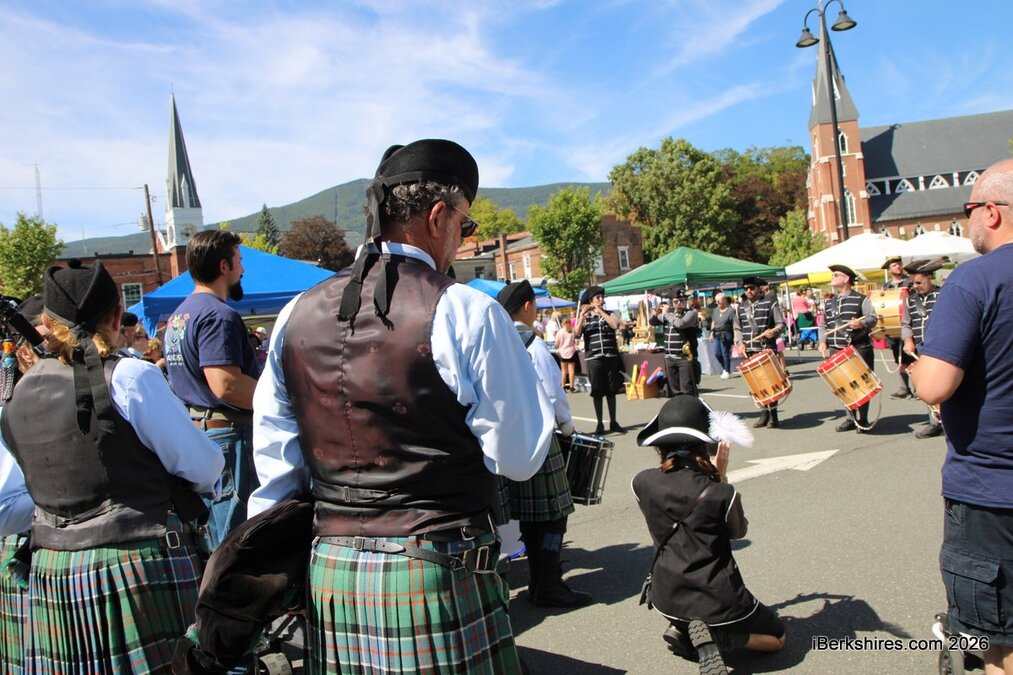
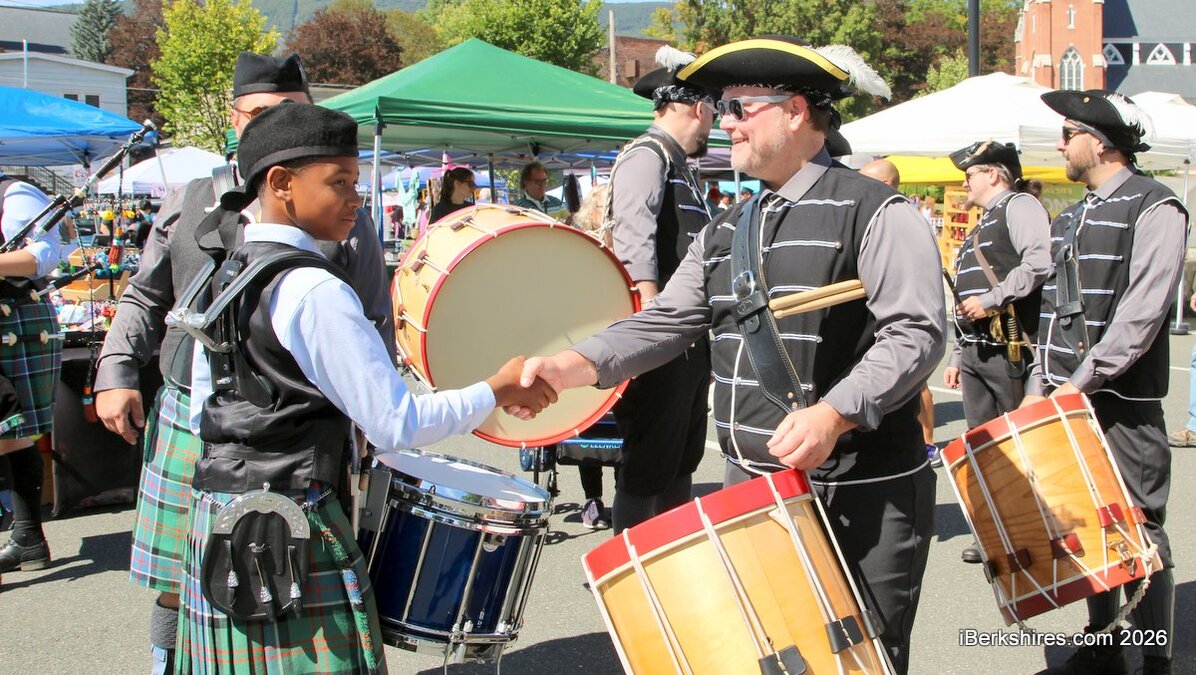
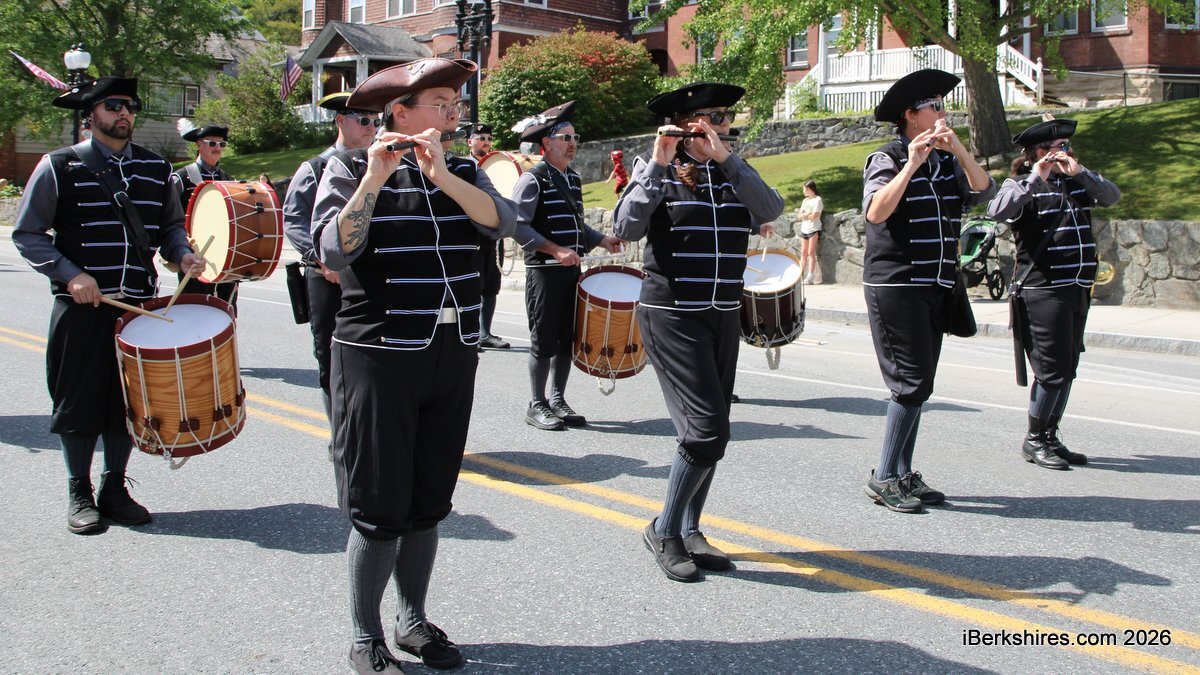
Since then, the group has stayed busy, averaging roughly two performances every month since January. With America's 250th anniversary approaching, Eagle noted a growing demand for traditional ensembles like theirs. They have marched in parades throughout New England and are even scheduled to perform along the Boston Harbor waterfront. A full schedule can be found online.
As a drummer himself, Eagle primarily focuses on teaching percussion, emphasizing that no prior musical experience is required. Members can take the craft as far as they want or simply show up to jam.
During Tuesday's session, Eagle stopped the backing track and pulled out an earplug when he noticed student Barbara May using traditional grip — where the left stick is held underhand—instead of the symmetrical matched grip.
Because May is learning the bass drum, where matched grip is standard, Eagle gently advised her to flip the stick to make things easier on herself.
"If you wake up one day and say you have to play snare drum, I will teach you, but until that day comes, matched grip is the way. You are just going to have a better time," he told her. "But if you want to learn snare one day, I will set you on that path."
During a brief break, student Fran Gardzina, an experienced kit drummer, swapped out his drum pad stand for a heavier-duty rig that could take more of a beating.
Gardzina said going back to basics has made him a better drummer.
"It is very humbling," he said. "Stuff I should have learned in my youth, but it makes you better and translates to a drum kit. It is making me use both hands equally."
May, who is new to drumming but plays guitar, said the challenge of learning the rudiments has been rewarding.
"I always thought, oh, that looks so fun," she said. "I'm slightly dyslexic, and I think this is helping ... It's incredibly basic, but in just like a really good way."
Eagle, who has played in marching bands his entire life and taught percussion at various high schools and universities, comes from the world of contemporary drumline performance.
"High school marching band uses contemporary American drumming, if you're talking about style and culture. This is traditional American drumming," Eagle said. "Certainly, if you are a good marching band drummer, you'll transfer to this easily. It wouldn't work as easily the other way around."
Contemporary drumming expects far more complex movement and multi-tasking, Eagle explained. Traditional drumming is more straightforward — and in that simplicity lies its true beauty.
"We don't really learn field drill in fife and drum. We just do parades. You have to have a much wider skill set to be in the battery or front ensemble of a marching band," he said. "What's beautiful about this style is, yes, you have to have a certain modicum of technical musical understanding, but your list of to-do's is pretty small."
Even when it comes to marching, Eagle said as long as you can find the downbeat, you will do fine.
"Most members of the group march pretty well because, again, it doesn't require the absolute precision and body awareness that marching band does," he said. "It just requires knowing where beat one is and putting your left foot down. Rinse and repeat."
Eagle said they practice marching right inside their mill space, moving outside when the weather cooperates — so don't be alarmed if you spot the ensemble stepping off down Beaver Street.
Repertoire-wise, Berkshire Drum and Fife doesn't play a constantly revolving setlist. Instead, they pull music straight from the history books.
"We're playing charts that have been played for a hundred years or more. The classics. They're awesome," Eagle said. "It's incredible how this music, just made out of five rudiments, is still badass. It still sounds as cool today as it must have a hundred years ago."
Eagle said marching band at the elite level tends to end after college. Drum and fife is forever.
"There is no place to do it. You got college, you got high school. If you go pro, you march DCI," Eagle said, referring to Drum Corps International. "But then you're done at 23, and I did all those things. I taught and I wrote for it. But that's not the same as playing. Fife and drum corps — it doesn't matter what age you are. You can start today. It doesn't matter what you've done or what you haven't done. You can learn it."
While much of rudimentary drum instruction traditionally targets children, Eagle loves working with total novices and believes there should be far more space for adult learners, whether they are complete beginners or lapsed musicians returning to the stick.
"It's great to get kids, and we have a couple of kids who come, but I think adult learners deserve as much of a chance to drum as kids do," Eagle said. "Almost everyone in this group is an adult. They usually have either a little bit of a music background or no musical background at all. Either way, we show them how to do it and let them move at their own pace."
When students feel ready, they can transition into the performing ensemble. Today, the roster stands between 20 and 25 members strong.
As for the future, Eagle has no expectations. But like any true ensemble, he leaves it up to the group.
"It's up to these guys, you know, it's 100 percent up to them. I, of course, am always going to lean toward musical excellence," he said. "That doesn't mean we have to be the best in the world. But at least it means we have to agree on what's good and what's not good. We agree on what good is, and if something's not good, we want to work harder to make that better."
Berkshire Drum and Fife is free and open to anyone. Those interested can sign up on their website. The group meets every Tuesday at the Beaver Mill.
Tags: music,