Arts & Cultural Groups Celebrate Millions in Local Grant Awards
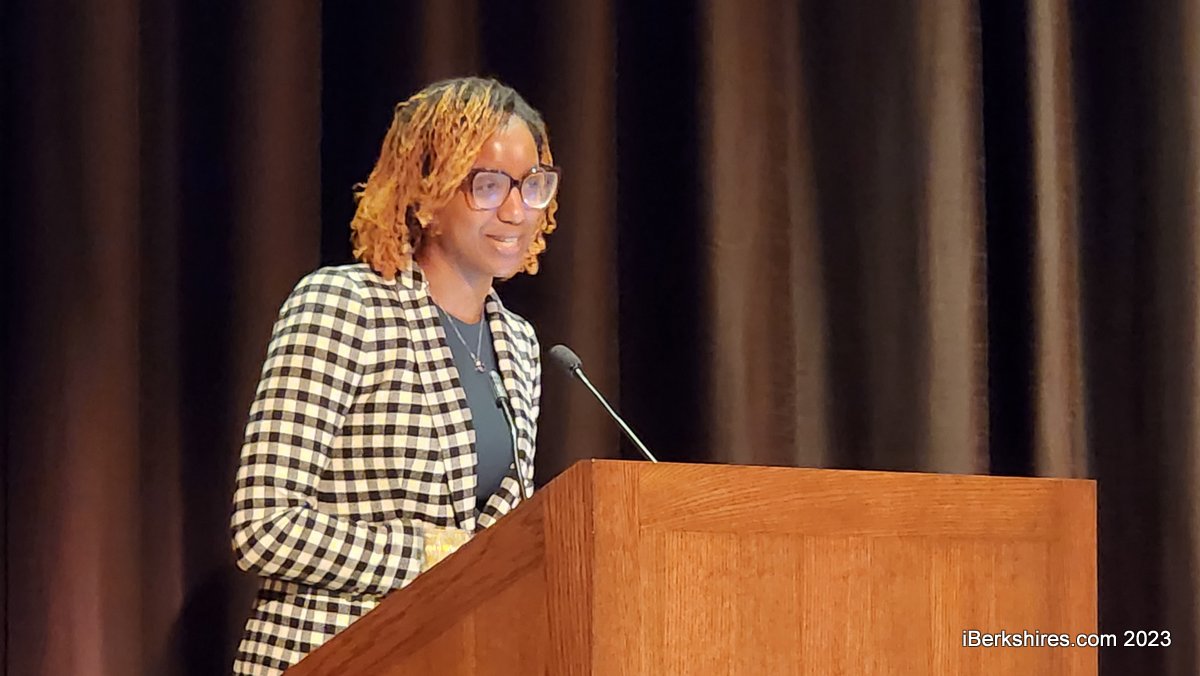
Lyrical Faith, an award-winning poet and educator, performed two of her spoken word poems at the event.
The grants were made through two one-time Cultural Sector Recovery Grant programs — one to assist businesses, organizations and collaboratives and the other artists, creatives and gig workers. More than $51 million was awarded throughout the state; $2.5 million was targeted to humanities organizations and $7 million into the cultural facilities fund.
Berkshire County in particular received $2,186,910 for 72 organizations and $860,000 for 172 individual creatives.
The grants were funded by the Baker administration through the state's American Rescue Plan Act and its surplus revenue.
"We received their 1,359 applications. We were able to fund 1,218 of those organizations who were eligible and Mass Cultural Council awarded more than $31 million to them," Mass Cultural Council Executive Director Michael J. Bobbitt said. "And the thing that excites me is that 42 percent of them are first-time recipients of a Mass Cultural Council awards."
Another 7,593 individual applications were submitted and 4,000 were granted, of which 98 percent were first-time grantees. The individual grants were awarded proportionally according to the number of applications from each region; every eligible organization was funded.
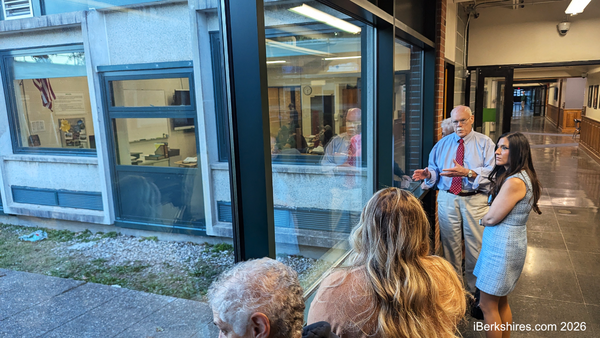
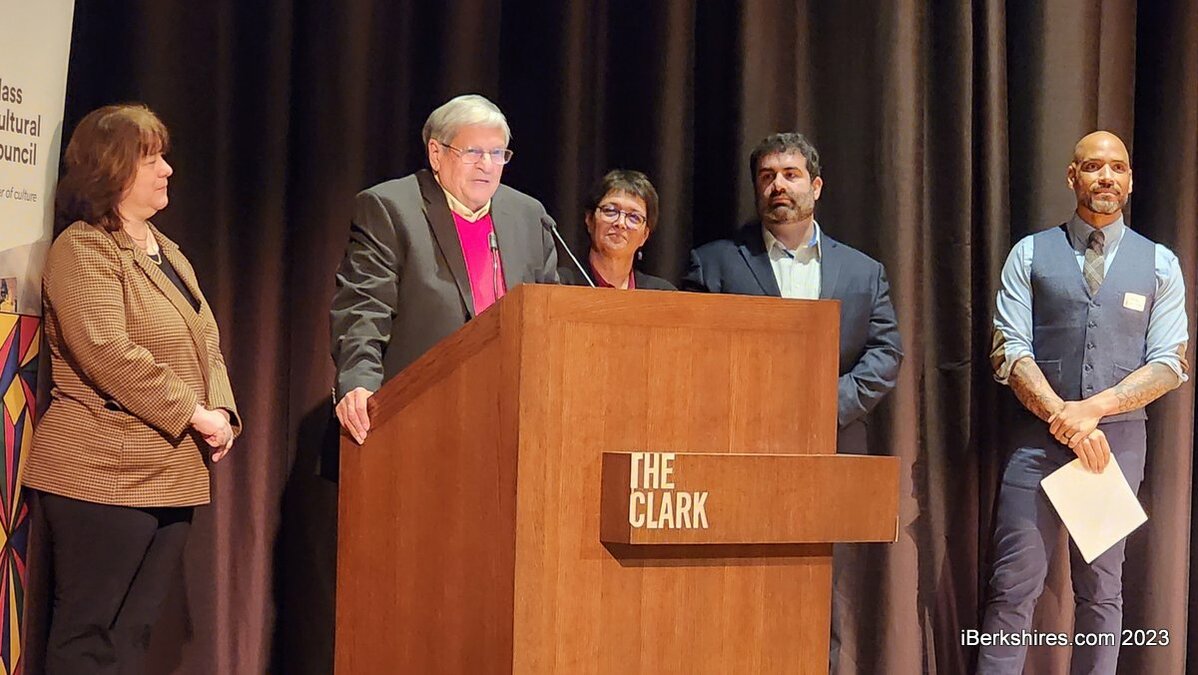
Bobbitt spoke to more than a hundred artists, creatives and organizational representatives who joined officials in the auditorium of the Manton Research Center at the Clark Art Institute to stress the importance of investment into the creative economy, saying it reaps rewards in the long term.
"We in the Berkshire delegation say, invest in arts and culture because that creates more dollars to be able to invest in eradicating homelessness and food insecurity," said state Rep. Tricia Farley-Bouvier. "Ways and Means knows that the Berkshire delegation, in arts and tourism, are force when it comes to advocating for this and they sure do listen."
The announcement also included the chairs of the Joint Committee on Tourism, Arts, and Cultural Development state Sen. Paul Mark and state Rep. Mindy Domb of Amherst, state Rep. John Barrett III, Farley-Bouvier, and Clark Art Director Olivier Meslay, and comments by Mass Cultural Council Governing Council members Jo-Ann Davis and Matthew Keator, Mass Creative Executive Director Emily Ruddock and Mass Humanities Executive Director Brian Boyles.
"Having these awards available today, these grants, every little bit that we're able to do to keep everyone in this room afloat and keep what's special about our commonwealth, especially at our region, and special about the creative sector in the creative economy, is so important," Mark said.
Barrett pointed out that local officials had to work hard to convince Beacon Hill more than 30 years ago that Massachusetts Museum of Contemporary Art would benefit more than just a small segment of the population.
"Finally I said, listen, I'm only a blue-collar mayor from a blue-collar city but I understand one thing — arts and culture is going to be the wave of the future, especially out here in Berkshire County in Western Massachusetts," he said.
The arts and culture have grown to become a significant factor in the state's economic development as manufacturing had declined.
"The Massachusetts creative and cultural sector is a $27.2 billion industry representative for 4.3 percent of the state's GDP and 135,181 jobs," said Bobbitt. "That makes us one of the top three sectors contributing to the state's economy."
The pandemic had a devastating impact on the arts as performances were canceled, museums closed and small and large venues struggled to adapt. It's been estimated the state took a $4.6 billion hit in lost revenue and nearly two-thirds of those who lost jobs were involved in the creative economy.
For Richard Michelson, the grants meant $75,000 for repairs to the roof on his R. Michelson Galleries, the largest commercial art gallery in the region hosted in a former bank in Northampton. The children's book author and illustrator had considered throwing in the towel after repairs to the 1913 marble edifice climbed to more than $250,000.
"I was telling Michael, that you know, after 44 years, putting all this money into it, I don't know I'm just getting a little tired. I was thinking of maybe selling the building. let somebody else deal with the issues," he said.
But Bobbitt kept after him to apply for that grant and a second one for his poetry. In fact, Bobbitt kept after every artist he met: the result was that some 98 percent of the applicants for $20 million in individual awards were first-time grantees.
Ruddock, director of Mass Creative, highlighted the governor's budget that has $25 million for the Cultural Council, a 23 percent increase over the former governor's highest recommendation. She lauded it as new leadership "to meet the perennial and steadfast advocacy" of the Legislature, particularly the Berkshire delegation.
"We all work together to make sure that when our legislators go in for those meetings with leadership, and their leadership says what are your priorities are about, our elected officials can say in my district, this is a top priority," she said. "This is what my constituents care most about. And that is because of all of you, so thank you for that."
Tags: creative economy, Mass Cultural Council, state grant,