Municipal Services Could Be Solution to Limited, Unreliable Internet
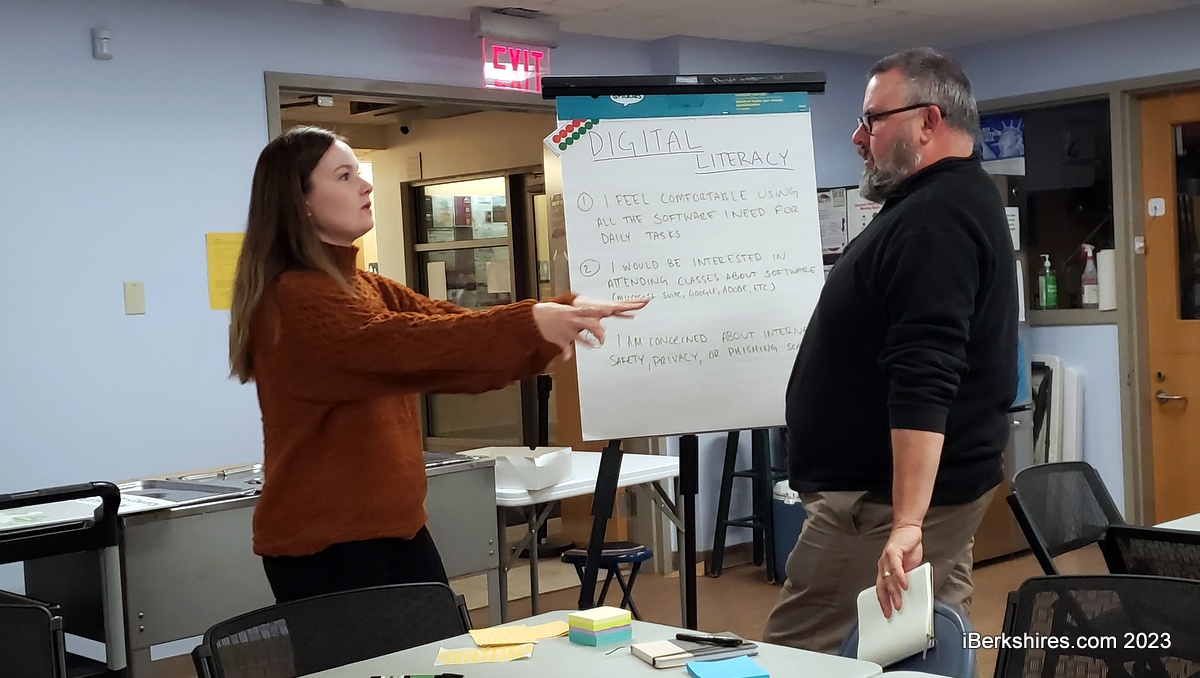
Attendees also looked at digital literacy and devices.
That was the download from Tuesday's Digital Equity Plan meeting held at the Adams Visitors Center.
"We don't have the providers, we don't have the service," said Superintendent James Brosnan of the Northern Berkshire Vocational Regional district, adding it made the lack of devices a moot point. "We can reduce this down to a simple process to MBI, to telecommunications, to all the other experts: Get the service to us. The rest is easy."
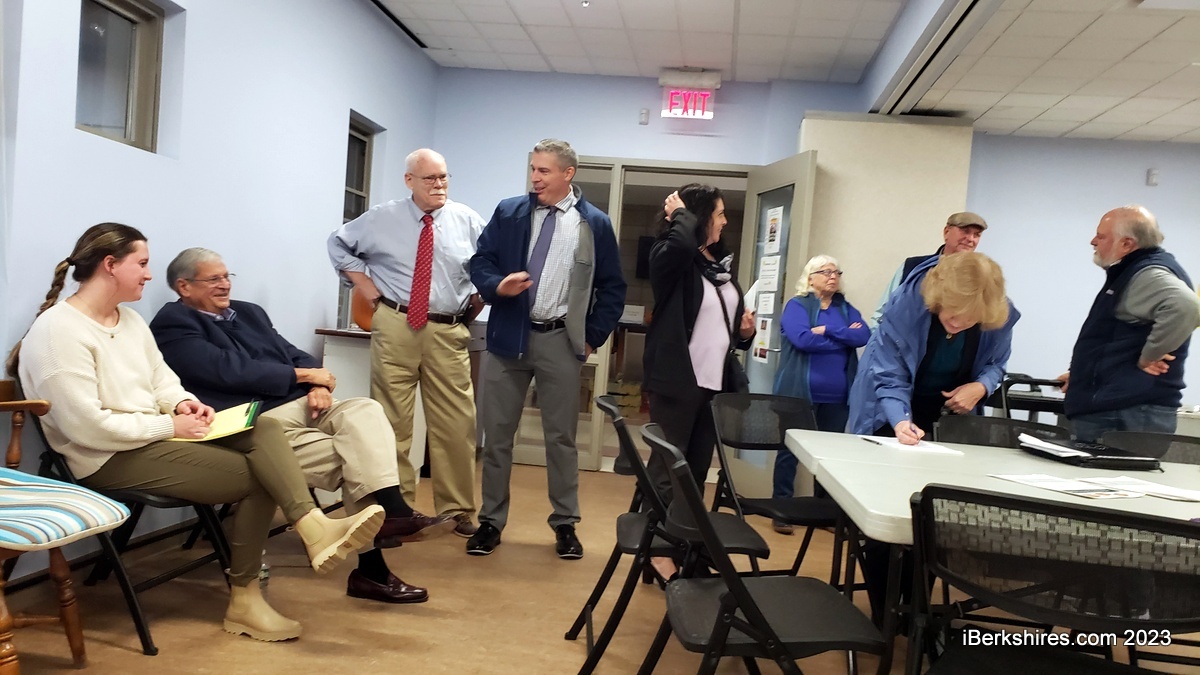
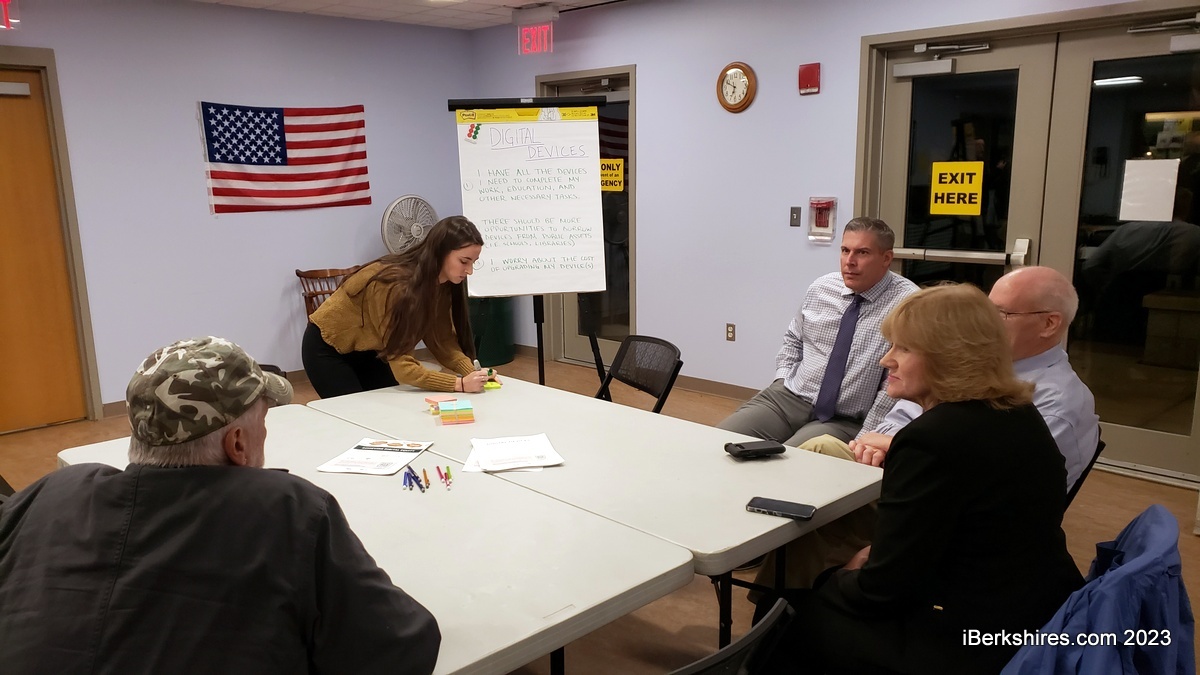
This first public meeting for North Berkshire plan for communities Adams, Cheshire, Florida, Lanesborough and North Adams included a presentation on current data and feedback on the key topics of broadband access, digital devices and digital literacy.
"We know there's some big gaps in rural areas and how folks use technology and their level of knowledge in terms of accessing the internet and accessing devices on the internet," said Eammon Coughlin, Adams' community development director. "We know there's the need to address this through this planning process."
The Northern Berkshire digital equity plan is being sponsored by the Massachusetts Broadband Institute, which selected Vanasse Hangen Brustlin to perform the equity analysis and outreach activities. Similar planning is underway in Central and South County.
VHB will help guide the region in decision-making investments and prepare the region to apply for funding. Berkshire Regional Planning Commission would be working in the next phase to identify private and nonprofit partners who could invest in the project.
It is also highlighting some new programs including the federal Affordable Connectivity Program for eligible residents who can save up to $30 a month on internet service.
The attendees were largely made up of local officials, including state Rep. John Barrett III, Adams Selectwoman Christine Hoyt, Superintendents Barbara Malkas of North Adams, Aaron Dean of Hoosac Valley Regional and Brosnan.
This was the first public meeting on the plan but the VHB consulting team started about two months ago in talks with the plan's steering committee and other stakeholders.
"We're going to be crafting the report but it's really going to be written around the goals," said VHB's Luke Mitchell. "You want to have a good amount of goals to cover your bases you don't want to have so many goals that it becomes distracting like white noise."
The main goal the attendees focused on at the start was the lack of fast, reliable internet access for parts of the county because of the paucity of providers. Brosnan described the town of Florida as having 19th-century technology because of its struggles to get internet.
Mitchell said VHB could help shape a plan for municipal broadband but Barrett said MBI has been a hindrance in achieving internet access for the region.
"We've gotten lip service for the last 10 years out here," he said.
"The MBI denied us getting money when all the communities got together and asked to form and hire consultants at that time — this was back six or seven years — to form their own [provider]. Why? Because they wanted to protect their own little fiefdom."
The state had spent millions on getting internet and last-mile service that largely went to utilities, Barrett said, while consumers still had unreliable and limited service. Spectrum is the main provider and T-Mobile doesn't offer service in most communities. He'd twice had to call and prod the telecommunications company to hook up the new Cheshire town hall and Hoosac Valley Regional offices.
"I don't know what the answer is, and we I can't get MBI to give me an answer," the representative said. "I don't want any more consultants ... I don't want to see more money spent on this. I don't want to see $147 million basically go to consultants and nothing happening in the community because that's what we've been facing for a long time."
Daniel Bosley, former state representative, said he'd encouraged the county commissioners to set up municipal light plants after electric utilities were restructured in 1997. Cape Cod had done so successfully.
"You can run your own system. Municipal light plants run their own systems and their prices are lower than then we have with our electric utilities," he said. "The same thing should be happening with broadband."
Providers are going where the profit centers are, Bosley continued, and that's leaving kids like some of Brosnan's students without the same resources as their peers.
"That's what frustrates us and the only way we're going to change that is with the municipal system," he said. "I mean, it needs to be done locally with people that care about local. And quite frankly, I don't care about Western Mass. I care about Berkshire County."
The so-called digital divide leaves behind marginalized populations, low-income residents, the elderly, disabled and rural residents because of limited access, lack of skills or training, cost for internet and devices, privacy concerns, language barriers and fear or shame.
The attendees discussed some of these other aspects and goals for alleviating them.
Berkshire United Way President and CEO Thomas Bernard said he came away most interested and concerned about digital literary skills.
"The best, fastest, most reliable network in the world, and devices to access it are ultimately wasted unless we pay equal attention to, and invest proportionally in, digital literacy," he said. "This is important for learners at every level, employers looking to start or expand businesses, informed and engaged participation in civic life, and so much more.
"The challenge as this work proceeds is to ensure all dimensions of digital equity remain in the mix."
The VHB team will be attending the next Coffee in the Court, held in the Armory Court on Park Street. Some tabling events will also be held as well as another public meeting probably in December.
Tags: Internet,