Two Berkshire Beaches Closed, One for Bacterial Exceedance
 PITTSFIELD, Mass. — Two Berkshire beaches are closed for swimming ahead of the Fourth of July weekend.
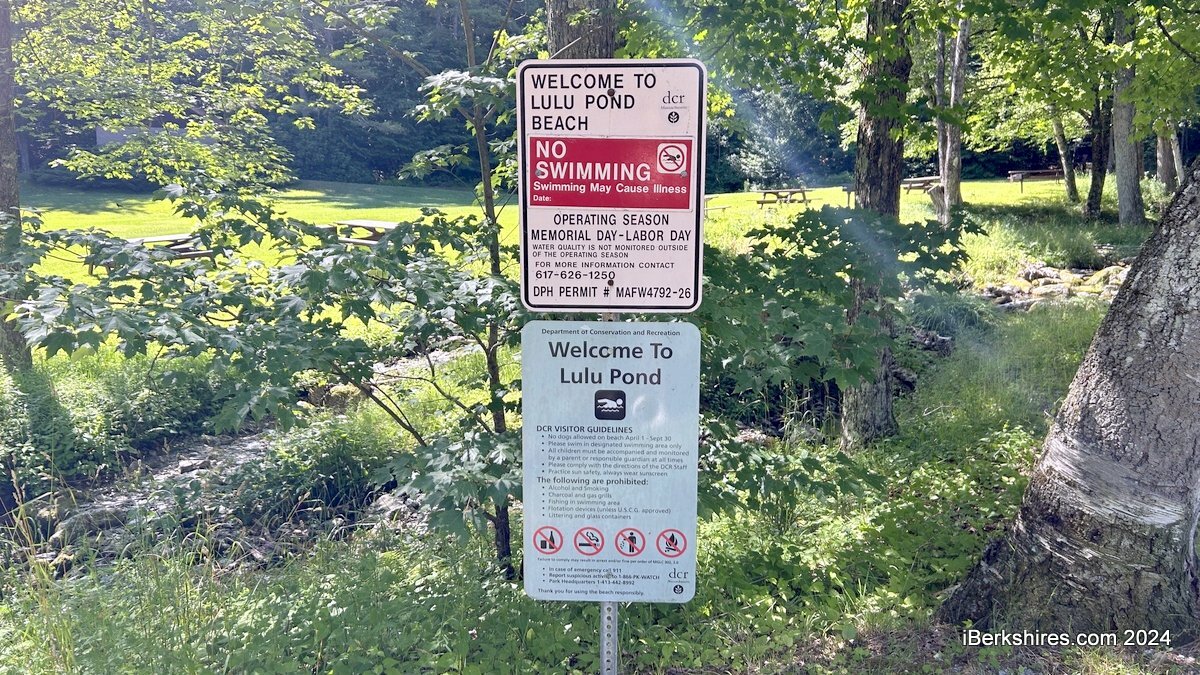
Lulu Pond in the Pittsfield State Forest had a bacterial exceedance and Lake Mansfield in Great Barrington is closed for "other" reasons. While the waterbodies are closed for swimming, other recreational activities are allowed.
On June 24, Lulu Pond had 488.4 colony-forming units per 100 milliliters of Enterococci bacteria, dramatically higher than the threshold of 61 cfu/100 ml for freshwater beaches. The number had risen from 2 cfu/100 ml on June 17, closing the beach.
On July 1, the pond had 204.6 cfu/100 ml.
"Enterococci bacteria are a type of indicator organism found in the intestines of warm-blooded animals and humans and are often associated with fecal contamination. Pathogens in the water are difficult to measure directly, so indicator organisms are used to predict the presence of pathogens associated with fecal contamination," a representative from the Massachusetts Department of Public Health wrote in a request for more information.
"The bacteria used as indicator organisms to test the waters at beaches are Enterococci and E. coli. Marine beaches are tested for the presence of Enterococci. Freshwater beaches are tested either for the presence of E. coli or Enterococci."
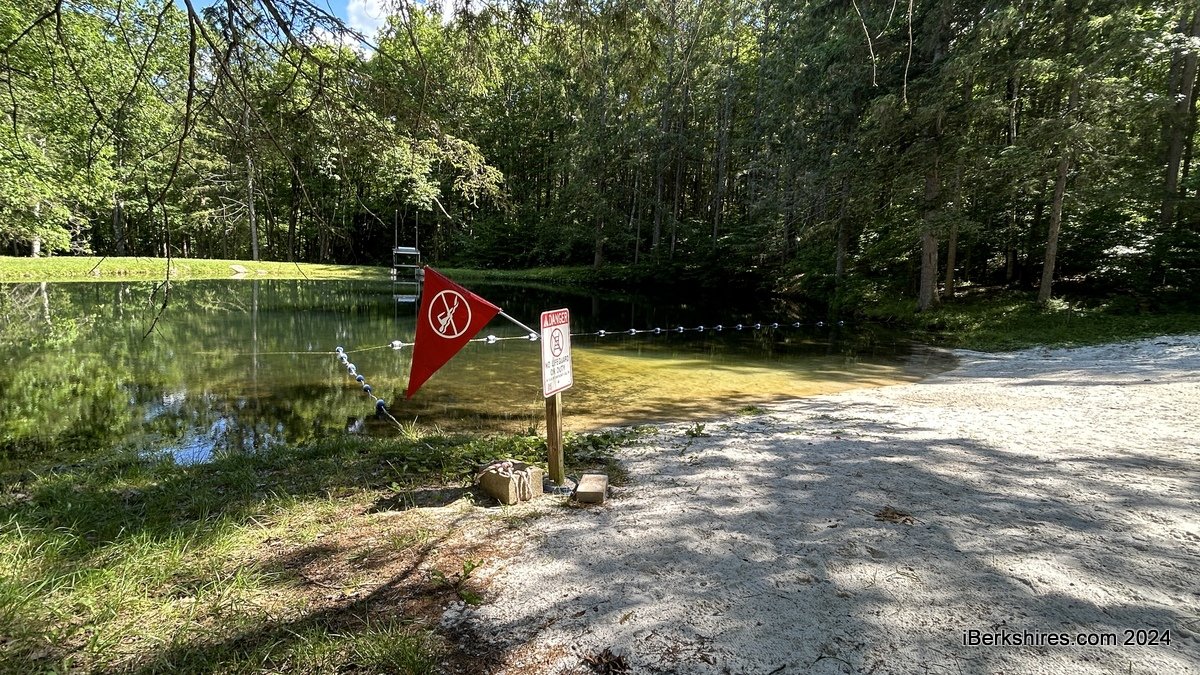
A flag warning visitors not to enter the water sways at the shore in addition to signage warning that "swimming may cause illness."
Water is considered unsafe for swimming at a majority of beaches in Massachusetts when there are two consecutive exceedances and beaches with a history of multi-day exceedances are required to post after just one.
Lake Mansfield is closed for "other" reasons, which can include non-bacteria-related issues such as storm damage, water clarity/visibility issues, repairs, etc. This is determined by local authorities and can be unrelated to water testing.
"For the beaches currently closed due to 'other' reasons, these reasons include missed sampling/testing, flooding at the beach, road maintenance, and unstable access route to the beach," MDPH reported.
There are currently more than 30 closures statewide.
York Lake Beach in New Marlborough was closed for an exceedance of the Enterococci on June 24 at 209.8 cfu/100 ml, but opened on July 1 when that dropped to 11.9 cfu/100 ml.
"Beaches closed to swimming due to high bacterial levels can reopen once a test result shows bacteria levels below DPH standards," MDPH explained.
"While the testing frequency at swimming beaches in Massachusetts varies from beach to beach, beach operators often elect to test the water the day following a high bacterial result or beach closure, rather than wait for the next scheduled test."
The numbers and timing of beach closures can fluctuate dramatically based on rainfall and environmental conditions. On July 10, 2023, there were 53 beach closures in Massachusetts and at the same time in 2022, there were 40 beach closures. On July 2, there were 42 beach closures.
Swimming in unsafe waters can cause gastrointestinal symptoms (nausea, vomiting, diarrhea, and abdominal pain,) respiratory symptoms (sore throat, cough, runny nose, and sneezing,) dermatological symptoms (skin rash and itching,) eye and ear symptoms (irritation, earache, itching,) and flu-like symptoms (fever and chills.)
While most are minor, serious illnesses can occasionally occur and children, seniors, and those with compromised immune systems are at a greater risk. The public is encouraged to contact a health care provider if they swim at a closed beach and feel sick.
"A beach posting does not mean that a person cannot go to a beach, or that a posting prevents anyone from entering onto a beach. If a beach is posted, it simply means swimming is not allowed," MDPH clarified.
"There are plenty of safe recreational activities people can still do at the beach that don’t involve contact with the water, including walking along the shore; sunbathing; collecting seashells/sea glass; and playing sports such as paddleball, volleyball, football, frisbee, etc."
More on Enterococci:
At marine beaches, the accepted level of Enterococci for a single sample is 104 colony-forming units per 100 milliliters (cfu/100 ml) of water or below.
At freshwater beaches, the accepted level of Enterococci for a single sample is 61 cfu/100 ml or below. The freshwater limit is stricter because elevated levels of bacteria within a smaller body of water (such as a lake versus the open ocean) can pose higher risks of illness. Freshwater beaches can also be tested for E. coli instead of Enterococci. The accepted level of E. coli for a single sample is 235 cfu/100 ml of water or below.
MDPH also has a limit for the last 5 test results at a beach known as the geometric mean, or geomean for short. The geomean is intended to reflect water quality found during a previous time frame (typically a month). At marine beaches, the geomean for Enterococci is 35 cfu/100 ml. At freshwater beaches, the geomean for E. coli is 126 cfu/100 ml and the geomean for Enterococci is 33 cfu/100 ml.
The test results for individual beaches can be found on the MDPH's Interactive Beach Water Quality Dashboard. DPH beach closures are updated daily and beach closure data from previous years are summarized in DPH's Annual Beach Reports.
Tags: contamination, lakes, ponds,