Opioid Summit Highlights Collaboration, Stigma Breaking
PITTSFIELD, Mass. — Combating the opioid crisis depends on collaboration and smashing the stigma around substance use disorder, local agencies say.
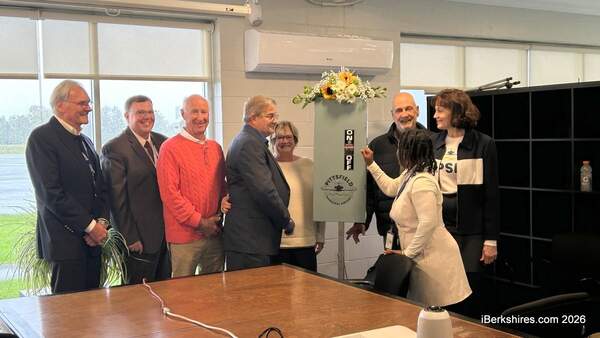
The Berkshire County District Attorney's Office held a summit at the Berkshire Innovation Center on Monday titled "Breaking Barriers to Support Recovery, Re-Entry and Reduce Recidivism."
Law enforcement, health care, and community service agency professionals attended the summit to connect and discuss paths forward.
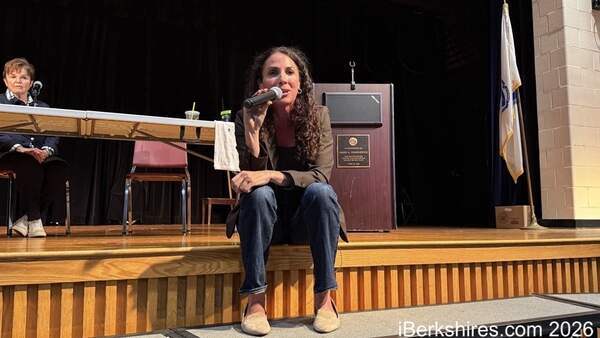
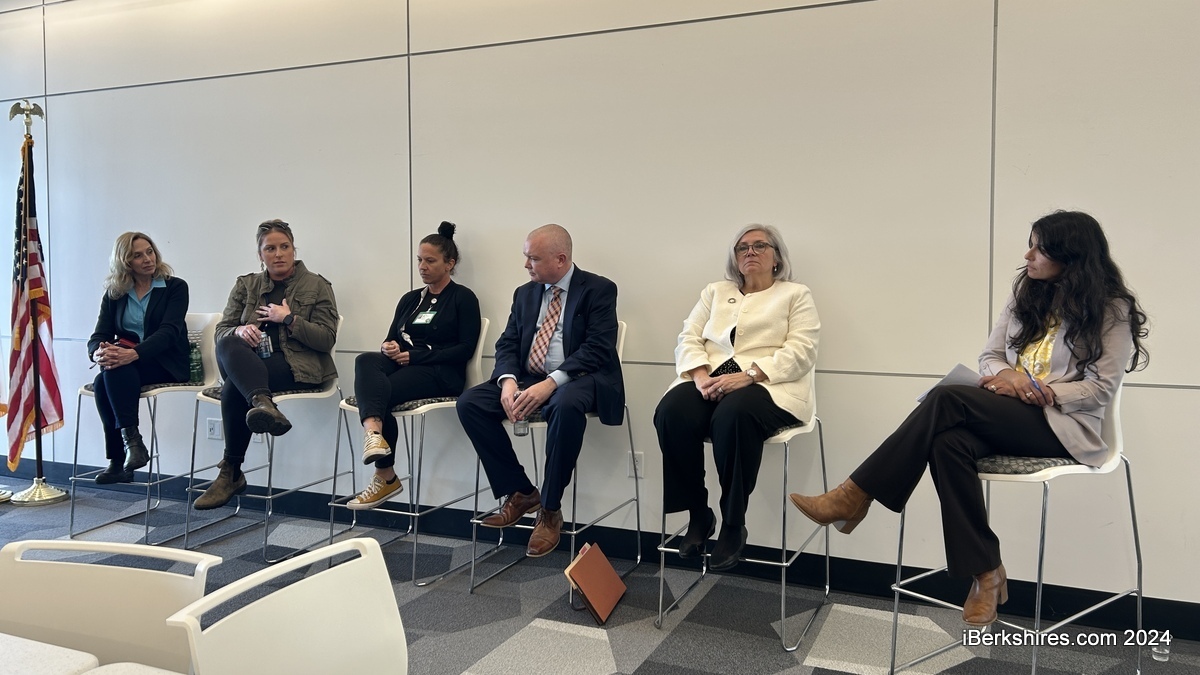
"I think for Berkshire Harm Reduction, our biggest thing really is keeping people alive and keeping people safe," Director Sarah DeJesus said during a panel discussion.
"And keeping Narcan in the community."
During the conversation moderated by Celia Norcross, dean of students at Berkshire Community College, panel members were queried on their agency's response to the opioid crisis and what the community can do to create, sustain, and strengthen cross-sector partnerships in the Berkshires.
Second Assistant District Attorney Kelly Mulcahy Kemp explained that the district court, where she works, is focused on treatment. This has taken the better part of her 40-year career.
"We never thought about treatment really when I was a young prosecutor but we have come to this understanding as we look to the roots of recidivism," she said.
"Even as a young prosecutor, a domestic violence prosecutor, I was concerned about recidivism. How do we stop the cycle? And it's through that work that I came to recognize the significance that substance use disorder plays in a lot of the folks that we see every single day. Not just defendants. Victims, family members, others in the community that interact with the person that suffers with a substance use disorder."
She trains assistant DAs to look for treatment options available for people when they come through the courts, explaining that her job isn't so much about punishment but jail will be recommended when appropriate and necessary.
Second Street Second Chances Executive Director Lindsay Cornwall explained that her program relies on community partnerships. Located in the former jail on Second Street, it works with formerly incarcerated people and inmates before release from the Berkshire County Jail and House of Correction and the women's correctional center in Chicopee.
Second Streets is able to offer wraparound services through its connections with local agencies, including support for substance abuse disorder, mental health, housing, and workforce readiness.
"Just because I'm referring to somebody else, just because someone else is getting a piece of the pie, the piece of the puzzle doesn't mean it's taking anything away from me and so I think looking at looking at it like that, our organization wouldn't exist without community collaboration," she said.
"And when we created Second Street, we deliberately said, 'We don't want to create a 501(c)3. Other agencies are already doing similar work. We're going to refer out.'"
He added that the organization has services come in and do what they're experts at doing so that services aren't duplicated.
"I think there's a recurring theme that keeps coming up as far as collaboration, community, connection, working together and I think that the big part of it is working together. If we ask a lot of people in this room whether it's detox, law enforcement, the justice system, anywhere, I think a lot of us have felt like it's a revolving door," DeJesus said.
"We see the same people over and over again and sometimes we feel like we're just on this wheel like we're not getting anywhere and so to me, that's our treatment system failing. That's not people failing the treatment system. So the ability and the willingness to be able to think outside the box and keep that forward momentum of alternative routes for people and working together is going to have alternative outcomes for us."
She feels that BHR has made progress in reducing the stigma behind substance abuse disorder — partly due to conversations like these.
Cornwall added that formerly incarcerated individuals' records impede their success when trying to find housing or a job and sometimes all it takes is giving that person a chance. She stressed the importance of treating them as equal community members.
.
"These are people returning to our community. They're our brothers, our sisters, our neighbors. They live in the same neighborhoods as we do. Their kids might go to school with your kids," she said.
"And so when we start looking at people like that and not placing that judgment and that stigma on them just because it's something they did 20 years ago. They might have done time for it already and then they continue to live with it and face it for however many more years after that and so just looking at people a little bit differently and not placing labels and judgment and breaking down the stigmas."
The Brien Center' medical director, Dr. Jennifer Michaels, said peer support has been recognized as a powerful resource in the last decade and that the agency now has three peer-led community centers in the county.
"I think you have to destigmatize the disease to trust the people, that they can be experts and help other people. So that's one thing," she said.
"And I think medication, historically was extremely stigmatized and unaccepted and it would be okay to say 'We're abstinence-based, no thank you, we don't do that stuff here,' Or it would be perfectly OK for people to say, 'When are you getting off that stuff?' and it's shifting now because I think we're disseminating knowledge evidence-based outcomes and that has to do with stigma, too."
Defense counsel Michael Coyle said "We need more beds," pointing out that if a person does a 90-day jail sentence rather than spending that time in treatment, they are likely to re-offend.
"It's great that there's support in the community but come wintertime, I'm going to have clients who just can't get a bed and that's the No. 1 problem that plagues the defense bar," the attorney explained.
"If we can throw more resources at that, get more programs started. There really needs to be more government intervention in this."
DA Timothy Shugrue was proud to see around 84 people participating in the summit. To attack the opioid crisis, he feels that it needs to be addressed at the personal use level and the distribution level.
"We're dealing with the narcotics in the opioid, say, crisis on two different levels. One, we're attacking the high-level drug dealers that are not addicts, that are coming into our community. We're prosecuting them, getting them off the streets, and we're trying to cut the supply off," he said.
"But we also have to deal with the addiction level, the substance abuse disorder that exists on a lower level, and trying to get people off this so that there's not a need for the drug dealers to come here."
Since taking office last year, he has noticed the need to get everyone in the same room to work towards the same common goal.
Shugrue worked in private practice before his election as the district attorney and saw a magnitude of success stories.
"We can have that happen here but they need medication, they need the tools, they need peer support, they need recovery," he said.
"And in order to do that, to get people off drugs, all those services which are available, they need those services. I always want to make sure A gets to point B."
The event also included presentations from the Brien Center and Berkshire Harm Reduction and a keynote address from Judge Charles W. Groce III.
Tags: drug abuse, drug treatment, substance abuse,