Menorah Lighting Begins 8 Days of Hanukkah, Thoughts of Gratitude

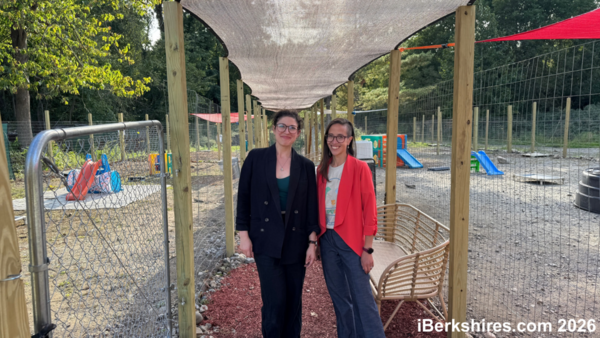
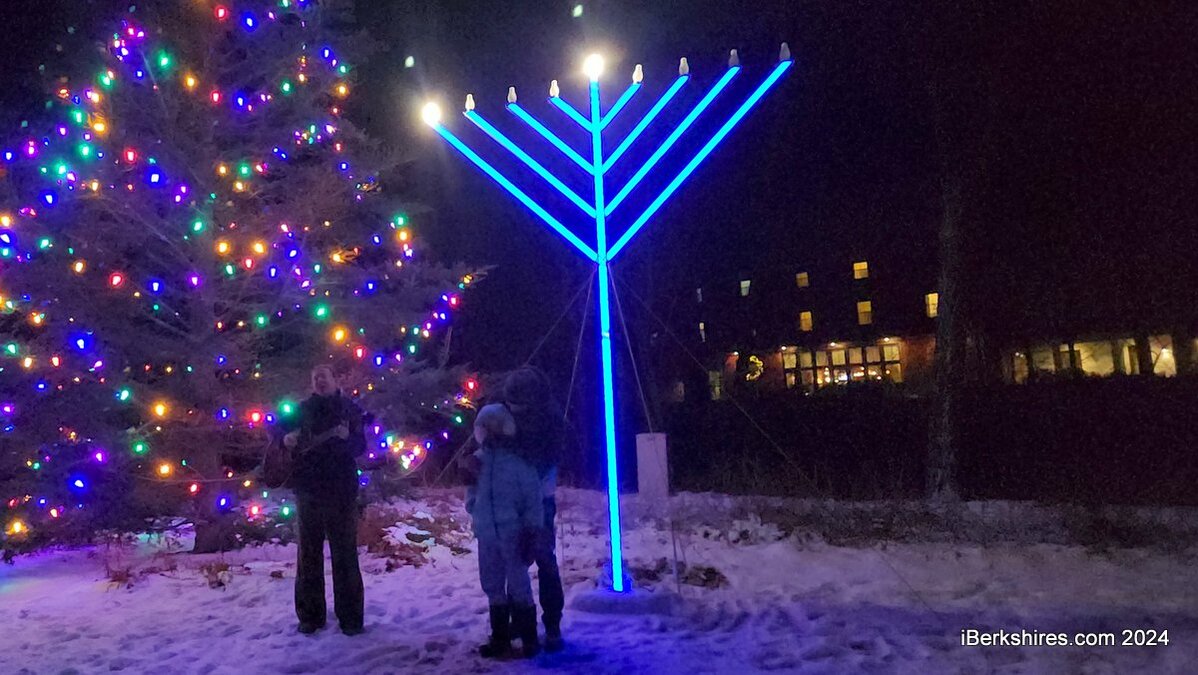
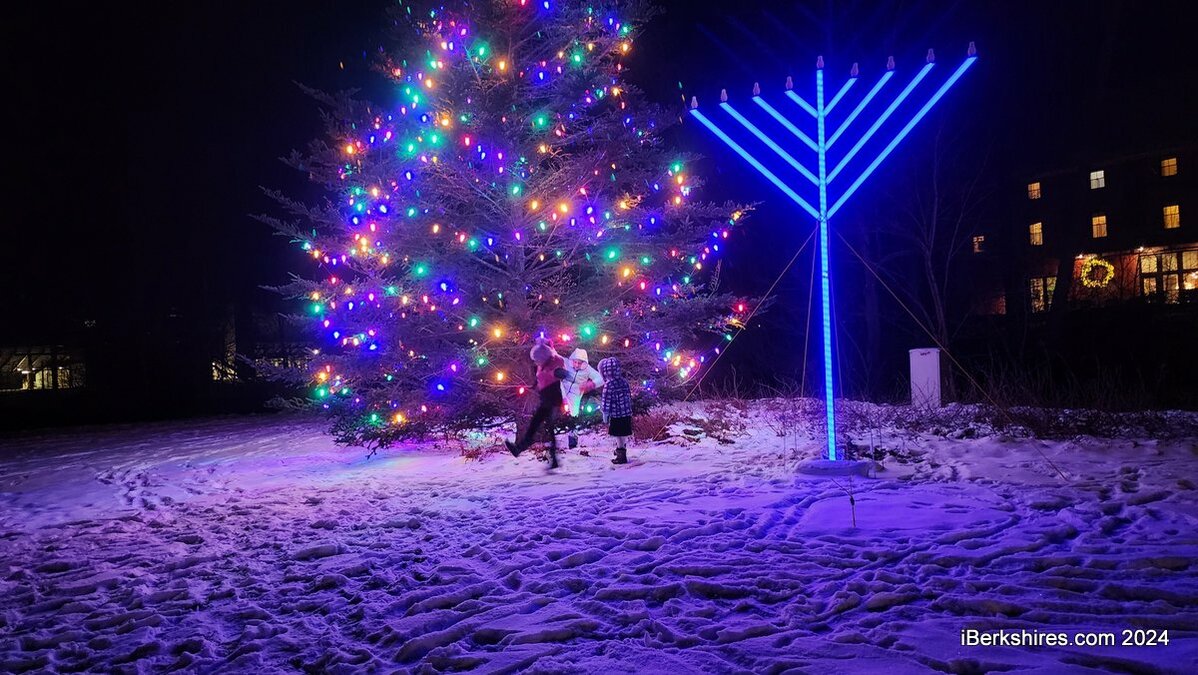
Mia Wax gets some helping light as she works the controls. The full ceremony can be seen on iBerkshires' Facebook page.
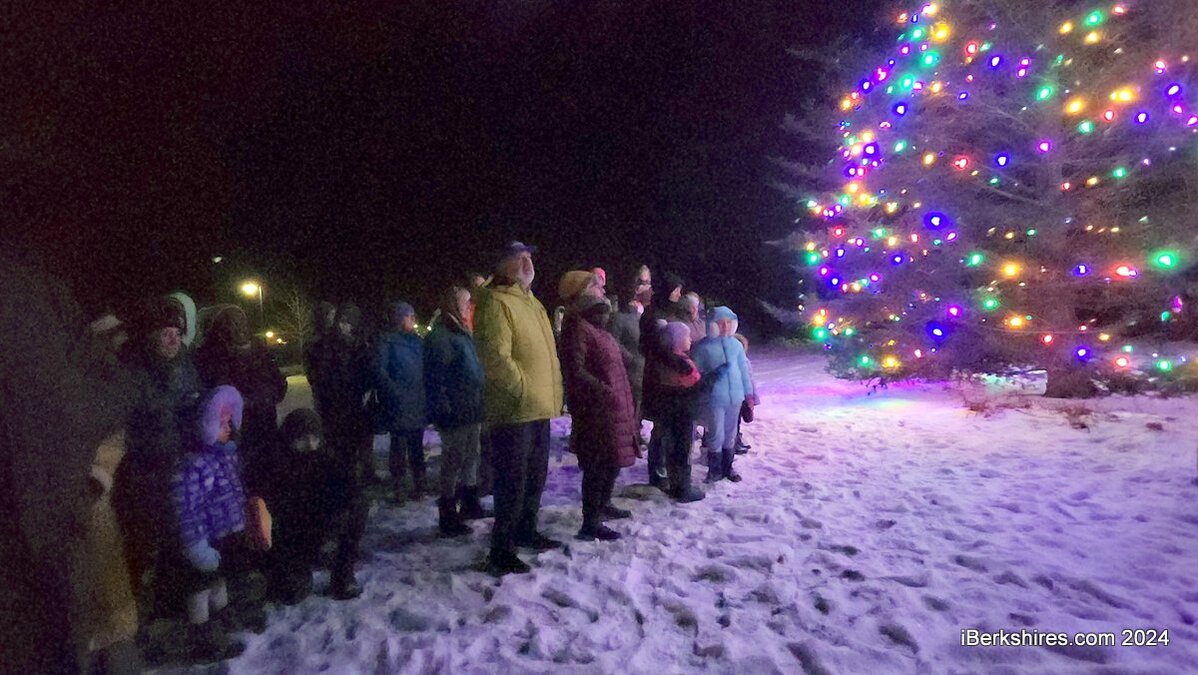
Around 40 people attended the community lighting for the first night of Hanukkah, which fell this year on the same day as Christmas. They gathered in the snow around the glowing blue electric menorah even as the temperature hovered around 12 degrees.
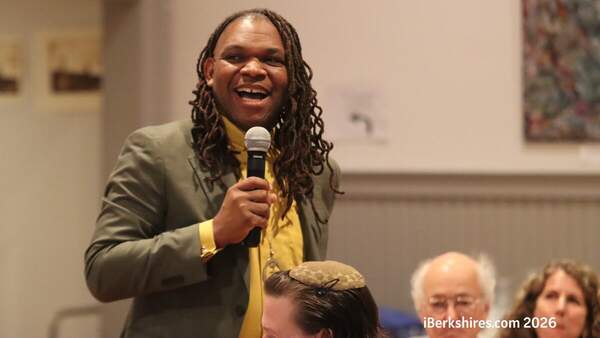
"We had a small but dedicated group in North Adams, so this is unbelievable," said Rabbi Rachel Barenblat of Congregation Beth Israel in North Adams. "This is honestly unbelievable."
Barenblat had earlier observed the lighting of the city's menorah in City Hall, which the mayor opened briefly for the ceremony.
In Williamstown, Rabbi Seth Wax, the Jewish chaplain at Williams College, with his daughter and her friend Rebecca Doret, spoke of the reasons for celebrating Hanukkah, sometimes referred to as the Festival of Lights.
The two common ones, he said, are to mark the single unit of sacred olive oil that lasted eight days during the rededication of the temple in Jerusalem and the military victory over the invading Greeks.
"For the rabbis of antiquity, who created and shaped Judaism, these two events were considered to be miracles," said Wax. "They happened not because of what humans did on their own, but because of what something beyond them, what they called God, did on their behalf.
"And so when they spoke about the about Hanukkah in Jewish prayers, in the liturgy, we do it through the lens of gratitude, a special prayer for Hanukkah that occurs in the daily prayers occurs in the section where we express gratitude for what we receive."
Gratitude "is a really wonderful thing," he said, noting parents teach their children to be grateful and say thank you. Others might have gratitude journals in which the list the things each day for which they grateful.
"We know that having practices of gratitude can help us feel more calm, more connected and more at peace," Wax said. A Ukrainian teacher from the late 18th century, Rabbi Nachman of Breslov, he continued, "taught that the gratitude that we cultivate on Hanukkah helps us nurture a yearning in our hearts for the world to come for a more perfect world."
When the world becomes perfect, then the only thing people can offer each other is gratitude.
"So in this light, gratitude is messianic — to tie in with another holiday that many of us are celebrating today," Wax said, standing in the light of the adjacent Christmas tree, "it's not just about what we receive or what we have in this world. Rather, gratitude opens a doorway into what could be.
"So as we celebrate this first night of Hanukkah, when the world so often feels broken, want to bless all of us with the capacity for gratitude, for the strength to practice gratitude for what we have received, to be nurtured by it, to be strengthened by it, knowing that feeling and expressing it is not self centered, but rather they can open us up to the possibility of what might be, to dream, to imagine what a perfected world might be."
Then Mia was placed on her father's shoulders to reach the controls lighting the shamash, the central higher candle used to light the other eight, and the first candle. One candle will be lighted each evening in the hannukiah to represent the eight nights the oil burned. The holiday will end on Jan. 2
Barenblat explained that, facing the menorah, the candles are placed from right to left, then lighted from left to right (actual candles would be replaced each night); however, from the street, the lights would go from left to right.
"So this might look backwards to you, but it looks frontwards to me, which I think is some kind of deep teaching about, you know, different points of view," she said.
The gathering agreed that one song was enough in the frigid cold and they sang "Oh Hannukah" as Barenblat accompanied them on the guitar.
Tags: hanukkah, religious event,