Concerns Over PFAS Spark Sewage Debate in Williamstown
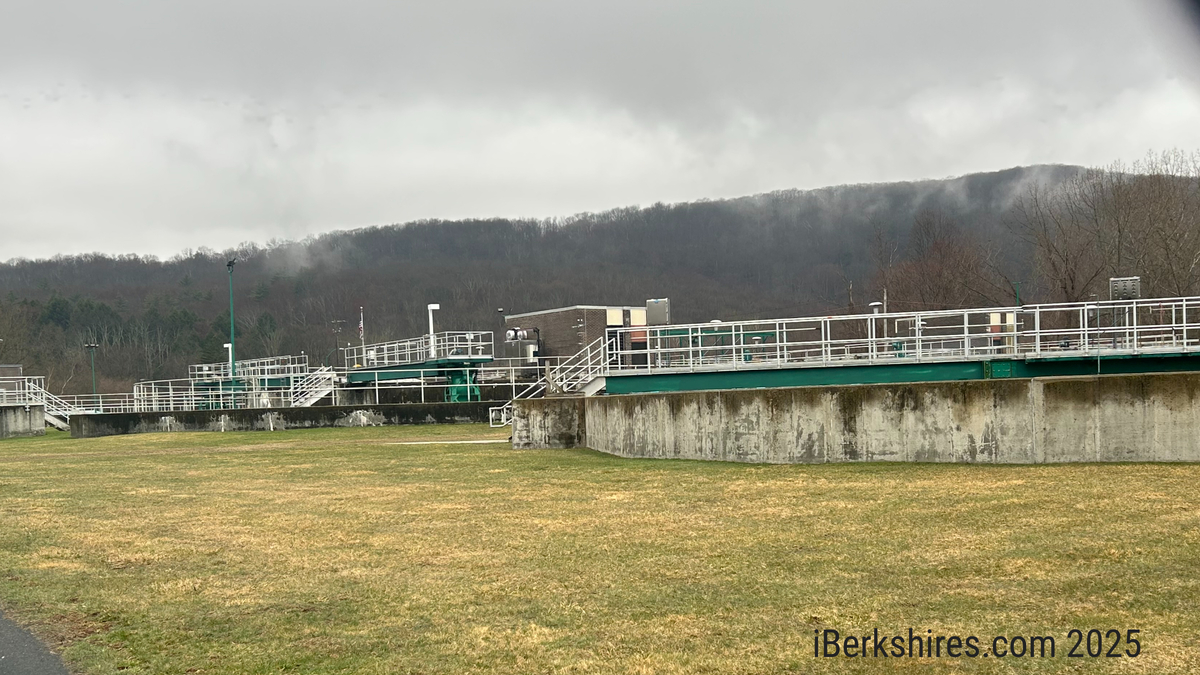
The composting facility at the intermunicipal wastewater plant is operating at about two-thirds capacity.
Out of 15 fiscal articles on the warrant for the annual town meeting in May, the board last Monday voted to recommend passage of 14.
It delayed its decision on Article 5, which concerns the budget for the sewer department, more specifically the town's share of operating costs for the Hoosac Water Quality District.
Some members of the community, including a member of the Select Board, say the district is choosing a course of action that is at odds with the environmental principles that the town espouses.
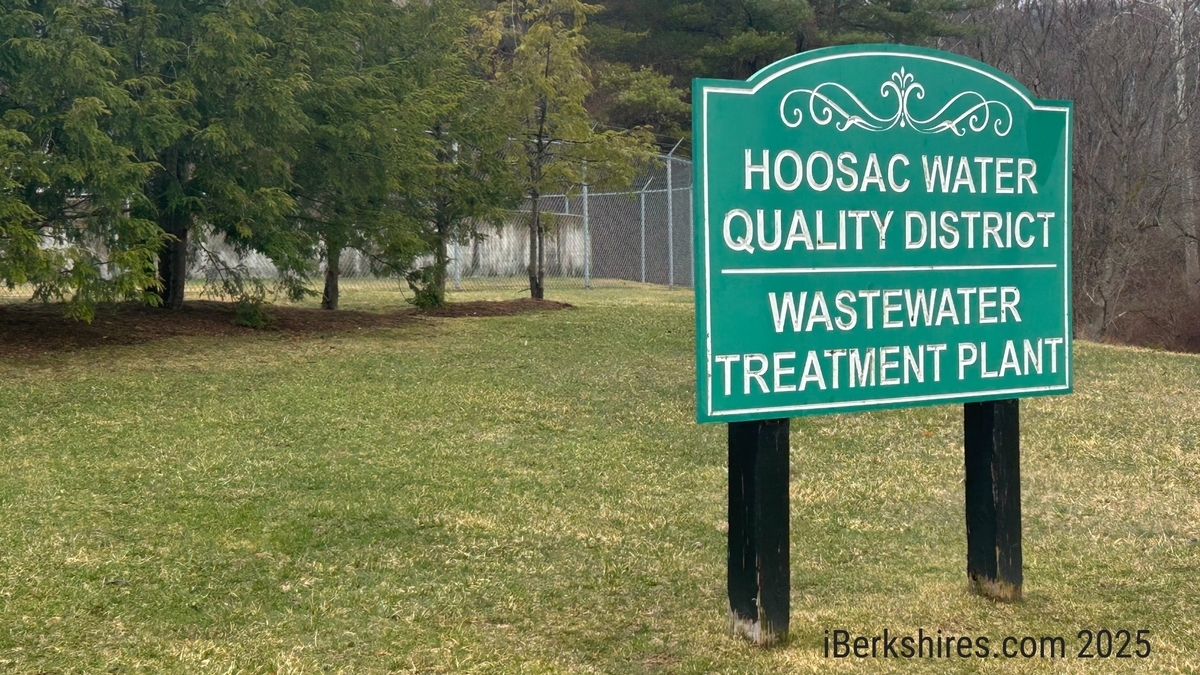
The HWQD is a 55-year-old intermunicipal entity shared by Williamstown and the city of North Adams.
Residents of both communities on public sewer service send their wastewater to a treatment facility in Williamstown off Simonds Road (Route 7).
The facility cleans and treats the wastewater and discharges it into the nearby Hoosic River.
Like all other municipal services, costs are rising, but the HWQD sent Williamstown voters a budget that would actually see the rate per 100 cubic feet drop from $5.15 in the current fiscal year to $5.09 in fiscal 2026, which begins on July 1.
The total $1.5 million appropriation — Williamstown pays about 30 percent of the HWQD budget — is what is in Article 5 to be voted on by Williamstown residents who attend the May 22 annual town meeting.
Built into that budget, though, is a plan by the water quality district to sign a contract with Casella Waste Systems. Casella wants to truck untreated residential sewage from other communities to the Williamstown facility, which has a composting operation that has operated significantly under capacity for years.
"The composting capacity we're not using actually has a value, and other communities will pay us to compost for them," HWQD Commissioner Hugh Daley told the Williamstown Finance Committee last month. "And the end product, the compost, itself, has a value."
The problem? Wastewater and, ultimately, the compost that results from it are contaminated by toxic, fluorinated chemicals called PFAS, the so-called "forever chemicals."
"About half of the sewage waste generated in the United States is treated and then spread on land, including agricultural crops and dairy land for disposal," according to the non-profit environmental advocacy group the Sierra Club. "The treatment doesn't break down persistent chemicals like PFAS, which pose a threat to food crops and waterways."
And while the compost issuing from the HWQD has value, that value likely will inevitably decline.
Some states, like Maine and Connecticut, have already banned the use of compost from wastewater treatment plants from being used in agriculture.
"Massachusetts has not outright eliminated it, but there are enough bills on the floor [of the legislature[ that within the next one or two years you won't be able to land apply compost or biosolids in Massachusetts," HWQD chief operator Brad Furlon told the Finance Committee on March 12.
Casella likely would end up taking the compost produced in Williamstown and transporting it to places, like New York, which, for now, have less stringent regulations on PFAS levels in compost.
But officials from the HWQD characterized the "contract" composting arrangement as a short-term solution that eventually will not be workable as more states restrict PFAS-contaminated materials and it becomes more and more expensive to transport the compost further afield.
Eventually, the end product of the HWQD treatment plant might have to go to an incinerator, a solution that environmentalists still challenge.
Furlon had actually cautioned the board back in 2023 that the composting program might have to be halted because of various per- and polyfluoroalkyl substance.
A February 2020 publication from the U.S. Environmental Protection Agency said incineration is a "potential disposal method" but admitted, "The effectiveness of incineration to destroy PFAS
compounds and the tendency for formation of fluorinated or mixed halogenated organic byproducts is not well understood."
What is known to the the Hoosac Water Quality District is that not taking the admittedly short-term solution of a contract to import and compost residential sludge from other communities will drive up costs that will need to be passed on to rate-payers in Williamstown, North Adams and Clarksburg (which receives sewer service through a separate intermunicipal agreement with North Adams).
"The budget impact of no longer composting and having our sludge hauled away by Casella was around $500,000," Daley wrote in response to an email from iBerkshires.com seeking specifics. "That represents about a 25 percent increase in the budget, year over year."
Officials from the district argue that this will not be the first time it has imported sludge. It used to have an arrangement with a community in Vermont's nearby Bennington County to take its waste for composting. And the commissioners told the Williamstown Fin Comm that incoming sludge will be tested to make sure it has no higher level of PFAS than the locally produced sludge already being composted at the site.
Furthermore, they say, not taking in the additional sludge wastes the facility that the district users paid to build.
"The Hoosac Water Quality District is the only composting facility in the Northeast with capacity right now," Furlon told the Fin Comm, adding that Casella has been trying for years to get him to accept sludge from other communities. "Right now, the district produces about 3,100 wet tons of sludge per year from our own people. The capacity of our composting facility is about 9,000 wet tons per year. So we're only using about a third of our facility.
"I'm going to start slow, taking in probably about one load per week, about 28 tons per week and work up from there. … The community won't see much more trucking traffic than what you're seeing now with trucks going to the DPW or Countryside [landscapers, a neighbor of the treatment plant]."
The town's Finance Committee ultimately voted to back the HWQD appropriation as drafted and send it to the May town meeting for final approval.
One member of the Select Board, which casts adviser votes on articles placed on the annual meeting warrant, addressed concerns to the Fin Comm and later asked colleagues on the Select Board to take a closer look at the water quality district's plan.
Stephanie Boyd has asked about the potential for additional PFAS chemicals leaching from the composting facility into the ground. She also has suggested the district and its member communities would be taking on a greater risk, including potential legal liability, than they already are by being responsible for their own sewage.
"We, as a society, are only really becoming aware of those potential impacts in recent years," Boyd said at last week's Select Board meeting. "It's unfortunate that all these products we use end up as contamination in our sewer and now we're responsible for disposing of it.
"It was only in 2022 that Maine banned the use of biosolids that came from water treatment plants, and now other states are doing the same thing. … Lots of other states are banning or restricting the use of this in land applications. There are farms suing the EPA for not regulating [its use] … whether anyone will succeed with these lawsuits is unclear. Local governments are referred to as ‘passive receivers' because we just receive these PFAS in our sewers. I don't think we're as passive when we choose to bring in contaminants from other towns.
"This is a complex decision that involves financial risk, environmental risk and, for some of us, ethical risk. If this is so not good for the environment that it's going to be shut down in five years, why do we continue to do it today?"
Susan Abrams, a longtime advocate of green policy in the town, addressed the board from the floor of its March 24 meeting, calling the PFAS issue "really scary."
"There's legislation in front of the Massachusetts Legislature right now, which is forbidding the spreading of this material anywhere in the state of Massachusetts," Abrams said. "There are also bills about developing a PFAS remediation trust fund to help communities get rid of the stuff. There might be things coming down the pipeline that might help deal with this problem.
"Knowing the damage this stuff can do … spreading it on the land [in compost] is the worst thing we can do.
"Williamstown is supposed to be a green community, and this does not fit in with that intention and reputation of this community. We run the risk of becoming a Superfund site with other people's PFAS because it is that bad."
Of course, the HWQD's actions impact ratepayers in both Williamstown and North Adams.
"If you're going to take the time to consider this, there are considerations," Town Manager Robert Menicocci advised the Select Board. "One is, if somehow we don't want this [additional sludge], there is substantial financial impact to the community, and it's important that's laid out. The cost of simply moving it out of town is significant, to the tune of several hundred thousand dollars.
"The other piece is the water quality district serves several communities, and whatever we do or say or want to do impacts the other communities. It would probably be quite difficult to resolve the issue between towns in a very short period of time."
Because of the vote from the Finance Committee, the sewer department appropriation is going to town meeting as is, with the Casella proposal included. The Select Board is scheduled to make its advisory vote on Article 5 at its next meeting on April 14.
Tags: PFOA / PFAS, town meeting 2025, wastewater,