State Auditor Pushes PILOT Program Reform in Windsor
WINDSOR, Mass. — Environmentally prosperous and high property-value communities don't see the same reimbursements for state-owned land.
The state auditor wants to level the playing field.
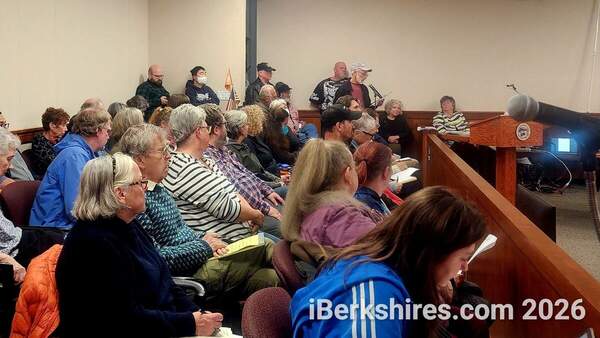
"For too long, state government's resources and attention have not matched the value of what is going on in some of these state forests, these parks, and these recreational state-owned land opportunities," State Auditor Diana DiZoglio said to a packed Town Hall on Monday.
"From farming to forestry to conservation and small business, Western and central Mass communities carry a deep tradition of resilience, hard work, and commitment to the land and generate real value economically, environmentally, and culturally. It is time that the government's resources and attention match the value that these lands provide."
DiZoglio traveled to Windsor on Monday to push recommendations from the new Division of Local Mandates report, "Pursuing Equitable State-Owned Land Reimbursements for Municipalities." She was joined by representatives from state Sen. Paul Mark's office, the Woodlands Partnership of Northwest Massachusetts, and officials from surrounding municipalities.
Berkshire County has thousands of acres of protected state-owned land, while Suffolk County has less than 200 acres of state-owned land, most of which is developed.
Eighty of the 97 municipalities with payment in lieu of taxes (PILOT) reimbursements below $127 an acre (the state median income) are located in Western and central Massachusetts. The auditor said the current system is "indeed" broken.
"With per acre reimbursements ranging from $5 to $120 with a median of only $42 (per acre), central and Western Mass municipalities have some of the lowest per acre PILOT rates in the program, still, even after all these years of advocating," she explained.
DLM, a unit within the State Auditor's Office, determines the financial impact on cities and towns of proposed and existing state laws, rules, and regulations. The 100-page report highlights the PILOT program, which helps communities recoup lost revenue that is a result of state property tax exemptions.
The report's recommendations provide funding safeguards to account for conservation and recreational value and lower property values:
- Target annual supplemental funding to municipalities with PILOT reimbursements per acre below the state median to account for the conservation and recreation value of their protected land.
- Increase PILOT funding by at least the average percentage change in state-owned land values to protect municipalities experiencing lower land value growth from losing funding to municipalities with higher land value growth.
- Establish a hold-harmless safeguard to provide funding stability so municipalities can plan for future expenditures knowing their funding will not decrease year by year.
DiZoglio said the plan reforms the program and makes recommendations to address inequities and challenges in the current formula. Savoy was coined the "poster children for disparities in the formula," as it holds the same 10,000-plus acres of state forests as Plymouth, but in fiscal year 2024, Plymouth's PILOT reimbursement rate was $102 per acre, and Savoy's was $11 per acre.
"You pay taxes, have children in school, work multiple jobs, and help drive our economy forward. You deserve access to services, infrastructure, and opportunity just as much as anyone living in the eastern part of the state," she said about underfunded communities.
DiZoglio's predecessor, Suzanne Bump, had also brought PILOT inequities to the fore in a 2020 report and described it as a "state-imposed burden on municipalities."
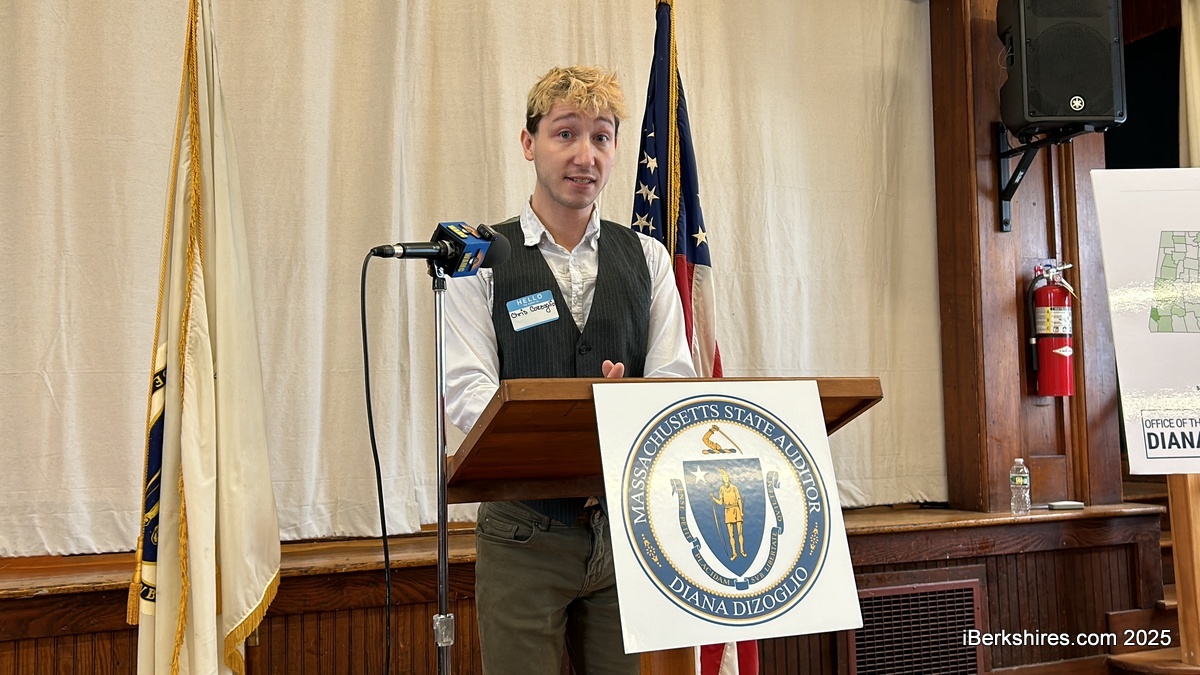
Windsor Selectman Chris Cozzaglio pointed out that the town has a large aging-in-place population on fixed incomes, and the FY24 commitment to its seven-town school district was 40 percent of the overall budget.
"That is insane, not in the sense that we don't want to support our schools, but in the sense that it's such a chunk of our funding. If we got more money from state-owned PILOT lands, we would have a lot more money in the system to do better things for the town. To support our budget in other places. To be updating equipment that needs to be updated. Inflations have been significantly rising since COVID," he said.
"What this really falls down to at the end of the day is we are seeing it harder and harder and harder to operate a town, small towns, based on the resources we have with the lack of support we get from the state."
Dicken Crane, Woodlands Partnership board chair, said more than anything, issues related to PILOT brought the partnership together. He is the owner and operator of Holiday Brook Farm in Dalton.
"Because the 21 towns all have large amounts of state-owned land and their budgets are very much dependent on the tax revenue or payment in lieu of taxes that they're able to get because there isn't a lot of other taxable entities within these small towns," he said.
"Back when the partnership was just a dream, a lot of people in this room were coming to meetings, and PILOT always came up as one of the most important issues to be resolved, and here we are at least 10 years later, and something seems to finally be happening."
The report establishes a minimum $50 floor per acre reimbursement that would positively impact about one in four municipalities, most in Western Mass. For the purposes of legislative discussion, they proposed options for a $50 per acre floor to a $125 per acre floor
"Many of those communities are playing a pivotal role in helping the commonwealth meet our environmental our recreational, and overall public health goals by hosting forested land," DiZoglio said.
"Establishing a floor payment would recognize and reward those contributions while simultaneously helping to provide state resources to financially strapped communities."
Sam Haupt of the Peru Select Board and Planning Board pointed to his town's $14 per acre reimbursement, recognizing that it is not the lowest rate but doesn't reflect the land value. He said the report is an analytical tool that "really, in very stark terms, points out the disparities that exist between the communities in the commonwealth."
"It's a ridiculous number for how we support the quality of life for everyone in the commonwealth. For how we support all the outdoor recreational marketing that the commonwealth does to bring tourists to Massachusetts," he said.
"It's a shame, and obviously, to a great extent here, we're preaching to the choir."
Haupt pointed to budgetary and staffing shortages in small towns and said the $50 floor would be a substantial bump.
Kate Conlin, coordinator of the Woodlands Partnership, pointed out that Peru and Windsor have between 30 percent and more than 50 percent state-owned land.
"The State of Massachusetts owns 64 percent of all permanently conserved open space in the Woodlands Partnership region. These lands offset the environmental impacts of developed areas out east. They sustain biodiversity, provide clean air and water, and host natural spaces enjoyed by all," she said.
"However, when it comes to giving these lands a monetary value, which informs the resulting payment to the communities hosting them, none of these benefits are taken into account. As the state plans to increase conservation efforts, it's imperative this inequity is rectified."
Tags: dizoglio, PILOT, state auditor, state forest, state land,