

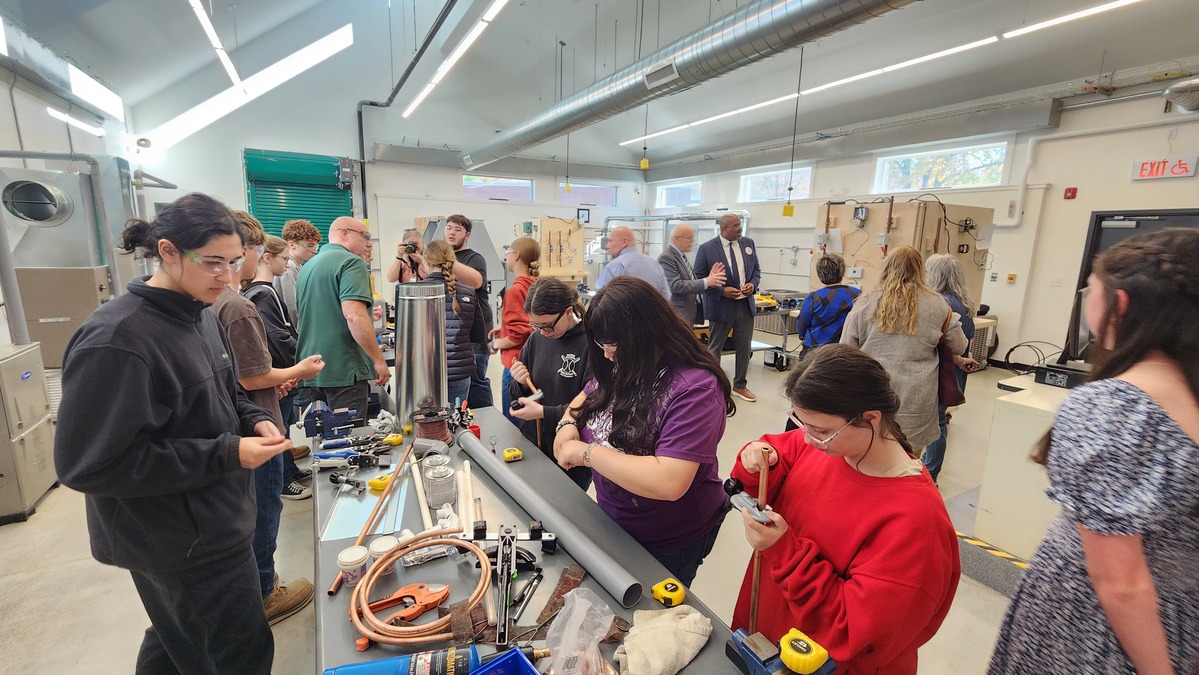
Part I: Berkshire Vocational Schools Prepare Students for Challenging Careers
Deep Dive is a monthly series that takes an in-depth look at economics, business, art, recreation, and education in the Berkshires. John Townes gets into the details on topics and issues of interest to the community. Our first topic is vocational education in the Berkshires. Is there a subject you think should be explored? Contact us at info@iberkshires.com.
As the job market and economy have become increasingly complex and challenging, the role of vocational education — also known today as Career and Technical Education (CTE) — has become more prominent.
In Massachusetts, the administration of Gov. Maura Healey has made improving and expanding CTE one of its priorities in wider integrated education reforms that encompass all facets of secondary education, including CTE and academic studies.
Modern CTE is based on the traditional role of vocational education, which is to prepare students to graduate directly into well-paid jobs that do not require a college degree.
In addition to the core academic curricula, CTE programs include intensive training and hands-on experience in a specific career field.
"The goal of CTE is to provide options for the student," said Marcie Simonds, supervisor of career technical training at Taconic High School in Pittsfield. "We want to prepare students to be ready to be employed in their chosen field directly after graduation or to go on to college or further professional training."
One of the goals for current CTE modernization is to close a gap that exists in the workforce, according to the Massachusetts Department of Elementary and Secondary Education (DESE). Its website states that 44 percent of jobs in Massachusetts require a higher level of skills training than high school, but less than a four-year degree. Currently, 34 percent of the state's workers are trained at this level.
Long gone are the days when the basic options for high-school students were either to focus on academically oriented "college prep" studies as a step toward postsecondary degrees or on vocational shop classes in fields such as construction, manufacturing, maintenance, and personal services.
The distinctions are no longer as clear-cut. Many of these jobs require rigorous training and certification to meet professional standards necessary to enter and build a career in them.
The responsibilities and expectations of workers have also become more complex, with the increased role of computers and technology. Modern manufacturing, for example, encompasses skills in advanced high-tech or biotech products and production methods, including digital operations, processes, and equipment.
There is also a recognition that other knowledge and life skills are also necessary to equip CTE students for responsibilities such as critical thinking, problem-solving and communication, both on the job and in their personal lives.
Another factor driving the increased demand for CTE is the high cost of college and the burden of student debt. CTE provides alternative paths.
Expanding those options is one of the goals of overall education reform in Massachusetts, for both college and career preparation. An initiative of the administration is called Reimagining High School, which encompasses a variety of programs and supports, including Innovation Career Pathways, Early College Programs, and other strategies and programs.
CTE is one emphasis of that.
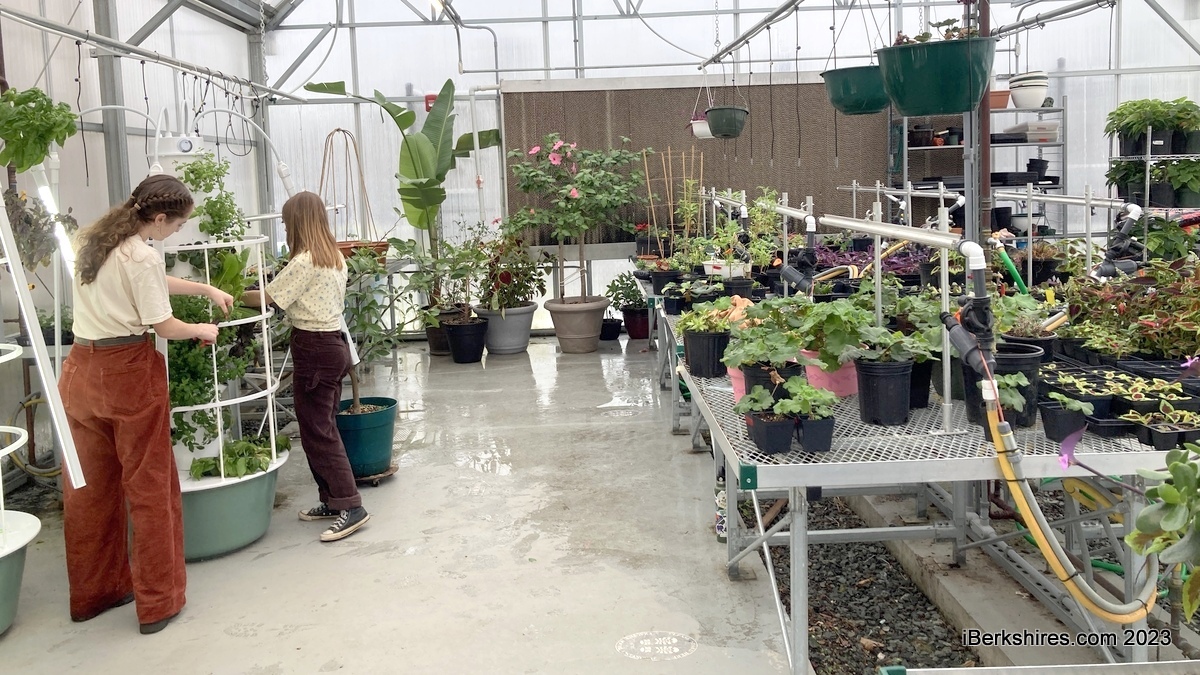
"We've heard from students across Massachusetts that they want what they learn in the classroom to connect to what they will see in their future careers," said Healey, in an announcement of18 new CTE programs in 16 high schools last August. "By expanding career technical education, we're answering that call — giving more students the chance to gain hands-on skills, earn credentials and graduate ready for the opportunities ahead. As a result, our businesses and economy will benefit from having highly skilled talent to fill open roles in in-demand industries."
In another indication of this, last fall, the state began accepting applications from comprehensive high schools and career technical schools to apply for $60 million in CTE capital grants to support more than 2,000 new CTE seats through expansion of existing and new career tech programs and training equipment.
CTE programs are overseen by local school districts under the direction of DESE's Office of College, Career and Technical Education. It is charged with supporting schools and establishing standards to provide students with both college and career readiness.
Local programs can receive funding through the state and through federal funding. Educational policy has always been dynamic. Educators and policymakers have constantly had to keep up with the need to equip students for success in their careers and lives, while also meeting the ever-changing needs of employers.
In addition, the state and school districts also have to contend with the basic realities of allocating finite money and resources effectively, especially in times of tight budgets.
In recent years, there have been intensified debates on the national, state and regional levels about the overall role of education, and where priorities and resources should be placed.
The policies of the Trump administration, such as plans to abolish the U.S. Department of Education, and uncertainties about federal funding, have added to this ferment.
There has been an added impetus for reforms in Massachusetts. Previously, the core secondary education curricula and eligibility to graduate were largely influenced by the standardized Massachusetts Comprehensive Assessment System (MCAS) exam, which was a requirement for all students to graduate. There have long been controversies about MCAS, with opponents claiming it forced "teaching to the test" rather than addressing the needs and goals of students.
In 2024, voters in a referendum ended the MCAS as a graduation requirement. As a result, the state and local schools have been exploring and developing new standards and methods to evaluate educational competence and criteria to ensure quality. This applies both to CTE and other programs.
"There's a lot happening with the elimination of MCAS," noted Matthew Bishop, principal of Taconic High School in Pittsfield. "Schools are now asked to prove competency in other ways. The governor has asked schools for input to help determine what rigorous requirements might look like. The results of that process could bring significant changes to programs."
Local and regional considerations are also a factor. In Berkshire County, where skilled workers are needed in a variety of industries, one goal is to coordinate public education with the workforce need of employers to support the regional economy. This has led to ongoing partnerships between schools, officials, and organizational advocates of economic development.
In a related goal, while it provides skills for students wherever they choose to live, CTE supports opportunities for young people who wish to remain in the Berkshires rather than leave for college and work elsewhere.
The paths vary for CTE students, noted Thomas Tinney, cooperative education placement coordinator at McCann Technical School in North Adams.
"A student might get a job after graduation and stay with an employer here," he said. "Others might go on to college elsewhere on their own. In other instances, an employer here might help them with college or advanced training programs."
While CTE is sometimes used generically to refer to skills-oriented education, there are specific categories. Schools can offer elective technical and academic courses and programs which provide technical training on a less intensive basis. This enables students to learn additional skills as well as sample potential career paths. In addition, initiatives such as early-college offer alternative pathways to college.
In one category, individual schools may offer locally approved technical career programs that meet federal requirements, called Perkins.
However, a different category of state-approved and supported CTE programs are officially designated as Chapter 74, referring to the state laws originally passed in the 1920s that oversee vocational education.
The state refers to Chapter 74 as a designation of quality because of the more extensive framework requirements.
"Locally approved programs may also offer excellent career-related experiences but are not required to meet the same requirements and standards (as Chapter 74 programs)," notes the DESE website.
Chapter 74 programs may be offered by certified technical vocational high schools, comprehensive high schools, charter schools and other institutions.
CTE education is also affected by school choice, which gives students more options to select and attend institutions other than the nearest high schools based on offerings.
In Berkshire County, the majority of CTE programs and courses are offered by Charles H. McCann Technical School in North Adams and Taconic High in Pittsfield.
Monument Mountain Regional High School has three programs — automotive, horticulture, and early childhood education — has been approved for an electricity program with the new high school. Monument, Hoosac Valley Regional School and Drury High in North Adams also offer Pathways programs, and Drury has an Early College program.
McCann opened in 1962, with a focus on secondary and postsecondary vocational and technical education for students in Northern Berkshire, as a complement to the comprehensive high schools there. It currently offers 10 secondary and four postsecondary CTE programs with an enrollment of 575 students.
Pittsfield has two public high schools. Pittsfield High was the city's original comprehensive high school. Taconic High, which opened in 1970, was also a comprehensive high school but had a stronger vocational orientation. Over time, that become more of a focus at Taconic. In 2017, a new Taconic was built reflecting that emphasis and the School Committee voted to make it an all-vocational school in 2023.
"We're now wall-to-wall career training," said Bishop.
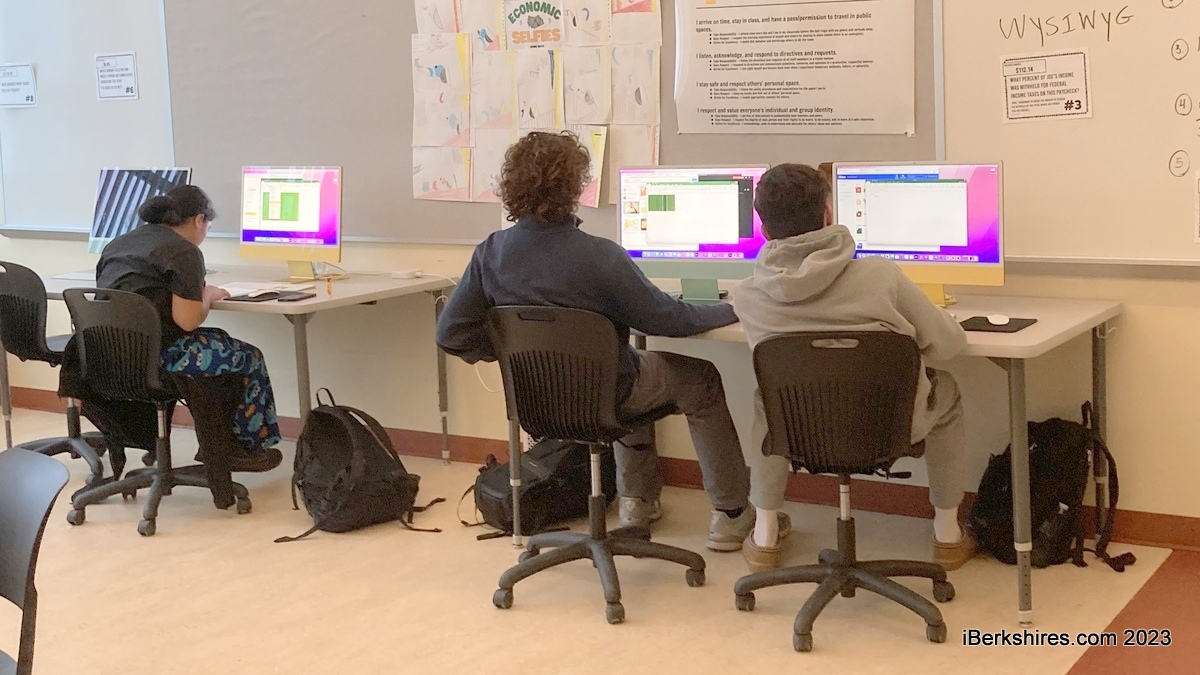
Despite their differing emphasis, both schools are complementary, said Bishop and other officials. While Chapter 74 programs are predominant at Taconic, Pittsfield also offers courses related to career exploration and skills such as the visual and performing arts, engineering, and digital communications in finance.
"Both high schools serve college and career readiness, with differing pathways," said Bishop.
Latifah Phillips, interim superintendent of the Pittsfield Public Schools, said the two schools are well positioned for the characteristics of Pittsfield and surrounding communities.
"This is the first district I've worked in that had strong offerings of a comprehensive high school and CTE together," she said. "This gives students more flexibility and selections. That's especially important for a community in a rural region."
In South Berkshire County, vocational programs are limited. However, expanding vocational education is one of the priorities there. For example, that is one of goals for the upcoming construction of a new building to house Monument Valley High School in Great Barrington.
Tags: deep dive, vocational program,