CBRSD Budget Decreases; Dalton Assessment High
DALTON, Mass. — The Central Berkshire Regional School District has decreased its initial operating projections from nearly 10 percent down to 4.9 percent, but the Dalton's budget is still strained because of its high assessment.
During a School Committee in January, a tentative budget was presented, which included a pessimistic look at the uncontrollable costs. Since then, updated figures have come back and substantial reductions were made.
Preliminary projections had the district's operating budget at $36,375,938, however, the it is now eyeing a significantly lower operating budget of $33,767,460.
The original budget included $2,881,285 in increases and just $454,040 in decreases.
Further adjustments — such as a $621,000 reduction in insurance costs, a $70,000 decrease in state charter school assessments, and several cuts to staff positions, curriculum, Chromebooks, insurance, capital projects, and other post-employment benefits — resulted in additional reductions totaling $1,824,915.
Despite these efforts, the town's assessment is at $1,148,177 — a $126,838 increase, or 12.42 percent.
However, when factoring in capital assessments, the increase drops to 10.1 percent. Dalton's capital assessment stands at $1,529,099, representing a decrease of $56,119.
Town Manager Eric Anderson said the town can not absorb such a large increase with its current fiscal situation, being so close to its levy capacity, having contractual salary increases, and other uncontrollable fiscal responsibilities.
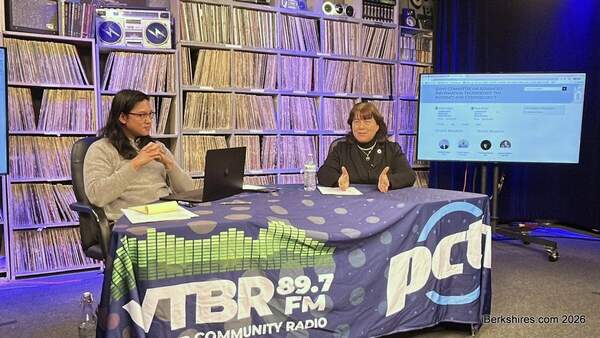
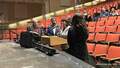
"It is a concerning crisis. There are many people that are working on it, trying to solve the crisis. I don't know how we're going to get out of it at this point, because it's not trending in the right direction for all of us," Finance Committee chair William Drosehn said during its meeting on Wednesday with the district's Superintendent Michael Henault.
"You guys are in the same boat we are. I guess we're trying to let you know that we're very much in the same boat. We feel your pain.
"The district has done exceptional work in the past five years … and ever since then, you've all worked extremely hard to kind of bring us a budget that we can work with."
Over the past five years, the town's assessment has increased yearly by 2 to 3 percent so a 10 percent increase is staggering, committee Vice Chair Thomas Irwin said.
"We are so close to our levy limit, that's going to mean we're going to have to do draconian things elsewhere and that's not good," he said.
The town faces significant budget constraints this year, so any meaningful reduction from the district's current 10 percent increase would be greatly appreciated, he said and clarified that these reductions do not require lowering the assessment all the way to 2 percent.
"The reality is, our teachers, our administrators, our staff, are doing a really good job getting excellent results for kids with the lowest per pupil expenditures in the county," Henault said.
Additionally, the district is in the bottom half for net school spending countywide, he said.
Teachers, staff and administrators are working creatively with less to keep costs down and the district is committed to continuing to keep costs down for its towns, Henault said
The district budget is funded through Chapter 70 and local contributions, which make up the foundation budget, said Gregory Boino, the district's director of finance and operations.
Each year, the state determines the foundation budget, which represents the minimum cost to educate all students in the town, this includes students in school choice, CBRSD, and private school.
The required local contribution for school funding is primarily determined by the number of students in a town, in addition to other factors, including property values and local revenue.
Something happening across the state and Central Berkshire is a decline in the number of students in the foundation enrollment, resulting in a decrease in Chapter 70 state aid.
Additionally, the district is now in the held harmless category, so for the first time the state is saying the district's need in aid for its students is less than what it got last year.
"The district now sees a per pupil increase. So, for the number of students this year that went up, or that have changed, we see $75 per student,"
This change is why its state aid only went up a little over 1 percent, where in the past it was increased between 2 to 4 percent.
With weaker state aid growth, rising district costs, and fewer one-time offsets, the share the town must pay increases.
The Chapter 70 formula has not changed since 1993 and has assumptions built into it that don't hold true, and especially puts rural districts at a disadvantage, Henault said.
One of the assumptions, for example, is that the district is operating at a 3.97 percent special education; when its real number is closer to 20 percent, he said.
There is discussion about revising the Chapter 70 school funding formula, which could impact rural districts.
Concerns have been raised that urban districts, with more political influence, may benefit more from any changes. Local leaders are monitoring the situation and plan to advocate for adjustments that reflect the area's true needs.
"One thing that was heard very clearly is that the way the formula is currently designed, it's pitting towns versus schools," Henault said.
Towns across the state are facing tough budget choices, such as deciding between essential services and schools, he said.
Rural and suburban schools were well represented in voicing these concerns, while urban areas participated less. Overall, there is widespread agreement that the current funding formula is not working effectively statewide, Henault said.
The district also builds into the budget rural aid to offset the town assessments, however, the district will not find out how much it will get until June. The district's budget needs to be finalized by March 12.
Advocacy will play a major role in how much the state approves for rural aid.
Currently, the district is budgeting for $1,265,000, but if calculations from the governor's budget remain the same it could get about $1,900,000.
There are some options the town can consider to lower the budget, but they would require serious conversations because they are a bit of a gamble, said Paul Farella, School Committee member.
For instance, the town could increase its budget for rural aid to secure that amount. However, this approach carries the risk of overestimating the aid, which would require the town to address any resulting shortfall.
Tags: CBRSD, Dalton_budget, fiscal 2027, school budget,