Williamstown Housing Trust Gets Update on Summer Street Project
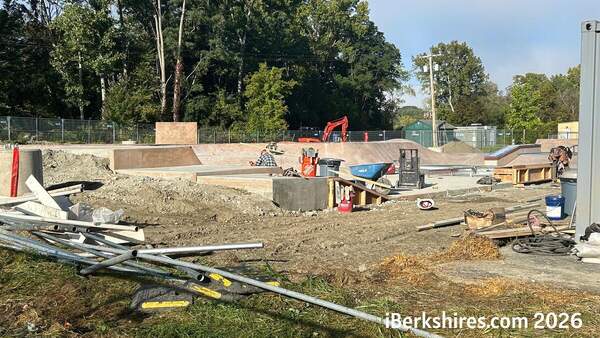
WILLIAMSTOWN, Mass. – Northern Berkshire Habitat for Humanity continues to make progress on a planned four-home subdivision off Summer Street despite rising costs.
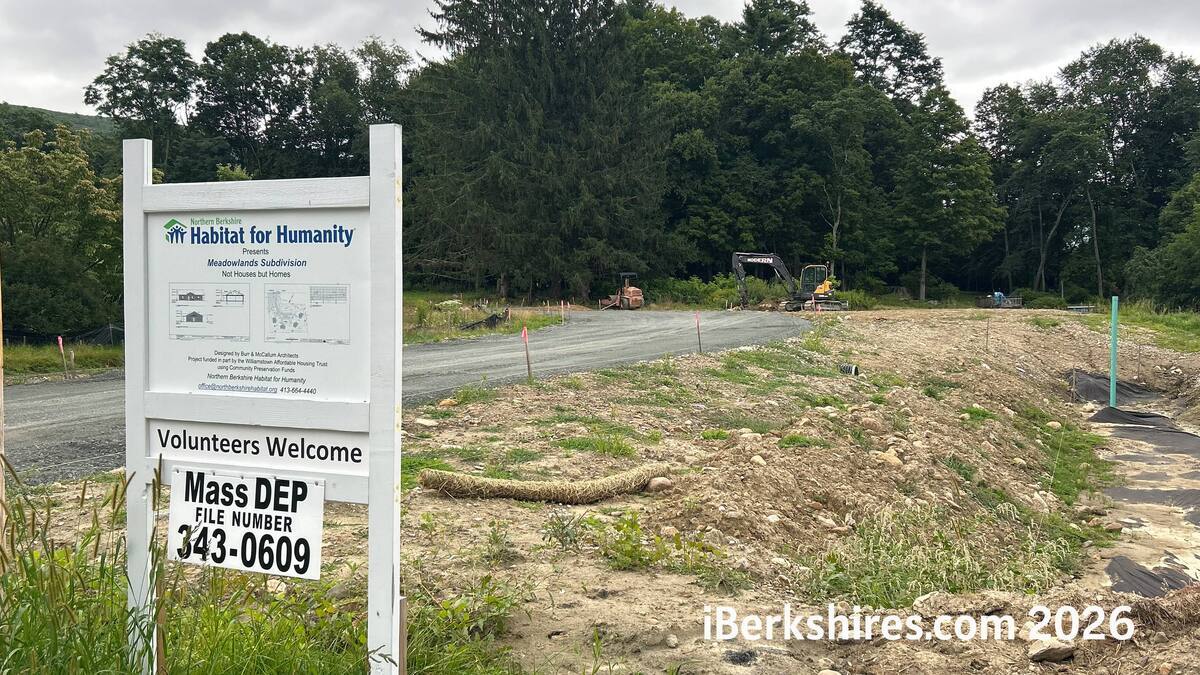
NBHFH project manager Keith Davis was back before the board of the town's Affordable Housing Trust in August to give an update on the project being developed on a parcel granted to the non-profit by the trustees.
"The majority of the site work is now done," Davis said. "The road base is completely in. We won't blacktop the road until the first foundation is done. It doesn't make any sense to drive a loaded cement truck over fresh blacktop.
"The detention basin is in. All the [stormwater] structures are in. I talked to [DPW Director] Craig Clough about coming in and looking at it, so he can verify all the structures are in. Because a lot of them get buried. That's the next step, to do that and sod it."
The construction package to build the road and stormwater infrastructure cost NBHFH $330,000. The Affordable Housing Trust kicked in $120,000 toward that, and the trustees have committed another $100,000 toward the construction cost of the first home to be built in what the non-profit has named the Meadowlands Subdivision.
Davis told the board at its Aug. 19 meeting that a couple of issues have popped up that have slowed the project and added cost.
One was the removal of an additional five trees on the 1.75-acre parcel.
"Two were dead completely with no bark, no branches," Davis said. "One was a telephone pole that went up about 40 feet. There was no top and no branches. The fourth was a tree with no top and only two live branches. The last one was a monster. It was a very wide tree that was rotted at the base and one limb about 40 feet up had fallen off, so there was only about one third of the tree left.
"It took a little while because I had to get [civil engineer] Charlie LaBatt to map them out for us. I talked to [town conservation agent Andrew Groff], and I talked to … the DEP and got their permission. We contacted the neighbors and said we'd be taking them out, and we took out the logs today. That job is all done."
Meanwhile, the construction cost of the first home was driven up by an adjustment to the design needed to lower the home's Home Energy Rating System score. After an audit of the plans, NBHFH had to lower its HERS score by two points to 45 on a 100-point scale (100 is the baseline for a home built to 2006 energy standards).
The solution was to switch from double-pane windows to triple-pane windows, which are more expensive, he said.
"The other thing that affects us is price increases," Davis said. "Everything gets more expensive the longer we wait to get materials. But we can't order a lot of materials until we get a structure to put them in.
"We're probably a month and a half behind the timeline I set, because right now we're at the mercy of other people. The volunteers are ready to start the build tomorrow. Modern Excavation would like to excavate for the foundation tomorrow. But we can't get the building permit until we get these other things nailed down. That has tied us up. The trees tied us up a little bit."
AHT Board Chair Daniel Gura, a vice president of Habitat for Humanity International, told Davis that a certain amount of slippage in the timeline is to be expected.
"These projects are almost always a little behind schedule and always a little over budget," Gura said. "It sounds like you guys are doing a good job. I just want to keep tracking it so we don't get caught off guard if we go from a month to six months to nine months."
In other business last week, the AHT board discussed how it wants to gather community input for a Housing Production Plan that it is developing with assistance from the Berkshire Regional Planning Commission.
Trustee Thomas Sheldon said that the BRPC's Brett Roberts suggested the town hold a handful of listening sessions with residents and then release a survey to see what residents think about issues related to housing.
Gura said he would prefer to put the survey out in conjunction with the listening sessions rather than wait until after the meetings are held.
"You could put the survey out and say in it, 'There are listening sessions, and you go to those first before you do the survey,' " Gura said. "For people who aren't going to attend, I wouldn't want them to wait to do the survey. I don't think there's any reason to hold the survey back until after the listening sessions. If you're lucky, you'll get 30 to 40 people at each one."
The board discussed mailing to every household in town a postcard directing people to an online survey.
"How you get [the survey] out is important," Gura said. "Do you send out a postcard to every mailbox, so at least you can feel confident everyone in town has gotten something about the survey? … Whether they use a QR code or not is a different thing, but at least you know everyone got a physical notice."
Tags: habitat for humanity,