North County Education Study Preparing to Survey Communities
WILLIAMSTOWN, Mass. — The North Berkshire Educational Sustainability Study is looking for input from residents about what is working — and what is not — in the four districts participating in the study.
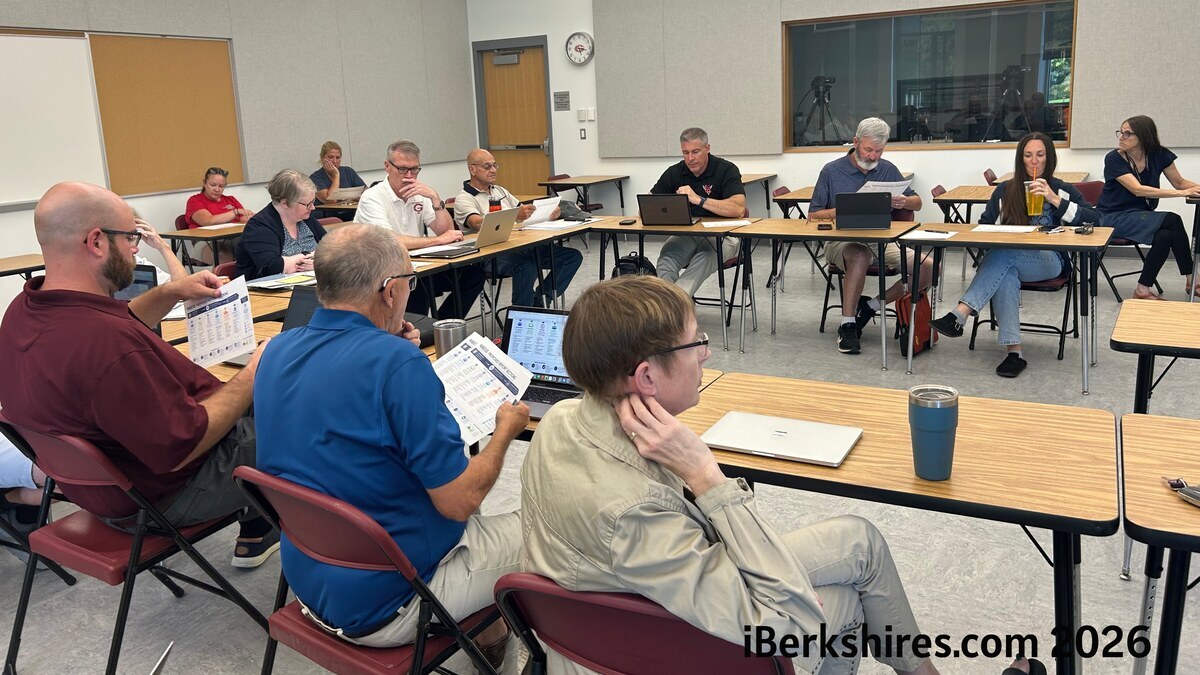
At its August meeting, the Steering Committee reviewed questions in an online survey that consultants from Berkshire Educational Resources K12 hope to make live before the end of the month.
The survey, which will take about eight to 10 minutes to complete, includes multiple choice questions about residents' experiences with and impressions of the region's public schools with the opportunity to give open-ended responses.
Data collected will help BERK12, the consultant, drive a yearlong conversation with stakeholders and develop recommendations to be included in a final report that will be issued in June.
BERK12's Brendan Sheran, who took the lead on developing the survey, pointed to one example of how survey results can inform the conversations that will feed into that report.
"To what extent do you agree or disagree with statements about how the schools prepare students for the next step," Sheran said, explaining that those preparations include academic and social readiness. "If we find people are strongly agreeing the schools are strongly preparing students for the next step, we can ask in focus groups about what the school is doing that does this."
Sheran and BERK12's project director, Jake Eberwein, also talked about how the consultant used a similar survey in a sustainability study for the Mohawk Trail and Hawlemont school districts and the eight Franklin County towns they cover.
"The Mohawk Trail survey gave us a lot of information and allowed us to ask a lot of great questions going forward," Sheran said.
One question asked survey respondents to assign a letter grade, A through F, for schools nationally, in Massachusetts and in their home district.
"It was interesting in Mohawk Trail because it found that people didn't follow the usual pattern, which is people typically tend to rate their local schools higher than the schools around them or nationally," Eberwein said. "That was a bit of a wake-up call for people."
The online survey will collect demographic data on respondents, including whether they attend or have graduated from one of the three public high schools included in the study: Drury, Hoosac Valley and Mount Greylock. And it will continue with a series of questions on perceived strengths and challenges facing the public schools.
It also may include a question gauging respondents' feelings about potential steps to make public education more sustainable in North Berkshire.
"Reinforcing that no decisions have been made, we could ask folks to indicate their level of agreement about solutions that are often a part of sustainability," Sheran said, naming paths forward that include sharing services, sharing administrative positions or combining regions.
The elected and appointed officials and community members who compose the Steering Committee have been clear that the study's aim is to find solutions that could work for the member districts. No outcomes have been predetermined.
"This study will represent a collaborative effort to better understand the current landscape of secondary education (grades 6–12) and explore opportunities for future collaboration," the group's website reads, in part.
Nevertheless, some have expressed fears that the study could lead to a proposal to combine regions, citing the work of the Berkshire County Education Task Force a decade ago.
Eberwein said the subcommittee developing the survey had options in creating a question on outcomes. A study in South County — which eventually led to a failed vote on regionalization — listed the potential solutions in a survey and asked for reactions at the outset. In the Mohawk Trail-Hawlemont project, organizers went a different direction.
"Instead, they asked what are three ways you think the study could have an impact," Eberwein said. "It was an interesting thing to get a really wide range of responses."
The full Steering Committee was asked to review the proposed survey and provide its responses to BERK12 by Sept. 8 so its Community Engagement Subcommittee can finalize the questions.
Sheran said he hopes to have the survey go live no later than Sept. 28. BERK12 plans a series of community forums and focus groups in November and December and, after taking a few months to synthesize the feedback, a second round of community engagement next spring to make sure it heard what it thought it heard before finalizing its report in May and June.
"There are so many folks we can connect with in this work, and it's important to go far and wide and make sure it's an inclusive process," Sheran said.
Meanwhile, work continues on two of the other legs underpinning the final report: an analysis of the histories of the districts and data collection.
Eberwein, in a meeting last week at Mount Greylock Regional School, walked the committee through an update on work collecting the data/indicators that will inform the study's recommendations.
The final report will include sections on districts' enrollment, educational offerings, finances, staffing, operations (transportation and facilities, for example) and governance. The Northern Berkshire region includes schools with three separate governing structures: a municipal district (North Adams), two regional school districts (Hoosac Valley and Mount Greylock) and one supervisory union (Northern Berkshire School Union).
Eberwein showed the board how complex those data sets can be and how much work is involved in aligning the information across districts.
"We're trying to figure out ways of helping each community look at their data and compare trends," Eberwein said. "We're also looking at comparative trends across the districts … so one might take the most recent year and stack them up against each other."
The Steering Committee set its next meeting for Wednesday, Sept. 30, at 5 p.m. at Hoosac Valley High School.—
Tags: education task force,