Mount Greylock School Committee Sets 2026-27 Agenda
WILLIAMSTOWN, Mass. — The Mount Greylock School Committee last month laid out its priorities for the next year while acknowledging three members of the seven-person panel may be gone by November.
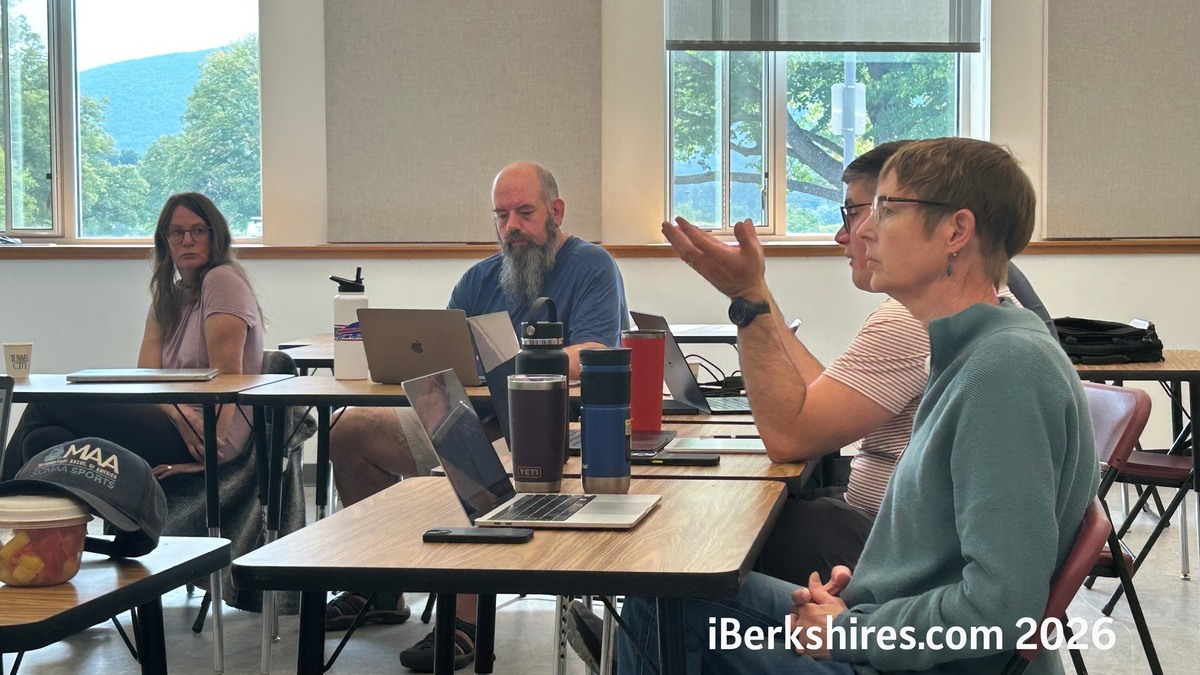
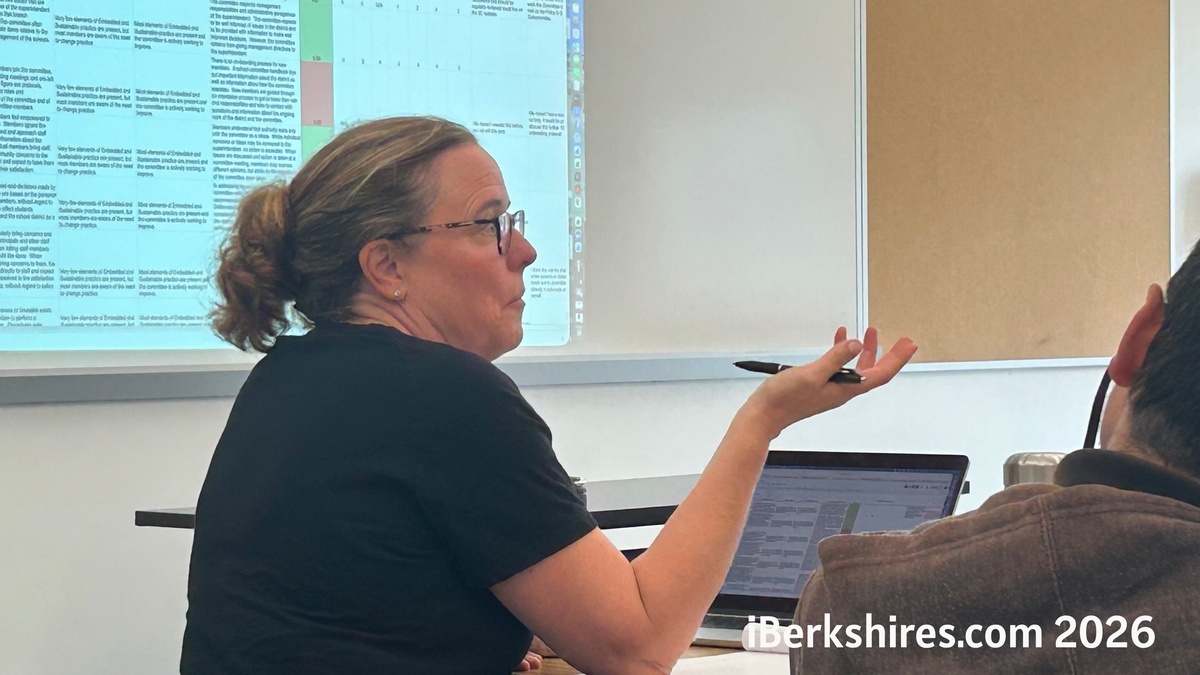
In a special in-person meeting at the middle-high school on a Saturday morning in August, the School Committee finalized its goals for the academic year ahead.
The four-hour meeting was attended by six of the committee's seven members, including three who face challengers in the Nov. 3 election.
The committee ended up agreeing on five goals to set for 2026-27: setting regular meetings and getting regular reports from its Outcomes Subcommittee; improving community outreach by the full committee; implementing a committee member orientation plan for the at least one new member who will be elected in the fall; advancing a district-wide "visions and values" process; and aligning the committee's practice with state requirements for a student representative.
Before the group got into goal-setting, it reviewed the results of a self-evaluation process it undertook for the previous academic year.
Members noted that in 38 areas outlined by the Massachusetts Association of School Committees, the seven Mount Greylock members rated its own performance as below satisfactory in just seven. And it was those areas that are addressed in the goals for 2026-27.
The MASC has five different subcategories headed "community engagement," and the MGRSC members rated themselves between 2.9 and 3.3 on a scale of 1 to 4 in three of the five. The lowest score in the self-evaluation was for the topic of "Community Engagement - Building Support" with an aggregate score of 2.86 and two of the seven members giving the panel a score of 2 in the wake of a budget season when one of the district's two towns chose to amend the district's budget on the floor of its town meeting.
Chair Julia Bowen said she would like to see the School Committee have a more active presence at school events like the upcoming back-to-school activities and open house nights.
Superintendent Joseph Bergeron told the panel that district staff already planned to have a presence at the open houses to collect input from attendees for the district's "visions and values" initiative. And he suggested that School Committee members could join that effort.
Jose Constantine noted that for committee members with children in the schools, open houses are a night to visit the school as a parent first.
"Parents are off the hook," Carolyn Greene said.
But Curtis Elfenbein, one of three Lanesborough residents on the committee, said that with his child now at Mount Greylock, he would be happy to attend the Lanesborough Elementary event.
And, while at events, the committee members discussed acquiring some sort of identifying apparel — a baseball cap, a T-shirt, a lanyard — to give a visual signal to other attendees that they are members of the committee.
On another front, the School Committee discussed whether one of its members could be a regular attendee at school council meetings in each of the district's buildings. The school council is a state-mandated body that assesses each building's needs and advocates for them at the district level.
It was the Williamstown Elementary School Council that brought a need for the fiscal 2027 budget to the School Committee but ultimately saw that expenditure not included in the spending plan, prompting the town meeting floor amendment to add $120,000 to the town's assessment from the district.
The committee said the liaison plan could be tricky given the varying schedules of the School Councils, which comprise staff, caregivers and residents from each school's community. But it also discussed inviting the councils to give more regular reports, rather than the customary one presentation of needs at the outset of budget season each winter.
Greene said more regular communication could ease what she characterized as the school councils "being frustrated with the committee, feeling it's not necessarily listening."
"We didn't hear directly from the Lanesborough Elementary School Council, so I don't know if they're frustrated," Greene said. "But hearing from them earlier in the year and having liaisons will all help. There's a level of, 'We're telling you what our needs are, and you're not listening to us.'
"It's not that we're not listening. We have limited resources, and we're trying to balance the three schools and the resources of the two towns."
Another area of emphasis for the coming school year cycle is energizing the School Committee's Outcomes Subcommittee, which is tasked with looking at data to see if the district is meeting its goals in educating the students it serves.
"We need a group to spend time with data and provide some summary to the full committee," Jose Constantine said. "That facilitates thoughtful discussion. There may also be the need for other data, through alumni tracking or something.
"The third piece I heard was the data presentation piece, giving data in a systematic way to the committee but also the public, a data dashboard."
Bowen said she would leave it to the subcommittee, in consultation with the administration, to determine what is possible.
Later, Bergeron pointed out that generating regular data reports will help with the committee's outreach efforts.
Elfenbein said that the Outcomes subcommittee should "always have something to present to the full committee."
"Now, watch me leave the Outcomes subcommittee," he then joked, alluding to the fact that he will be running for re-election in November.
As for student representation on the School Committee, the committee regularly has invited a member of the Mount Greylock Student Council to address the panel at its monthly meeting, eliciting sporadic participation from the student group.
But it was noted at the Aug. 22 meeting that the state requires regional committees to have a student representative, who is a member of a Student Advisory Committee at the high school and then serves as an ex-officio, non-voting member of the School Committee.
Bergeron told the committee that the school last year advertised for students to participate on a Student Advisory Committee, "and no students wanted to participate," on the five-person panel.
"What happens when no students want to be on the thing?" Bergeron asked rhetorically.
The committee considered adding other goals to its plate for the coming school year, including a look at the existing policy for naming things on school campuses (memorial benches or athletic fields, for example). But it chose to refer that topic to its standing Policy Subcommittee rather than tackling it as a full committee.
Tags: MGRSD,