Descendants of Hemings, Jefferson Explore Hard Truths in Williams Panel
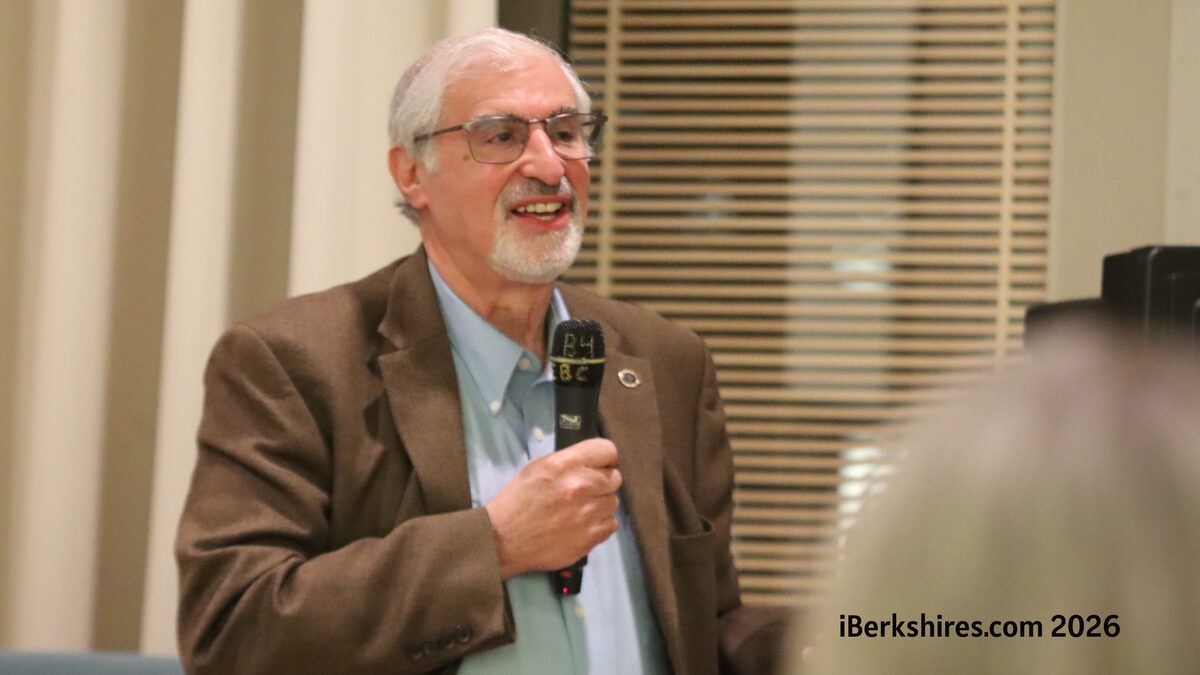
Anthropologist Richard Kurin talks about the DNA research that confirmed the lineage connecting descendants of Thomas Jefferson and Sally Hemings.
"We've always known who we are as Hemings, and we've had other families supporting us," David James Fisher Jr. said. "And it's amazing that we have science now validating our stories. … We need these stories so we can understand a more complete picture of America.
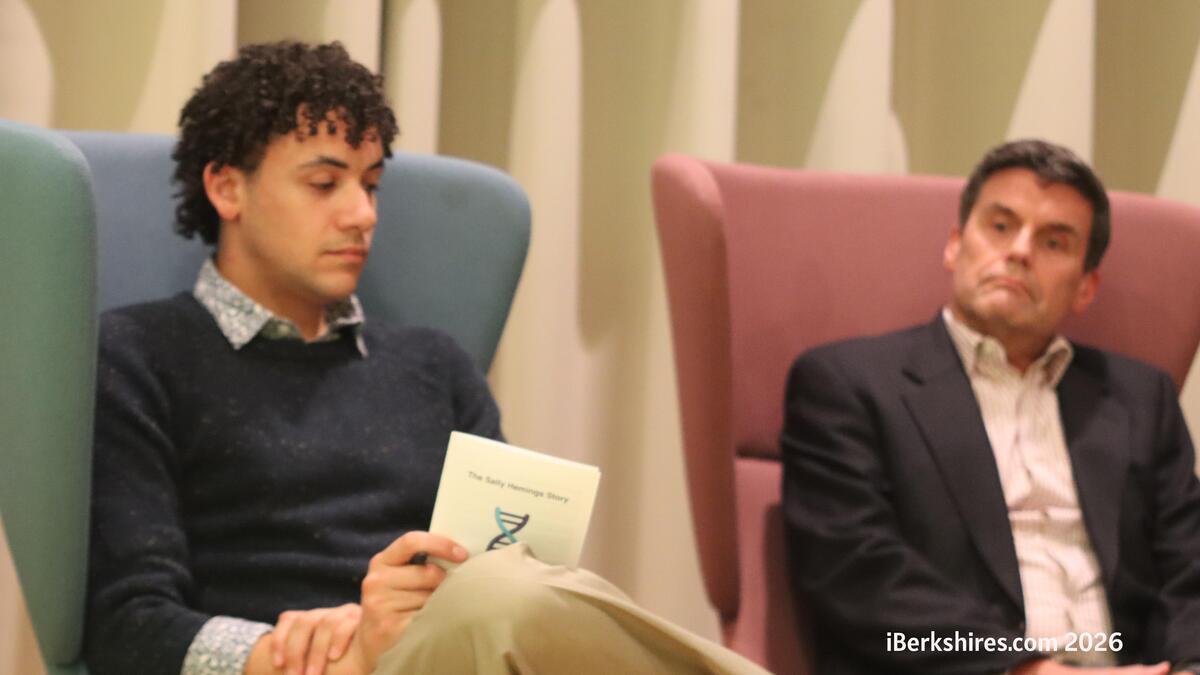
Fisher, a descendent of Madison Hemings, son of Sally Hemings (sometimes spelled Hemmings) and her enslaver, Jefferson, joined a panel discussion with Eston Hemmings' descendent Art Westerinen and Basheera Nazeer, a descendent of the Gillette family, who were also enslaved at Jefferson's Monticello estate.
"I want you guys to remember umbuto, which is an African philosophy which means, 'I am because we are,'" Fisher said. "It transcends pain and guilt and reconciliation. And it is a matter of fact. I am here today because of our history, and we are all here today because of our history.
"It is not about holding people's feet to the fire or anything like that. It is about: What does it mean to create that more perfect union? What does it mean to step forward and have our descendants look back and say, 'I'm so happy our ancestors aired it out and we can all be together now?'
"I want everyone to go home and learn about umbuto and learn about how we are all together."
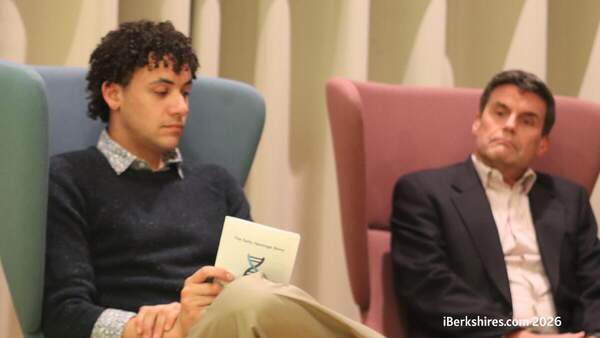
There was much to be learned from a 90-minute panel discussion titled, "Double Helix: The Stories in Our Blood, the Silence in Our History," at Williams College's Davis Center.
As Nazeer noted, not all of those lessons are easy for all audiences to hear.
"Something that sits with me is the idea of having radical honesty and seeking truth wherever it takes you and being able to confront reality, whatever that might be," she said. "Sometimes, you might even have to remove yourself from the equation to acknowledge what that reality might be.
"I think that Dr. [Richard] Kurin's work, I think the reality of our ancestors helps to reveal something that has been known for a very long time and that was confirmed by science."
Kurin, a Smithsonian scholar and anthropologist, joined the panel to discuss the investigation and scientific research that produced genetic evidence to support what Hemmings' descendants knew all along: that the author of the phrase, "all men are created equal," not only enslaved hundreds of people but also impregnated a 16-year-old girl through non-consensual intercourse.
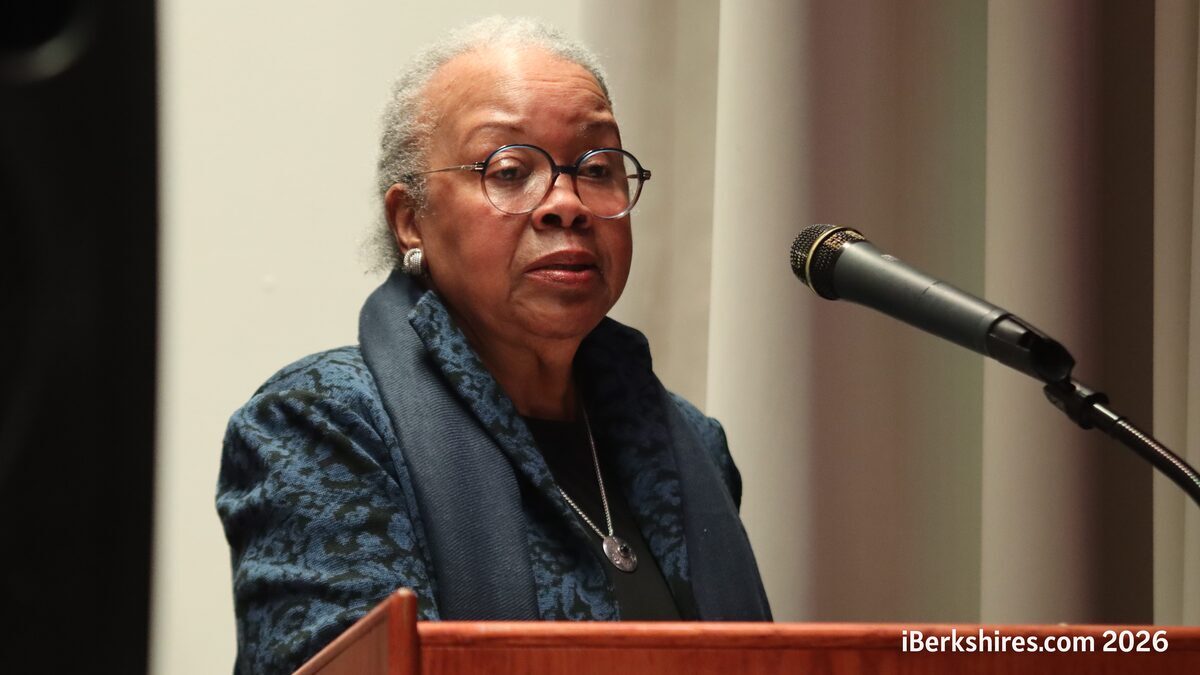
Kurin, Nazeer and the two Hemings-Jefferson descendants were joined by photographer Jane Feldman, who chronicled the 1999 reunion of the family members at Monticello and co-authored the 2000 book "Jefferson's Children: The Story of One American Family," in a 90-minute conversation moderated by Massachusetts College of Liberal Arts professor emeritus Frances Jones-Sneed.
Davis Center interim Director Akilah Edgerton welcomed attendees to the panel discussion and explained that learning difficult but important lessons from history is at the core of the center's mission.
"The Davis Center here at Williams College is grounded in the belief that dealing with complex questions, history, identity and culture is essential to building a more inclusive and informed community," Edgerton said. "Through dialogue, education and programming, we create opportunities to examine different perspectives, change familiar narratives and learn from one another."
The familiar narrative, taught in American classrooms for generations and amplified this year during celebrations of the nation's semiquincentennial, is that Jefferson was one of the Founding Fathers and a champion of individual liberty.
And while his role as a disciple of the Enlightenment and co-author of the Declaration of Independence was acknowledged during Tuesday's discussion, his personal story is more complex than many of his acknowledged descendants by wife Martha Jefferson cared to acknowledge.
In 1998, Kurin said, the first DNA tracing followed the male bloodline back to the third president's cousins.
"Nobody had Thomas Jefferson's DNA [sample at the time]," Kurin said.
While the genetic evidence supported the scholarship of historians like Fawn Brodie, who in 1974 concluded that members of the Hemmings family were descended from Sally Hemmings and Thomas Jefferson, some refused to accept it.
"A lot of historians accepted it, a lot of members of the public accepted it," Kurin said of the 1998 research. "Members of the Jefferson family through his daughters Martha and Maria, said, 'Wait a second. How do we know it was Thomas Jefferson? It could have been any Jefferson male. It could have been a brother, a cousin, an uncle.' So that still left doubt."
The breakthrough came in 2011, Kurin said. Historians at the Smithsonian discovered a red/blond hair while restoring the Jefferson Bible. Later, a packet of Jefferson's hair taken from his deathbed was discovered at Monticello.
That allowed a more definitive DNA sequencing.
"We compared it to Art [Westerinen]'s uncle, we compared it to David [James Fisher]'s mom, and we compared it to descendants through Jefferson's [acknowledged] daughters," Kurin said. "The Jefferson descendants, fifth generation, had 2.7 percent, 2.8 percent [match], close to the 3.1 percent you'd expect. Art's uncle had 3.7 percent. David's mom had 5.1 percent. Off the charts — 99.9 percent, you don't get that kind of match.
"The irony here was that the children of Thomas Jefferson and Sally Hemings were more Jeffersonian than the Jeffersons. So when you think about the denial, the denial of history, of people's ancestors … obscuring their heritage. David, your mom would tell me that her dad would say that if we said we, as African Americans, said we were descendants of Thomas Jefferson back in the day, we could get lynched."
The brutality visited upon Black Americans from the 17th century through the 21st century continues to make an indelible mark on the descendants of enslaved people. Tuesday's panel also reminded the audience that the legacy of those enslaved people is a story of survival.
"I think that the story of Sally Hemings is the story of Elizabeth Freeman, it's the story of enslaved people and their descendants and Native Americans, of anyone in America who is having their story erased right now," Fisher said. "Despite those attempts at erasure, despite centuries of dehumanization, we rise. We're here. And we're telling our story right here and right now.
"Let that be a testament. Let myself, if I can be so bold, be a testament that history persists. Truth persists."
Nazeer told the audience that she feels fortunate that she can trace her family's history before 1865, something that many Black Americans cannot do.
"I have coined this in my own head that Monticello, which means, 'my little mountain,' is all of our mountain," Nazeer said. "Although we have this tangible connection to the mountaintop, I feel that Monticello is American history but it's also African American history. I welcome you, as a descendant, to come to Monticello, to walk Mulberry Road, to spend time with the ancestors. Because we're all interrelated. We're all one big family.
"When I think of legacy, as it relates to my ancestors, I think of them not as the title of Israel Gillette Jefferson's 'Memoirs of the Lowly.' Oftentimes, we think of our enslaved ancestors as a 'lowly' people or we think of them as being disenfranchised, and I'm not saying they were not [disenfranchised]. But when I look at my ancestors and I study their accomplishments, they were artisans, they tended to land, they were masons, they were musicians, they had knowledge of things that a lot of us do not have today.
"I think the legacy of our ancestors at Monticello is that of perseverance."
Tags: black history, genealogy, Williams College,