Campaign Urges Citizens to Take Charge of Energy Use
By Justin SaldoiBerkshires Intern
Print Story | Email Story
NORTH ADAMS — With rising energy costs and winter on the horizon, a local initiative is offering residents the information necessary to make minimal-cost actions that will make their homes more efficient, comfortable and affordable to live in.

The North Adams Public Library hosted the launch of the Take Charge task force. Take Charge is a movement in North Adams and, hopefully, in the Northern Berkshires to conserve energy and money. 

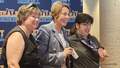
Mayor John Barrett III, Kathy Keeser of Northern Berkshire Community Coalition and Marie Harpin of Berkshire Community Action North came out to support the campaign to save energy with coordinator of the Take Charge task force, Morgan Goodwin.
"I am not an integral part of making this happen," said Barrett "We need the support of community to make this work."

  Photos by Justin Saldo
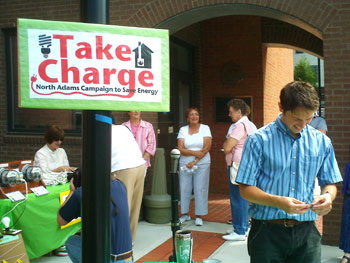
Morgan Goodwin, left, at the launch of the Take Charge program at North Adams Public Library on Thursday.

According to the Massachusetts Department of Energy, within the last three years the price of heating oil has increased from $2.10 to $4.30 and the cost of natural gas increased from $2.49 to $3.92

"There are going to be a lot of bad stories this winter and if we want to prevent them in this community we need to be proactive in this cause and educate future generations as well," continued Barrett.  "Because of this, we are a proud partner in this [program]."

Goodwin, an intern at NBCC, supported the mayor's statements with some of his own.

"The time is past when we can wait for experts and technology to solve this problem," said the Williams College graduate. "We need to take the steps we can as a community and as individuals."

Though the city has not pledged any financial support to the program, members of Take Charge were pleased at that the City Council approved a resolution supporting the program on Tuesday night.
"The mayor and the City Council's resolution is an excellent form of support in this campaign because of their influence in the community," said Goodwin in an interview.

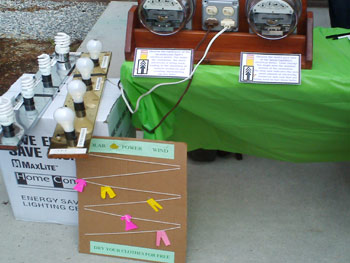
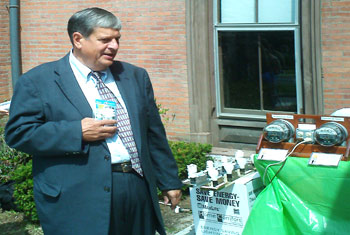
Mayor John Barrett III checks out energy-efficient lightbulbs; below, a meter shows how they stack up against regular bulbs in energy use.

"I like to start from the big picture and work backwards," he said. "Energy consumption is a global problem, but the best way to facilitate change is on a individual level and it doesn't need to be a drastic change either; if we all just change our consumption habits in small ways we can make a big impact worldwide."

Senior resident Edith Taskin has been using energy-efficient light bulbs for two years and planned to take charge by having her windows inspected and lowering her thermostat and putting on a sweater. Taskin also encourages people to use public transportation.

Another resident of North Adams, 64-year-old Judy Lepel, pledged to turn the power off when she leaves rooms and encourage family members to take charge as well.

Librarians Marcia Gross and Marion Grillon are also taking charge with energy-efficient lighting in the library in complement to the building's photovoltaic array and geothermal heating systems. On a personal level, Gross has changed the appliances in her house to more energy-efficient models.

Take Charge has a permanent display at the library and is promoting the campaign in the Hoosac Bank lobby. Future plans include another booth during the Mayor's Downtown Celebration, educational workshops in the fall and collaboration with the Williamstown COOL Committee.

"The coalition is looking for ideas, suggestions and volunteers for the program from members and the community," said Goodwin.

The Take Charge task force consists of 15 members and attained about 100 pledges on its launch with the intention of having 1,000 by November. It signed up 60 at National Night Out last week. Those who sign up receive an energy-efficient lightbulb or a clothesline.

For more information, contact Goodwin at morgan.goodwin@gmail.com or call Al Bashevkin at 413-663-7588.
If you would like to contribute information on this article, contact us at info@iberkshires.com.

Why the Massachusetts Art Community Is Worth Continued Investment

By James BirgeGuest Column
How do we quantify the value of art on society and culture? Even eye-popping figures, like the $100 million estimate for the jewels stolen from the Louvre, or the record auction last fall that saw a piece by Gustav Klimt sell for more than $236 million can't fully account for the value of the history, stories, and emotions behind the creations themselves. But beyond that, there is a measurable financial, cultural and social benefit of the arts that is often taken for granted. 

Closer to home, arts and cultural production in the Commonwealth of Massachusetts totals nearly $30 billion annually, representing more than 4 percent of the state's economic output, according to the Mass Cultural Council. All told, more than 130,000 jobs are spread across the commonwealth creating a vibrant and thriving artistic community for us all to enjoy. 

Despite the obvious impact, these figures are under threat. A recent survey by MassCreative compiled recent federal cuts to the National Endowment for the Arts, the National Endowment for the Humanities and the Institute of Museum and Library Services and identified 63 grants canceled and $4.2 million in grant funding rescinded across New England so far this year. 

The dollars, of course, are important. But they also only scratch the surface on what they bring to the community. Today, we risk losing part of the culture and identity many now take for granted. 

While others choose to look past these less tangible, but just as vital benefits, we're doing the opposite. Massachusetts College of Liberal Arts is all in to ensure the next generation retains their access to works of art, while also being empowered to create themselves. 

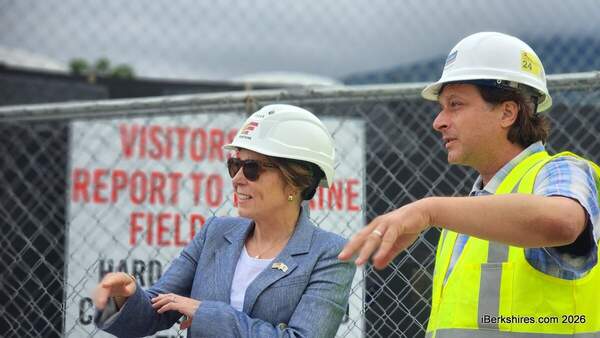
Last fall, MCLA officially broke ground on the new Campagna Kleefeld Center for Creativity in the Arts, which will serve as a new hub for the campus and the local community for arts programming. When complete in fall of 2027, our students will benefit, but so will all of Berkshire County and artists in the surrounding area. 

This exciting new facility is just one of the many forthcomings our region can enjoy in the coming years. Just a few miles away, anticipation builds for the Fall 2027 anticipated opening for the Williams College Museum of Art. Years in the making, the museum likewise grows from an enduring commitment to the arts, both in curriculum and in practice. Exciting times are also underway for the Clark Art Institute with the construction of a new facility to house a collection of 331 works of art, including paintings, sculptures, drawings and other works. Their wing is scheduled for completion in 2028. And listeners will no doubt enjoy the sounds and melodies from Mass MoCA Records, the latest endeavor to foster creativity and artistic pursuits through music launched in October as well. Of course, many are also awaiting the reopening of the Berkshire Museum anticipated this summer, after a tremendous renovation process to rejuvenate the experience for visitors. 

So much time, energy, and yes, dollars, have already been invested in taking these facilities from ideas and sketches and making them reality. But they represent much more than new buildings. They represent new opportunities to cultivate and accelerate the thriving arts community in Massachusetts and the northern Berkshires. 

Art, regardless of the medium, is a reflection of who we are, where we've been, and what we aspire to be. It can be inspired by hopes or fears and chronicle collective triumphs as well as tribulations. The goal of art is not only to document history, but to inspire those positioned to change it and to feel something new or even to provoke us to revisit our own assumptions or misconceptions. 

As unfathomable of a number as $30 billion can seem, boiling down the impact to any number inherently discounts the unknowable downstream effects our graduates will bring to the community and the broader world after they leave our institutions. Likewise, rescinding $4.2 million now removes a huge chunk of that growth potential.  

Justification for making these investments today when simply boiled down to dollars and cents still places us on solid ground strictly from a financial perspective that forgoes all of the intangible, but no less valuable, benefits as well.  

The arts are still worth our support. And our community will be richer for it. 

James Birge, PhD, is president of Massachusetts College of Liberal Arts in North Adams.  


View Full Story

More North Adams Stories