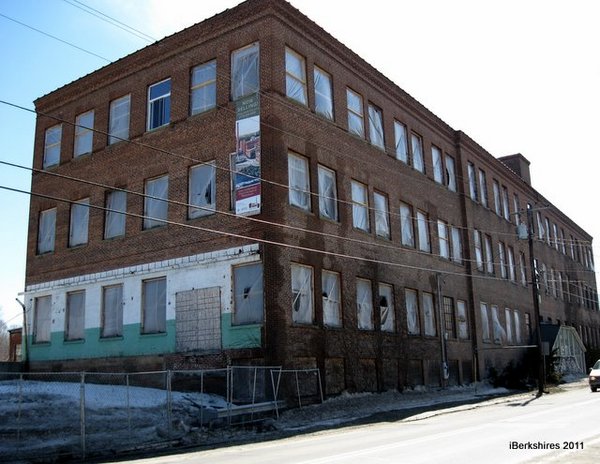
Williamstown CPA Still On The Hook For Cable Mills
WILLIAMSTOWN, Mass. — Even if the town abandons the Community Preservation Act, it will have to pay for commitments made years ago through the act.The town is still on the hook for a $1.5 million bond for the Cable Mills development that requires about $150,000 of the committee's funds each year while state matches have continued to decrease and this year's recommendations nearly drain the account. Last week, the committee debated whether to recommend reducing – or revoking – the act.
"We made a commitment that we will pay for over 20 years," Community Preservation Act Committee Chairman Philip McKnight said in a recent interview. "There is no timeline on it. The only way we won't have to pay it is if the developers announce they are abandoning the project."
Voters approved the $1.5 million in 2007, when the committee was getting a larger state match, to help Mitchell Properties turn the historic mill into condominiums with an affordable housing component. The approval has no expiration and once the developers start construction, the town will have to bond out its commitment. While no construction start date has been set, project manager David Traggorth said it could be soon.
"We still plan to use those funds," Traggorth said. "The town has stepped up brilliantly and we absolutely continue to be dedicated. It's just a matter of getting one of these lenders to give us a commitment letter."
The town adopted the state law in 2000, setting a surcharge of 2 percent on property after the first $100,000 in valuation to dedicate to historic preservation, affordable housing and open space. Along with the commitment to Cable Mills, town meeting has authorized another $167,000 for facade work at the mill and invested in agricultural restrictions, barn restorations and the development of affordable housing in the former St. Raphael's property.
The surcharge was once matched fully by the state but has been scaled back each year; it's now matched at about 25 to 30 percent. According to the state Department of Revenue, in 2010 the state's contribution was $53,187 — a 27.7 percent match. If contributions stay the same, the town will have about $250,000 added to its CPA account next year.
Three projects being recommended for funding this year for historic preservation would severely drain the account. The town will have about $2,000 in unappropriated funding, about $53,000 in affordable housing and about $129,000 in open space.
"There is about $2,000 left in the unappropriated cumulative account and there is money in two of the mandatory accounts – open space and community housing – but not a lot," McKnight said.
Traggorth said Cable Mills can begin work within 120 days after one of three banks the development company is waiting on commits to funding construction. While residents may say they have heard that before, he said momentum has picked up and that final commitment is expected soon.
"One is a bank that we've done multiple projects with and they're looking at it hard," he said. "Everything in the broader market says the lenders are back in the game."
Nearly all of the company's other projects have received funding recently, Traggorth said, and the Cable Mills development remains high on the priority list. The company has no intentions to call it off, he said.
Paul Harsch, whose real estate company Harsch Associates is handling the sales, said about one-third of the proposed units are sold. While that is down from a few years ago, when nearly half were sold, interest remains high, he said. The bank may require a certain percentage of the units be sold before the construction loan is released.
"The town will be obligated to pay these funds," McKnight said.
According to Town Manager Peter Fohlin, the agreement with Cable Mills can not be rescinded. If the voters disband the act, the surcharge will be reduced each year until both the bond and the levy reach zero.
He added that even if state compensation is reduced to zero, the town will have enough to pay the bill.