image description
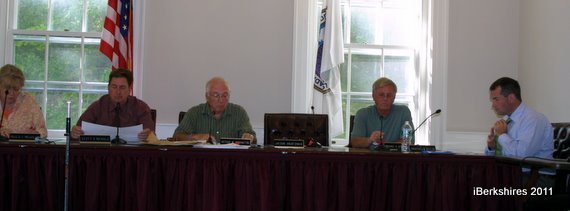
The Board of Selectmen approved deficit spending to repair areas of town that are public hazards.

Adams Approves Deficit Spending To Fix Irene's Damage

By Andy McKeeveriBerkshires Staff
Print Story | Email Story
ADAMS, Mass. — Hurricane Irene caused millions of dollars worth of damage that now threatens public safety and the town issued a blank check on Friday to do those repairs immediately and worry about the cost later.

The Board of Selectmen authorized, in an emergency meeting, deficit spending, which allows the town to overspend the budget this year and pay for it later.  Butler said the repairs are only intended to ensure public safety in areas that were destroyed by the hurricane and most of the money should later be reimbursed by the Federal Emergency Management Agency.

"We can't afford to wait two years to do these projects. We're going to lose lives if we wait," Board of Selectmen Chairman Arthur "Skip" Harrington said.

Butler outlined seven projects that need immediate attention, which include a section of road near Lime Street that could collapse if it erodes anymore. Most of the projects are focused on cleaning out clogged drainage that could cause massive flooding from even the most routine thunderstorms, Butler said.

"The damage to the properties on Lime Street is massive," Butler said. "We need these projects moving forward in September."

Butler called on town officials to "demonstrate leadership" and get the work done as quickly as possible for sake of the public. The projects are not a matter of frivolity but rather a necessity. The immediate work will be "band aids" just to make the town safe, he said.

Butler added that the town should be reimbursed by at least 75 percent for any money spent. However, that has not been set in stone. The county has to show at least $8 million worth of damages before it can qualify for FEMA funding. Representatives from the state Emergency Management Agency have toured the destruction twice since the storm and Butler said they are confident that the threshold will be exceeded.

Rough estimates on four of the seven projects totaled $1.6 million, Butler said, and there is additional work to do. Engineers from Hill Engineering have already assessed the project, Butler said.

"We are still in a state of emergency in Adams," Butler said, adding that the town has not yet identified all of the problems caused by the storm. "We had to move quickly on getting specs for these projects."

A few of the projects result from landslides on private property but do threaten the public road ways and some drainage areas have not been maintained by the town in 30 years, Butler said.

Superintendent of Public Works Tom Satko added that the town employees are doing what they can right now but do not have the equipment to complete the projects. Already the storm has caused the town to spend about $25,000 in overtime for employees - ranging from public works to police.

The board will be able to decide how to later fund the projects in future budgets, which could mean long-term or short-term loans.

"You have to trust in your Town Administrator and the department heads," Butler said. "It's to no benefit to myself or my department heads to overspend."

The procedure still needs to be approved by the state Department of Revenue but Butler said a lot of towns are doing the same thing and therefore he is not expecting the state to reject the proposal.

The board unanimously approved the move.
If you would like to contribute information on this article, contact us at info@iberkshires.com.

Cheshire Looks to AG's Office for Blighted Property Help

By Breanna SteeleiBerkshires Staff

CHESHIRE, Mass. — The Select Board heard a presentation last week from the state's Neighborhood Renewal Division program that could help rehabilitate two properties condemned by the Board of Health.

Janice Fahey, assistant attorney general for the division, explained program and what it means at last Tuesday's meeting.

"Our mission is to work with cities and towns in order to ensure safer neighborhoods by working with cities and towns to rehabilitate and bring them into compliance with the state sanitary code and to create safe, habitable homes," Fahey said.

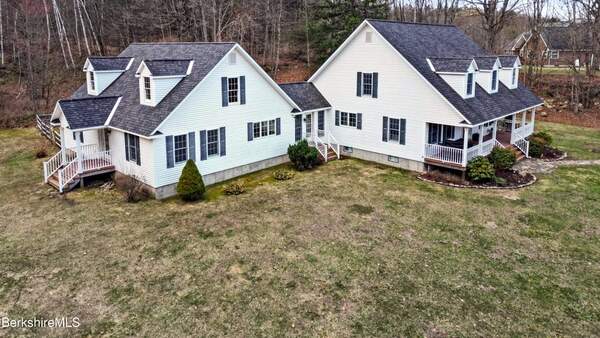
At the March 17 meeting, Town Administrator Jennifer Morse said 200 School St. and 73 West Mountain Road were condemned by the Board of Health and a request was sent to the Attorney General's Office Division of Receivership Programs.

The program, active since 1995, has expanded to work with 169 municipal partners and 205 active properties, with 54 active cases in litigation. It has brought $714,000 into city and town coffers through tax and fee recoveries. The process involves identifying properties, conducting inspections, issuing orders to correct violations, and potentially appointing receivers if owners are uncooperative. 

Fahey said the division works with the local board of health to do a title search on who owns the property.

"If the owner is cooperative, then we will just work with them to bring the property up to the sanitary code. And it's uncooperative, we may file a receivership petition. So when first of all, who is a receiver? A receiver can be anyone who has knowledge and capacity to work with a property and bring it up to the sanitary code," she said.

Fahey said the cost to fix property cannot exceed the cost of its  market value as the receiver has to get paid.

"This isn't something that is going to be making the receiver rich. It's kind of going to be something that just basically cleans up the property, gets it rehabbed, gets it back on the tax rolls, and hopefully a family moves in, and there has to be the receiver, has to have funding. Sometimes there are grants that we'll talk about later as well, but in the end there, they have to have some type of ability to get loans or. Fund a project and get insurance as well."

After being appointed by the court, the receiver will do an inspection and create a budget and scope of work. Once property is brought up to standard sanitary code, they ask the court for authority to foreclose on the property to recover what they spent. In some cases, instead of foreclosure, there may be a fair market value sale approved by the court.

Once the property is sold either through auction or sale the town will get paid municipal fees and the unpaid property taxes, then the receiver will get paid.

Fahey said it takes a lot of work and showed pictures of some properties rehabilitated throught the program that she described as a team effort.

"That involves everyone. It involves the city and town. It involves the receiver, certainly, and it takes a lot of people to put this together, and the time range is pretty significant, from a couple of months to a couple of years," she said. 

View Full Story

More Adams Stories