Pittsfield Police Panel Gets Insight Into Narcotics Force
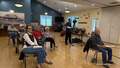
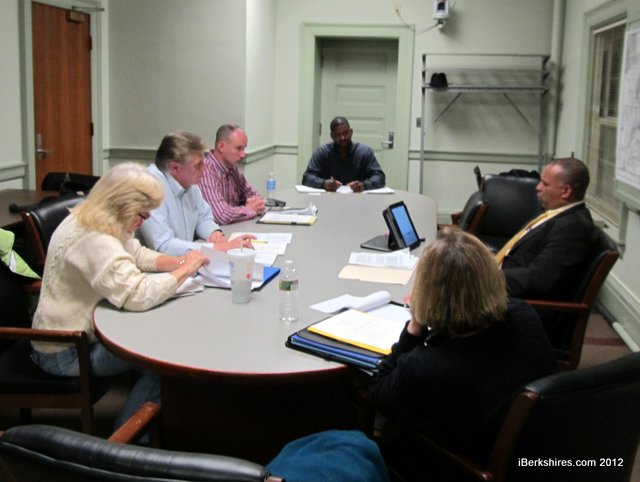 The Police Advisory Commitee held its third meeting on Monday after reforming in September. |
Sgt. Marc Strout and two officers came to the monthly meeting with a suitcase full of narcotics to explain to the seven-member board what they do on a daily basis.
The department averages 100 to 125 arrests yearly and one search warrant a week. They help patrol officers, the detective unit and the Berkshire County Drug Task Force.
The task force has made 645 arrests, investigated 11 homicides and executed 438 search warrants in the last 4 1/2 years.
The six-member core team, according to Strout, is particularly battling a prescription-pill epidemic but also enforces prostitution laws and monitors "hot spots."
"The thing that is getting to us now is the prescription pills," Strout said.
Abuse of prescription opioid-based painkillers is leading to greater heroin use. Children as young as 12 are getting into pills like Percocet, one of the officers said. And with changes in the OxyContin formula making it more difficult to abuse, abuse of Percocet, which also contains oxycodone, is on the increase.
"Heroin is a lot cheaper," the officer said as he passed around bags of the drug to members and explained that the pills he has cost about $90 but an equal amount of heroin can go as low as $20. The bags had stickers placed on them by dealers as "branding."
Police Chief Michael Wynn added that the costs in Pittsfield are "marked up" from other areas like Holyoke and the departments sees a lot of heroin coming from there. Wynn said he has seen markups in drug prices as high as 800 percent.
The core narcotics group builds the case with a team of informants. The group has a strong relationship with the state police and the drug task force and police officers, who can assist in making an arrest. Strout said that with one call, he could have 10 additional officers as needed.
They also deal with a lot of crack cocaine, the officers said, which tends to create more violent criminals. A lot of the city's violent crime and robberies are related to crack, they said as an "8 ball" of it was passed around the table.
Even marijuana is dangerous because police are finding a lot of it is now laced with phencyclidine (angel dust) or sprinkled with crack.
When evidence is seized, it is tested in-house first, which can provide enough probable cause for arrest and charges; the results from a state laboratory in Amherst is needed to proceed to court.
But the officers are not only out to arrest the dealers. They periodically perform "reverse stings" in which undercover officers sell drugs to the addicts.
They also work to prevent drug use from beginning: "We are here to help families," one officer said.
Parents are encouraged to call the department to discuss the possible signs of drug usage by their sons or daughters. Officers can talk to the child's school and then typically sit down with the parents and the child to "find help before it's too late." Often a one-on-one talk with the officer and the child works, too, they said.
In its third meeting, the committee is still figuring out its role. City Solicitor Kathleen Degan presented what she believes the committee is expected to do based on the city charter.
Degan said the committee is to advise the City Council on matters that are not "operational" nor "investigative." Items like a municipal project to build a new police station is in their purview as well as citizen policing efforts.
"You can't investigate crimes and you can't make suggestions on how they operate," she said.
Tags: drug abuse, drug crimes, narcotics, prescription drugs,