Arch Street Meets With Williamstown Housing Panel
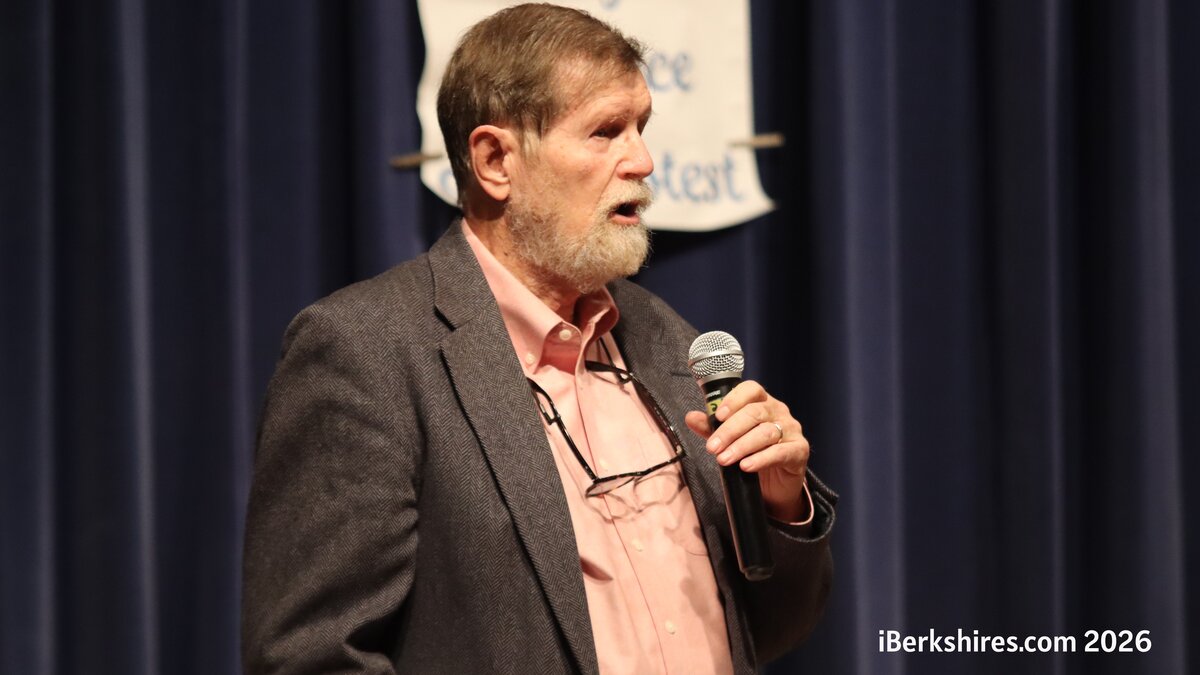
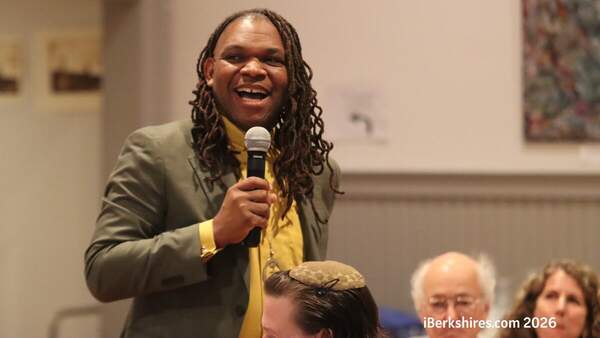
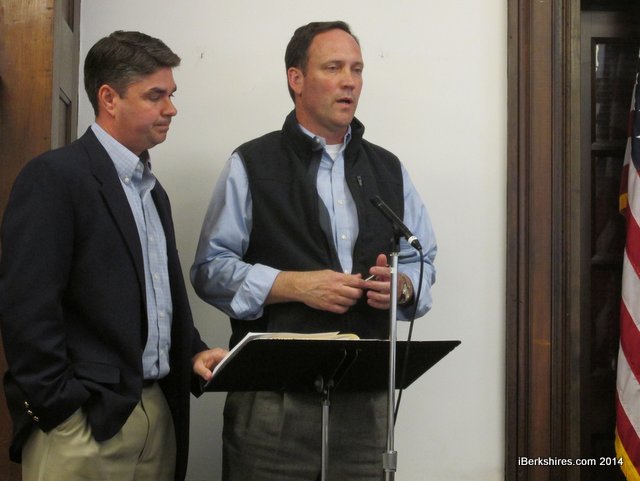 Richard Relich, left, and Colin O'Keefe address the Williamstown Affordable Housing Committee. Richard Relich, left, and Colin O'Keefe address the Williamstown Affordable Housing Committee. |
The Affordable Housing Committee held its second round of interviews of respondents to its recent requests for proposals to develop the former town garage site on Water Street and the former Photech property on Cole Avenue.
Only Boston's Arch Street Development submitted a plan to use both properties, and on Thursday its principals met with the committee.
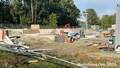
Arch Street's proposal anticipates a 25-unit, four-story apartment house at 59 Water St., the dirt lot currently used for parking, and 60 units of apartments in a "series of townhouse clusters" at the Cole Avenue site.
Among the questions the committee submitted to Arch Street prior to the meeting was whether the developer would consider doing one site and not the other.
Richard Relich and Colin O'Keefe said each site has advantages that make it attractive to the state funding agencies that would make a housing project possible, but developing them together makes the most sense.
"Having more units will generally bring down the soft costs," Relich said, referring to legal fees and permitting and architectural work and many of the expenditures behind the scenes of the brick and mortar in the end result.
Arch Street's competition, which met with the committee on Wednesday night, has proposed development only on Cole Avenue, where it foresees a single building with 46 units.
Relich said it likely would be hard to get financing for the smaller-scale project that would fit on the Water Street lot.
"Cole Avenue has enough economies of scale that it can stand on its own," O'Keefe said. "If you're looking to maximize units, the way to go is to do them both together.
"It's probably better to do them as one larger complex."
"We like both sites," Relich said. "That's why we want to do it. ... [Water Street] is a small site, but it's downtown development, and [funding] agencies look favorably upon that."
And if the project gets funded — a process that could be years down the road — the pair said it would build on the sites concurrently, allowing it to maximize the economies of scale.
Relich said Arch Street is not concerned that would mean flooding the market with 85 units of affordable housing at the same time.
"Based on our experience in North Adams and knowing the Williamstown market, we feel confident," Relich said.
He also noted that funding agencies would require market analysis before approving the project.
The Arch Street principals said they were familiar with the flood plain issues on the Cole Avenue site and the creek that runs below ground alongside the Water Street property, and they felt that both constraints could be addressed by engineering.
Unlike Berkshire Housing Development and the Women's Institute, the partnership that drafted a proposal for Cole Avenue only, Arch Street has not specified the architect and engineer it will bring into the project if it is awarded. But they named several of the firms with whom they have collaborated in the past and stressed that they prefer to use local subcontractors.
Relich and O'Keefe told the committee that while their 12-year-old partnership only has done renovations (like North Adams' Clark Biscuit) before now, they are excited by the prospect of doing new construction on both Williamstown sites.
 "Mill buildings are tougher," O'Keefe said. "From our perspective, what we've done is harder than new construction."
Unlike the Berkshire Housing/Women's Institute group, Arch Street did not include any conceptual drawings of its plans for either site. That was intentional.
Relich and O'Keefe repeatedly told the committee on Thursday that they need to do more study — particularly at the Cole Avenue site — to determine how their proposed housing could be situated. And even the 60-unit number is subject to further study, but Relich said they are confident that even with a reduced number of units on the Photech site, the project still will make sense from a fiscal standpoint.
The final design of the Cole Avenue development would be hashed out in consultation with the abuttors, Relich said, alluding to the criticism the competing proposal drew at Wednesday's meeting.
Connie Kruger, a consultant hired by the AHC to help it through the RFP process, told the committee that the lack of specificity in Arch Street's proposal is not necessarily a bad thing at this stage.
"This is very conceptual planning work," Kruger said. "It's pre-preliminary. ... I think both teams you interviewed said, 'Don't get attached to the plan.' This is an exercise to show we can do this many units and it might look very different.
"Tonight's applicants picked a strategy of not showing you a drawing because ... it's too soon."
Tags: affordable housing, housing projects,