Capeless: Heroin Creating 'Public Health Crisis'
 District Attorney David Capeless called a press conference Tuesday to both shed light on the situation but also show what resources are out there. District Attorney David Capeless called a press conference Tuesday to both shed light on the situation but also show what resources are out there. |
PITTSFIELD, Mass. — In just the first few months of 2014, five Berkshire residents have died from suspected heroin overdoses.
District Attorney David Capeless on Tuesday called a press conference to shed light on what he calls a "crisis" situation in the region.
"We are experiencing a public health crisis, nationally, in the commonwealth and here in Berkshire County. It's heroin addiction caused by overreliance on prescription medication to treat pain," Capeless said.
"Last year, in 2013, we saw a major shift in the cause of overdose deaths. Up to that point, typically two-thirds of deaths involved prescription medications. There were 16 confirmed overdose deaths here in Berkshire County, 11 involved heroin."
Capeless is still waiting for the autopsy and investigation results on six other suspected last year. The death numbers do not touch the surface of the number who have overdosed and survived or struggle with substance abuse, he said.
According to Capeless, the issue dates back some 10 years ago when the American Medical Association shifted general practice of doctors to encourage using opiates as a painkiller. From 2000 to 2008, prescriptions for opiates in the Berkshires grew 450 percent, he said. Twenty percent of Massachusetts residents have been prescribed opiates at some point.
With that, "we had a whole new class of opiate users and abusers and a whole new class of drug dealers."
As the demand increased for the "expensive" prescription pills, "high grade" heroin began to take hold at a much cheaper cost. Users grew addicted to prescription pills and then switched. Coupled with that, heroin changed forms and it didn't require the user to inject themselves anymore.
"Over time, the situation has become worse. Heroin is now the major drug involved in investigations here in Berkshire County, far surpassing cocaine, which had reigned supreme in the last few decades," Capeless said.
In 2009, a national survey found that prescription drugs were the second most abused by teens behind marijuana; last year, more teens died from drugs than car crashes.
Earlier this year, Vermont Gov. Peter Shumlin focused his state of the state address on combating the drug's expansion there. In February, the death of actor Philip Seymour Hoffman triggered national conversations about the issue. The Centers for Disease Control have previously issued warnings for acetyl fentanyl, a new type of drug involved in outbreaks of overdoses. The White House issued a white paper years ago foreseeing the "crisis."
And less than a month ago, Gov. Deval Patrick issued a set of initiatives to combat drug use in Massachusetts, which includes banning the drug Zohydro (a ban being challenged in court), allowing first responders to carry Naloxone, which combats overdoses, and allows it by prescription to families, made prescription monitoring programs mandatory, boosted treatment programs by $20 million and issued a public health advisory.
"All of these directives from the governor are a good start. But they don't address the root cause," Capeless said.
But Capeless also said, "we are not just aware of the problems in the Berkshires but are responding to them."
In the last 18 months, the county's Percocet prescriptions are down 20 percent and Oxycontin is down 15 percent.
While that will reduce the supply, Capeless says access to treatments must be made more available.
"People are dying. ... They are dying of overdoses," said Dr. Jennifer Michaels of the Brien Center for Mental Health and Substance Abuse Services. "We know treatment works."
Each year, an estimated 25 percent of opiate addicts will overdose or have a "near miss." Meanwhile, the county is seeing dozens of people die from overdoses each year, while many others are barely escaping death by getting medical treatment.
For Michaels, one of the biggest issues is the "stigma" put on users. Those who are falling into addiction are not always criminals, but rather someone who just got injured and addicted to prescription pills. It is a disease, she said, and while with other diseases the whole community reaches out with sympathy, with opiate addiction, the community shuns.
"These diseases are stigmatized," Michaels said. "We need more beds. We need more time. We need more transitional programs."
She is calling for a "variety" of treatment options to help those suffering from addiction find help to kick the drug. She says treatments come with a "multifaceted" approach to rebuilt the "muscles" addicts have to cope with the addiction.
"They need all the help they can get," she said. "Addiction is a lifetime disease but it can be put into remission."
Michaels said Berkshire Medical Center's McGee Unit forces patients to leave after just six days of treatment because insurance no longer covers them. But that isn't long enough.
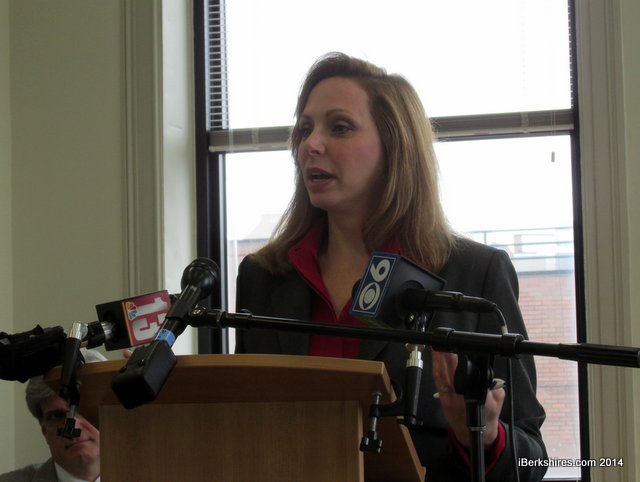 Dr. Jennifer Michaels said the biggest hurdle in treatment is getting people to treat addiction like a disease and not related it to crime. Dr. Jennifer Michaels said the biggest hurdle in treatment is getting people to treat addiction like a disease and not related it to crime. |
Last year, state Rep. William "Smitty" Pignatelli, D-Lenox, filed a bill to require insurance companies to treat addiction the same as any other disease.
Capeless is calling for insurance companies to do more and for local agencies to expand to help more. He wants residents to lean on their legislators to force insurance companies to provide the money needed for appropriate treatment.
Capeless said drug abuse isn't just about the deaths, though that is what comes across to his desk.
It "tears the fabric of the community," he said.
Addiction breaks down family relationships. And society doesn't trust drug users — making it more difficult for them to get a job and, the most obvious, often leading them into criminal activity.
"It is too easy to associate substance abuse with drug abuse and then to criminal activity," Capeless said. "There are so many people who struggle with substance abuse that have nothing to do with criminal activity. These are good people who found themselves in a bad situation."
Lorraine Scapin runs parent groups to help shake that stigma. Addiction has the ability to tear families apart but through the programs "Learn to Cope" and "Strength in Numbers," she hopes to give the families the support they need to help their loved ones who are struggling with the addiction.
Learn to Cope holds monthly meetings of parents in an attempt to educate them about various aspects of substance abuse.
"Substance abuse is part of the entire family and community," Scapin said. "We stress in those meetings that we are parents and families. And not professionals ... others have been there and there is always hope for recovery."
With the growing number of teen users, places like the Railroad Street Youth Project can provide counseling for addicts. Yevin Roh, drop-in center program director, said his organization allows the youth to build trust because counselors are "listening without judgement to get to the root cause."
"Drug abuse in Berkshire County can be addressed and can be assessed," he said.
Capeless said the county is continuing to drive down the availability of prescription drugs so fewer people get caught up in addiction in the first place.
Dr. Ron Hayden from Berkshire Medical Center said the health system put together a "pain steering committee" eight years ago of pharmacists, nurses and primary-care physicians. They set goals of educating those in the industry of the negative effects of overprescribing pain medication, revamping policies concerning prescriptions and increasing information sharing among those in the profession.
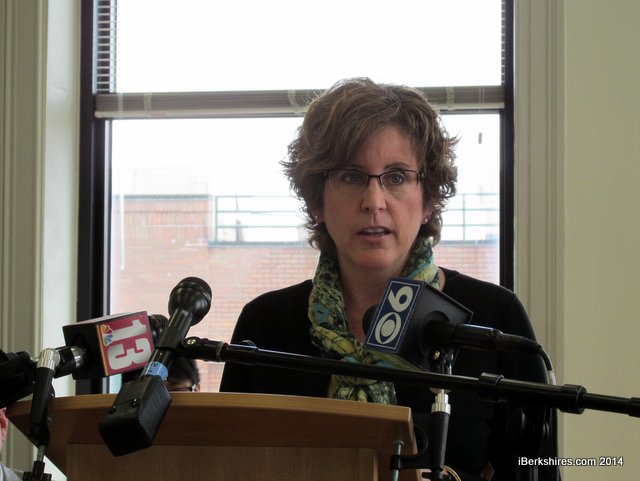 Lorraine Scapin says there are support groups for parents. Lorraine Scapin says there are support groups for parents. |
"If they aren't out there, they can't be abused," Hayden said.
The group has sent fliers explaining the dangers to prescribers and have implemented training programs for "up and coming" doctors.
A "flagging" system was put in place in the emergency room so that doctors and nurses can identify patients who may already have opiate prescriptions or addictions, copied more than 800 "pain contracts" patients have with their primary-care doctors and boosted their own internal prescription monitoring usage (previously it was optional for doctors).
Lois Daunis, of the Northern Berkshire Community Coalition, said the organization is running its eighth annual prescription drug roundup later this month.
That program places drop boxes in police stations across the county to get rid of old and unused medication — that way it doesn't end up back in the streets.
Over those eight years, 5,100 pounds of drugs were collected and destroyed at Covanta Pittsfield LLC. Ken Ryan, of Covanta, said his company has incinerated more than 1 million pounds of drugs from across the country.
Meanwhile, the Berkshire Public Health Alliance just completed a planning grant to bring all agencies together and ramp up strategies to combat it, according to Laura Kittross.
Tags: addiction, district attorney, drug abuse, drug prevention, drug treatment, heroin,