Nuclea Lab Closure Impacts Still Unknown
PITTSFIELD, Mass. — By 2013, Nuclea Biotechnologies was starting to look like a staple in Pittsfield.
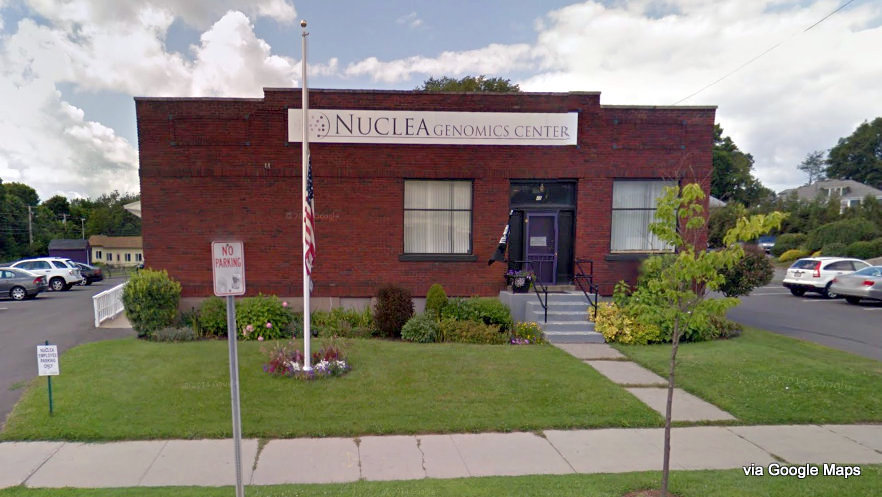
The company had just bought Wilex Inc., taking control of a 20,000 square-foot facility in Cambridge and 11 employees. The deal brought the company out of the research and development and into the commercialization of products.
At the time, then CEO Patrick Muraca said, "If life sciences really takes off at PEDA, then it is a real possibility that we can move the facility here."
Just a few months later, the Massachusetts Life Sciences Center announced a $510,775 tax incentive for the company to create 25 new jobs in 2014. It was the only award for Western Massachusetts out of $25 million and required the company to keep the jobs for five years — a term expiring at the end of 2018.
Former Gov. Deval Patrick toured the facility that March, touting the investment and proclaiming that, "We are trying to do our best to govern for the whole commonwealth."
Nuclea then boasted of employment numbers of 70 people, 43 of them located in the Berkshires with plans to add 35 to 40 people over the course of the next 18 months.
Muraca stepped down from his position to head a spin-off at the end of December and a new CEO was put in place. Still, Muraca was still going to be one of Nuclea's larger shareholders and declared: "Nuclea is not leaving Pittsfield."
The pomp and circumstances are now gone. A month later, quietly with just a posting on its website and without returning requests from the media, the company announced it is closing its Pittsfield lab and cutting positions.
"As part of its reorganization, the company is streamlining its operations which required eliminating position in both its Pittsfield and Cambridge locations," reads the short statement announcing the closure.
The company hasn't provided a timeline for the closure nor has it released information on the number of employees who will be affected. As for the tax incentive, the company might still get it.
It is required to file reports at the end of each year with job creation totals, so as long as Nuclea hits those benchmarks in 2016 — no matter where in the state it is — the Massachusetts Life Sciences Center can't take back the funding.
"The incentives were not based on geography, so long as the jobs are created somewhere in the state they are still eligible," said Christopher Gilrein, a spokesman for state Sen. Benjamin Downing's office.
According to Angus McQuilken, vice president for marketing and communication for the Massachusetts Life Sciences Center, the agency hasn't seen the company's 2015 job report but any layoffs now wouldn't be calculated until the end of 2016.
"We don't yet know the extent of the layoffs," he said. "Whatever layoffs occur this calendar year will be based on their filings at the end of the year."
Nuclea says it is currently going through a "a major internal reorganization," which includes rapid job creation.
"Since its inception, a major area of focus for the company has been economic development and job creation. The new plan will position the company to grow rapidly, and to continue providing essential diagnostic kits and services for the management of patients in oncology and diabetes," the statement read.
Pittsfield was the base of Nuclea's research and development, which is now being de-emphasized, while Cambridge served as the manufacturing arm. With the closure of the Pittsfield lab, it appears the city may not be in line to see the job growth incentivized by the state — the state funds may have just helped the company move east.
Nuclea still has not provided any details on its future in Pittsfield.
After hearing the news on Tuesday, Mayor Linda Tyer expressed concern for those will be impacted by the closure.
"Naturally, we are saddened to learn of the closing of Nuclea Biotechnologies. The company played a vital role in the advancement of the sciences in the city of Pittsfield, and throughout Berkshire County. Our focus is set on ensuring that those who are directly impacted by the closure will have the necessary support and assistance they need to move forward through this difficult transition," she said.
"But as we look ahead, it is important to recognize the many successful small businesses that are still here, and that serve as the strength of our local economy. As a city, our focus is to create the optimum conditions for not only their success and viability, but for that of new businesses as well."
Tags: biotech, closure, state grant,