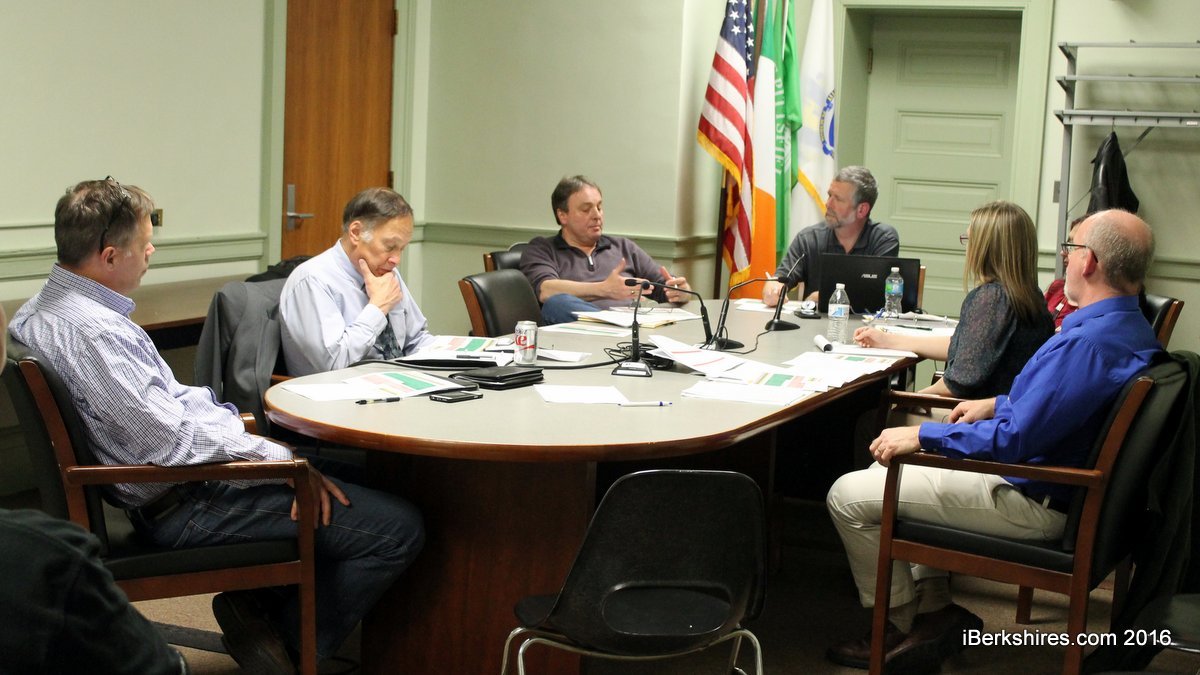
Pittsfield Airport Study Group Questions FAA Compliance With Westwood Leases
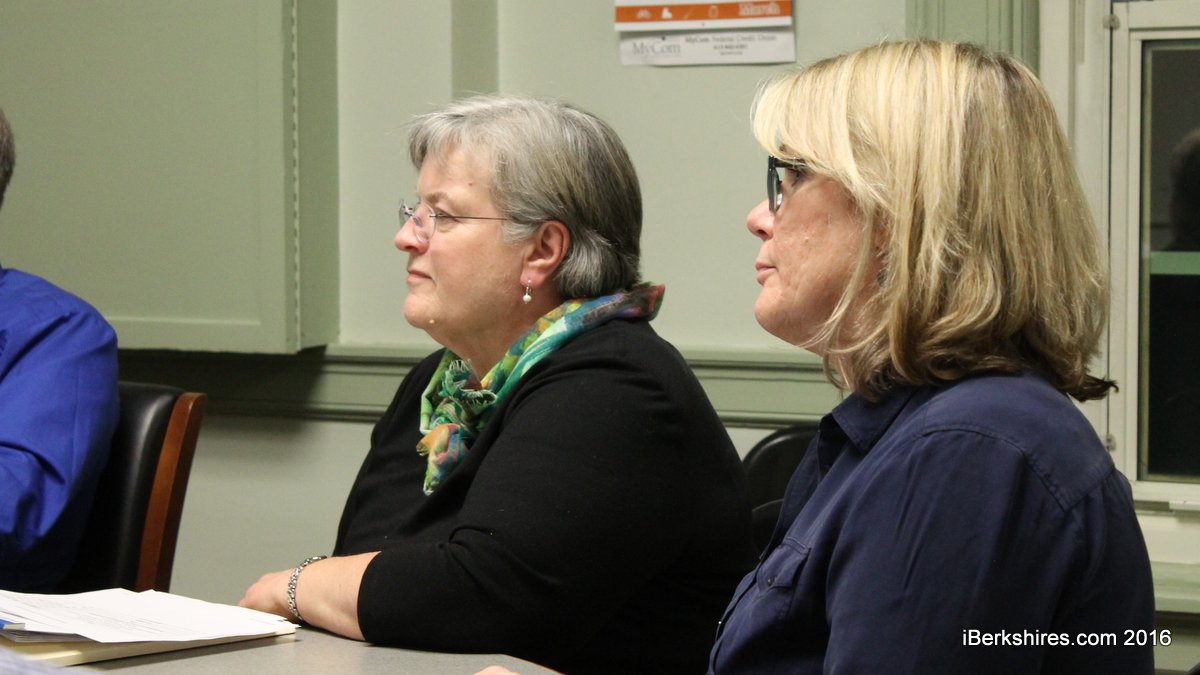
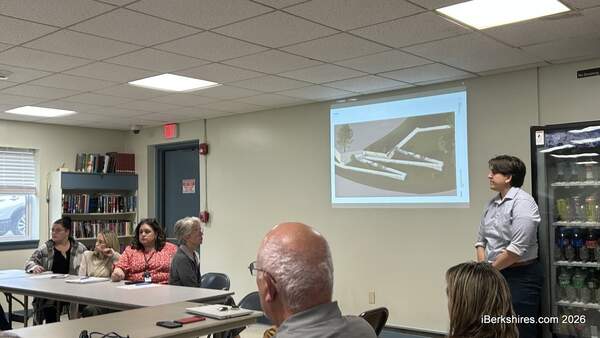
Ann Dobrowolski and Janis Akerstrom of the city's Office of Community Development presented what they found from 30 years ago on the Westwood Center.
In total, there is $20,312 generated in land leases from the park but 85 percent of that goes to the Pittsfield Economic Development Corp., which developed the park in tandem with the city's Office of Community Development.
With the money being funneled to an outside agency, officials fear that the airport has been out of compliance with Federal Aviation Administration regulations requiring all revenue from airport property be invested back into the airport.
"The two $1 leases, I think may have to go to court because the FAA considers that as subsidizing the local government instead of revenue for the airport," Airport Manager Robert Snuck said.
Ann Dobrowolski is a community development specialist in the city's Office of Community Development as well as the clerk for PERC. She recently tracked down what she could of the history of the park.
"It was developed during the 1980s when the Airport Commission declared some of the land on Barker Road as surplus property," Dobrowolski said, adding that 30 acres were carved out. "The city's community development office and PERC were designated as developers of the park."
The city and PERC used federal funds from the Department of Housing and Urban Development's Community Development Block Grant program to build out the road, infrastructure, wetlands work, and plot out seven lots.
"The original intention was to develop the property, create building lots, and sell them so companies could build buildings on their own land," she said.
But, the state's aeronautics divisions didn't want the land to be sold. The land was purchased by the FAA for the use of the airport and state officials didn't want the city to just sell off the acreage. Instead, state officials crafted legislation to allow for 40-year leases.
The 40-year leases were significantly longer than typical but it was enough to allow a bank to feel secure enough to finance a company building on the land. But, the park still wasn't as attractive as envisioned.
"It was challenging at the time, in the mid-1980s. The first two leases were set at a $1 per year rate because they needed to do that as an incentive to get the first tenants in the park," Dobrowloski said.
PERC had invested some $450,000 in developing the airport's land. Two appraisals were done determining that each lot was worth $1,000 per acre each year. An agreement was reached to escalate that by the consumer price index.
Since then, real estate values have far outpaced the consumer price index. Now, the city has seven lots leased - two of which are for $1 each - and takes in a total of $20,000.
"It is a leased commitment and the city can't break it," she said.
Because PERC invested the money and time to develop it, 85 percent of those revenues go back into PERC's programs while 15 percent goes to the Airport Commission. Snuck, however, says the FAA and the state never signed off on those leases.
"The FAA would never approve a lease for $1 a year," Snuck said.
The parcels were bought by the FAA in 1971 and the FAA requires all revenues from airport property be used for either airport operations or capital expenses. Snuck said he did find a letter from the agency warning city officials to make sure all leases are approved by the various agencies or else future funding could be in jeopardy.
"There is no known FAA document that says this is OK, it leads me the believe there were questions," Airport Commission Chairman Chris Pedersen said.
Pedersen said he's read an array of documents keeping the various agencies in the loop about the progress. But, "all of that comes to an agreement that says we will submit to the FAA and then everything stops. I don't know what happens. The paperwork may be there and I'm hoping it is but it creates a question if it isn't."
While the leases may seem to be under today's market value, former Ward 5 Councilor Jonathan Lothrop said the buildings at the Westwood Center generate $160,000 worth of taxes every year. While the city owns the land, the businesses own the buildings and pay property taxes on those and personal property tax — to the tunes of $129,522 for property tax and $30,568 for personal property tax.
"The airport is receiving more money from the city than it is generating," Lothrop said of the Westwood Center. "The money is the value of the property that is on those parcels and the personal property taxes."
But, of the total money generated from Westwood, the Airport Commission directly sees only a fraction of the income. The rest is sent to the city's general fund through taxes or PERC through the agreement.
Pedersen has no problems with the tax income going to city coffers instead of being directly given to the airport. But, he says he is worried that the FAA will find these leases and cut off or reduce funding for the airport.
.JPG)
Airport Manager Robert Snuck is worried about the city's compliance with FAA regulations.
The airport runs on a deficit every year and the city allocates money in the budget to offset the overruns.
Pedersen says his long-term goal is to make the airport self-sufficient so it doesn't need supplemental help from the city every year.
Lothrop said the airport's expenses are $191,717 per year.
The revenue is only $93,414 per year. This gives a deficit of $98,303.
However, the city sees revenues from the airport through property and personal property taxes. Between both Westwood and the airport, the city brings in $189,166 per year.
Added to the annual airport revenue, the Pittsfield Municipal Airport is responsible for $282,580 in revenues.
In 2010, 2011, and twice in 2014 debt was taken out for capital projects. Lothrop said the "high water mark" in annual payments to debt comes in 2017 with a bill of $175,662. That added to the expenses brings the total up to $367,380.
In all, it costs the city $84,800 a year to run the airport.
"The only money I can find not captured here is the money for PERC," Lothrop said.
A recent Massachusetts Department of Transportation economic impact study shows the airport generates more than $30 million in economic activity in the region.
Ward 4 Councilor Christopher Connell, who was one of three councilors to call for a study group, says the revenues have stayed the same for the last five years while expenses have gone up. The annual expenses are up since 2011 by nearly $20,000 from $172,249 to $191,717. With more projects on the way, he expects to be paying more for debt as well.
"You have to build revenue," Connell said.
He said the airport is regional in nature and he is looking at ways to generate a user fee to help offset the annual cost the city is incurring.
The study commission has already taken a look at the various fees and gotten an overview of the operation. In the end, the group is only authorized to make recommendations to Mayor Linda Tyer about the management of the airport.
Tags: FAA, leasing, PERC, pittsfield airport,