Pittsfield Approves Extending Tax Breaks For Beacon Cinema
.JPG)
Beacon owner Richard Stanley has exceeded his part of the TIF deal and the City Council approved extending that agreement for another five years.
City officials and DPI went searching high and low for a developer, from big chains to independent operators with little luck. Eventually they found Richard Stanley, who ran the Triplex in Great Barrington, but he, too, wanted nothing to do with the project.
But officials continued to lean on him, talking about how important such an attraction would be to the downtown and how it would help revitalize the area.
Eventually, he agreed.
"The Beacon was a community undertaking. We dragged Mr. Stanley into the project," said former DPI President Peter LaFayette, who was part of the organization at that time.
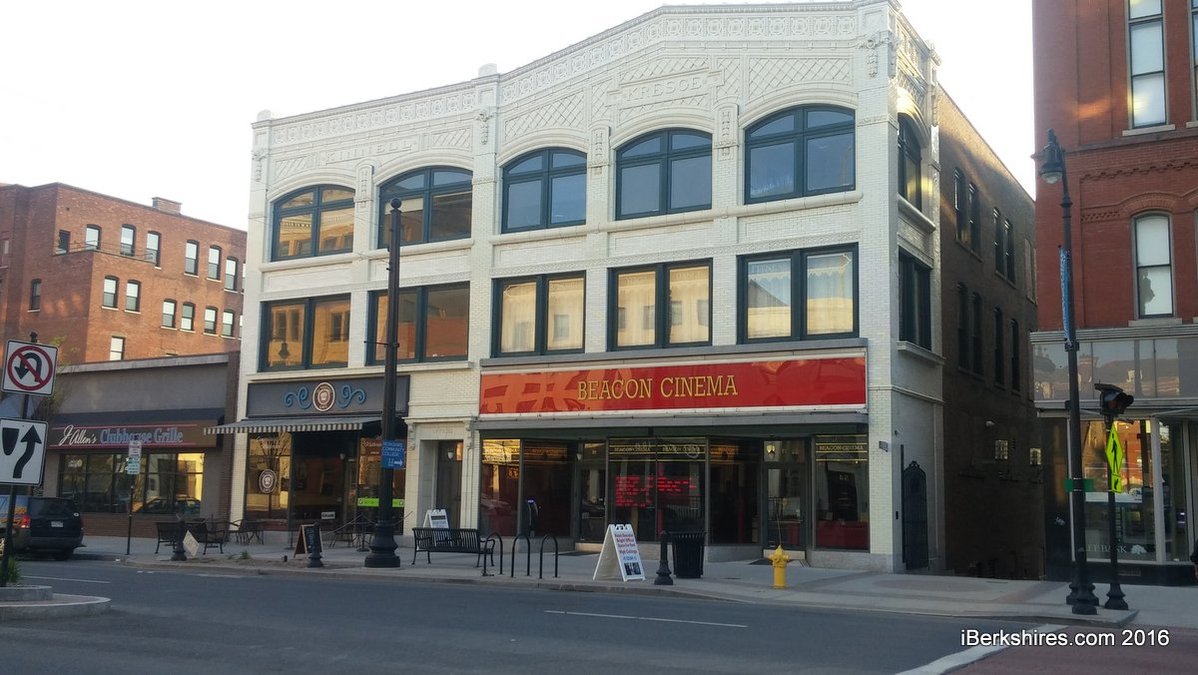
The Beacon Cinema opened in 2008, a decade after the first proposal. Eight years later, the theater is still struggling and has yet to turn a profit. On Tuesday, the City Council agreed to continue that partnership by giving Stanley an extension on a nine-year tax increment financing package for another five years, extending it until 2022. In a 7-2 vote after heated debate, the council agreed that the benefits the Beacon brings to the downtown far outweigh the $72,000 or so in tax revenue being forgiven during that period.
"They are willing to put more money into this. We also learned that they aren't making a profit on it. We could say that's a bad business model or we can thank them for continuing to invest in Pittsfield," White said.
Stanley is proposing to invest yet another half million dollars into the building to compete with the changing theater landscape. That money will be focused on new seating similar to those at the Regal Cinema at the Berkshire Mall. The expansion of digital movies and Regal Cinema's investments were unforeseen back in the 1990s, making the business even more difficult to sustain.
The Beacon has a "turnaround" plan to implement in the next few years in order to make the theater successful and the city's tax forgiveness is eyed to usher that along. While other businesses in the city don't have such a luxury, those other businesses weren't put in the position of Stanley, who was asked to take the risk as a partner in the project that as a business alone wouldn't be feasible.
"It was a public/private parnership," Ann Dobrowolski, community development specialist in the Department of Community Development, said.
The city invested some $1.8 million to restore the facade of the historic building, loaned the business $1.5 million from the General Electric Economic Development Fund, helped bring in another $1 million loan from the state Office of Travel and Tourism through a grant, and there was nearly $10 million in tax credits given. Additionally, a consortium of banks teamed up to provide another $4.6 million loan.
That is on top of the TIF agreement, which set a base rate for property taxes at $609,100 but forgave the increases in assessment because of the investment. That base amount remains and the company pays on that with the increases being slowly integrated in over the rest of the five-year extension. Personal property taxes were fully forgiven and the new agreement brings those back onto the rolls slowly over time as well.
For the Beacon's part, Stanley was asked to invest $11.9 million and create 14 full-time jobs and 22 part-time jobs in five years. In 2015, the company had exceeded that with spending more than $20.2 million and creating 39 total jobs.
"Richard Stanley has exceeded the promises he made to Pittsfield. He has invested more money and he has created more jobs," DPI President Jesse Cook-Dubin said.
The new agreement would extend the tax breaks until 2022, and ease into paying 100 percent of the value. In 2017, the Beacon would again pay 50 percent of the increase and each year pay 10 percent more. From July 1 until June 30, 2022, the last year of the amended agreement, the company would pay 90 percent of the increased value. In 2023, the Beacon would be fully on the tax rolls.
The agreement didn't come easy though and for more than two hours the City Council debated the issue. Both City Council President Peter Marchetti and Ward 4 Councilor Christopher Connell recused themselves from the discussion because they each have business relating to the operations. That put the decision in the hands of nine councilors but still required a majority of the entire board.
Councilor at Large Melissa Mazzeo and Ward 5 Councilor Donna Todd Rivers argued against the tax break. Rivers ran her own business on North Street — Bisque, Beads & Beyond — for a number of years, but her focus wasn't on the downtown as advocates had said. Her focus was on the city's finances, which is at a point where the ability to tax is eroding away.
"I believe in the ebb and flow of the marketplace," River said, saying that if the $20,000 a year is going to put the company out of business then there are bigger issues within it.
She said the Beacon owners knew the tax bill was coming and if taxpayers want to further support it, then they can do so by patronizing the theater. Meanwhile, there are plenty of other needs in the city, particularly with increasing the size of the police force. She called on Stanley to pay his share of taxes to help put officers on the street.
Mazzeo said TIF agreements aren't intended to supplement ongoing businesses but rather to help businesses start. All other operating businesses have to face the same challenges but aren't granted tax relief, she said.
"This is a significant project. We're glad that we have it. But at the same time there are so many other businesses that are in the same kind of bind, they are doing their best to stay afloat and they are paying what everybody else is paying," Mazzeo said.
Mazzeo said the city "went above and beyond" in supporting the project and now every dollar collected in tax revenue is important.
But for others, the debate wasn't about the one specific building but rather the contributions to the downtown. Since the Beacon's opening, seven restaurants have opened in the immediate area and nearly all of the North Street storefronts have been filled. The Beacon was just one part of a community effort to transforming the downtown, advocates said.
"That revitalization is not yet complete but there has been tremendous progress," Berkshire Chamber of Commerce President Jonathan Butler said. "That momentum over the last 10 years have led to tremendous investment in downtown."
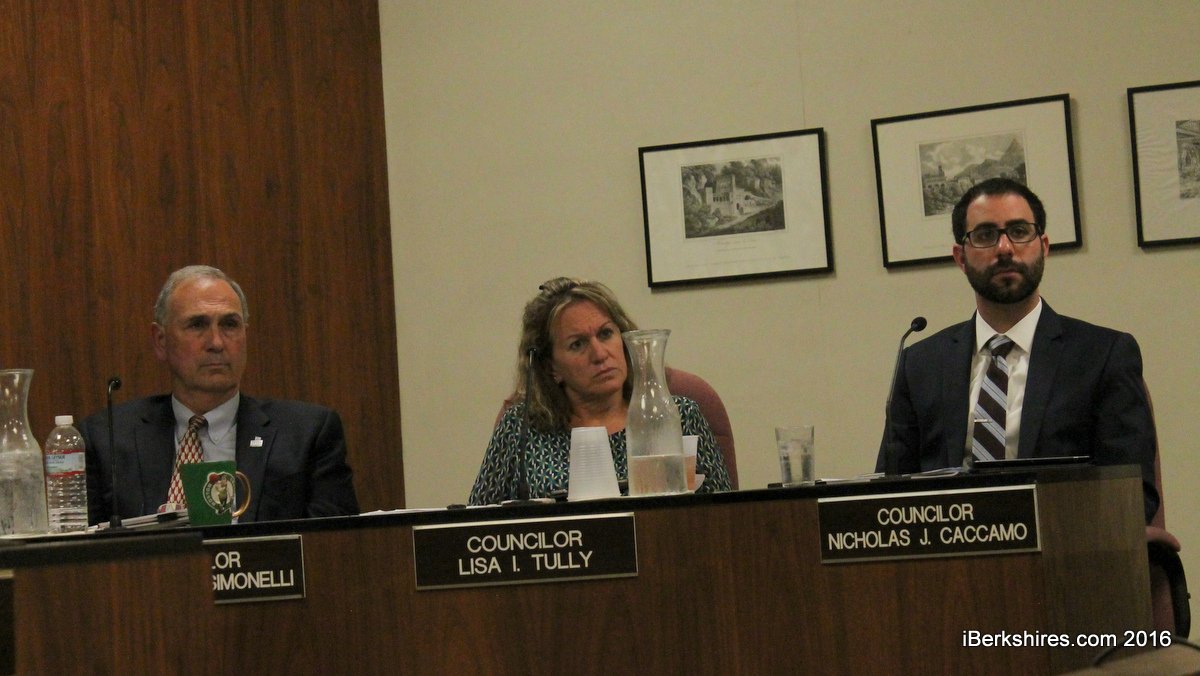
Councilors Anthony Simonelli, Lisa Tully, and Nicholas Caccamo all voiced support for the Beacon.
"It wasn't until the Beacon Theater was proposed when we thought [downtown Pittsfield] would be a good fit for us," said David Renner, who owns the Marketplace Cafe right next door to the cinema.
Renner says he has customers who are coming or going to the Beacon.
Laurie and David Tierney recently completed a $14 million renovation of the former Besse Clark building into the upscale Hotel on North. Laurie Tierney told the City Council that her hope is to contribute to that revitalization effort begun by the Beacon and others.
"We cannot afford to lose anything else from our downtown. What kind of downtown would we have if we didn't have arts and culture? If we didn't have a great movie theater?" she said.
DPI Executive Director Kristine Hurley read a letter from the owners of Flavours of Malaysia and J Allens, both supporting the Beacon and crediting it for driving business their way. Those other businesses pay taxes and contribute to local receipts through the meals and hotel taxes.
"I do think it would be shortsighted of us if we don't approve this for the Beacon," Councilor at Large Kathleen Amuso said.
While the councilors did argue over whether or not the Beacon would close if the incentive wasn't approved, Ward 2 Councilor Kevin Morandi said, "I want to play it safe and do everything we can do [to help business] and not what we didn't do."
"We need to do everything, as far as I'm concerned, to keep a business and promote business," he said.
Tags: beacon cinema, economic development, movie theater, North Street, tax incentive,