Pittsfield Approves Tax Agreement For Redevelopment of Holy Family Church
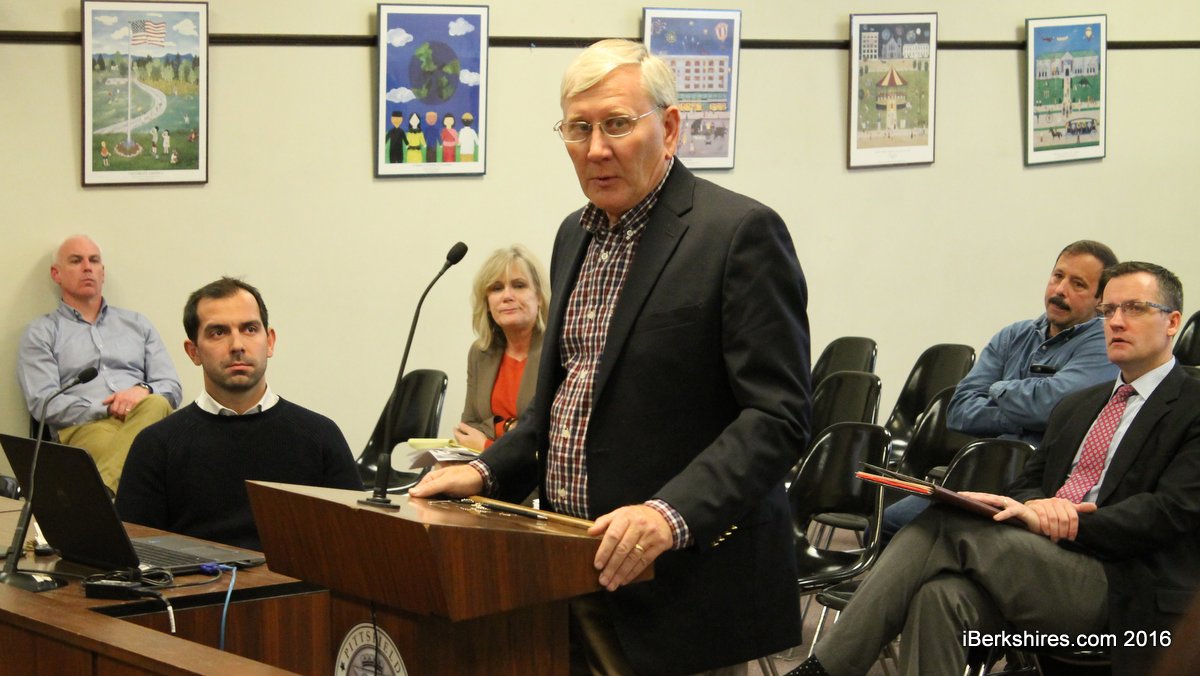
David Carver is looking to rehabilitate the former Holy Family Church into 10 market-rate housing units. He hopes to close on the property by the end of the year.
Developer David Carver, owner of Scarafoni Properties and doing this project under WDM Properties, is looking to turn the former church into 10 market-rate housing units.
The City Council approved Wednesday night two pieces to help bring the financing together: a tax increment exemption to ease the tax burden from increasing the assessed value of the building and extending the area eligible for the state Housing Development Incentive Program, which will provide state tax credits for the development.
Carver is looking to invest $1.8 million in the building. But because of the age and type of the structure, the cost is higher than other projects and it is more difficult for financing to be pieced together. Carver says banks set an appraised value of the renovation based on the income to be generated and will loan just 70 to 75 percent of that appraisal.
"The value of these commercial properties are derived by the rental income," he said.
But, the costs to do the renovation exceed that, creating a funding gap. In this case, Carver says there is about a $900,000 difference.
One piece is the state tax credits, which offer some relief on the income tax paid — or can be sold on the open market.
The other piece is the tax agreement with the city, which essentially freezes the tax increases that would come with a higher assessed value after renovation and then eases in those additional fees over the following nine years.
"In reality, it is not a break. You are paying the same level of taxes we are just not nailing them in the next year or two when this investment is made," said Council Vice President John Krol.
The city assesses the property at $334,500 and Carver will continue paying the taxes on that. After the project is completed, the assessed value moves to $700,000 but in the first year, he will only be asked to pay on the $334,500.
"The city still will be generating the same revenue it is now," Carver said. "We are not asking the city to go backwards on that."
In the second year, he'll be asked to pay 10 percent of the increased value on top of the $334,500, in year two, 20 percent of the increase beyond that and so forth until the tax on the full $700,000 is charged.
"It provides local tax exemptions to a developer in order to encourage market-rate housing in the development zone," Director of Community Development Janis Akerstrom said.
Over the next 10 years, Carver is anticipated to pay an estimated $73,864 on the base value — an estimate that would remain with the property whether or not it is redeveloped — and then $27,962 on the tax increase from the improvements. The city in total would be forgiving $42,748, which would be required if the project was developed but there was no agreement.
The council also approved expanding the zone in which developers can use the Housing Development Incentive Program, for which the state will provide tax relief on the income taxes. The two pieces are eyed to be a "small component" of the financing package, which includes Carver's own money, bank loans, and the tax relief. Those combined help make the numbers work in the long-term to save the former church.
"This is a long-term investment for the company. These are very small returns on long-term investments. What the state credits do is raise money to build them," Carver said.
The combination of the two incentives is the exact same package that led to the redevelopment of the Howard Building and the Onota Building by Allegrone. Those projects created new market-rate units on the upper floors and newly renovated commercial space on the lower floors. The Howard's units sold out quickly and more than half of the Onota units were rented, with move in day still a week away.
"Market-rate housing is in high demand in the city," Krol said. "This is a critical area so the more we can create of this, the better."
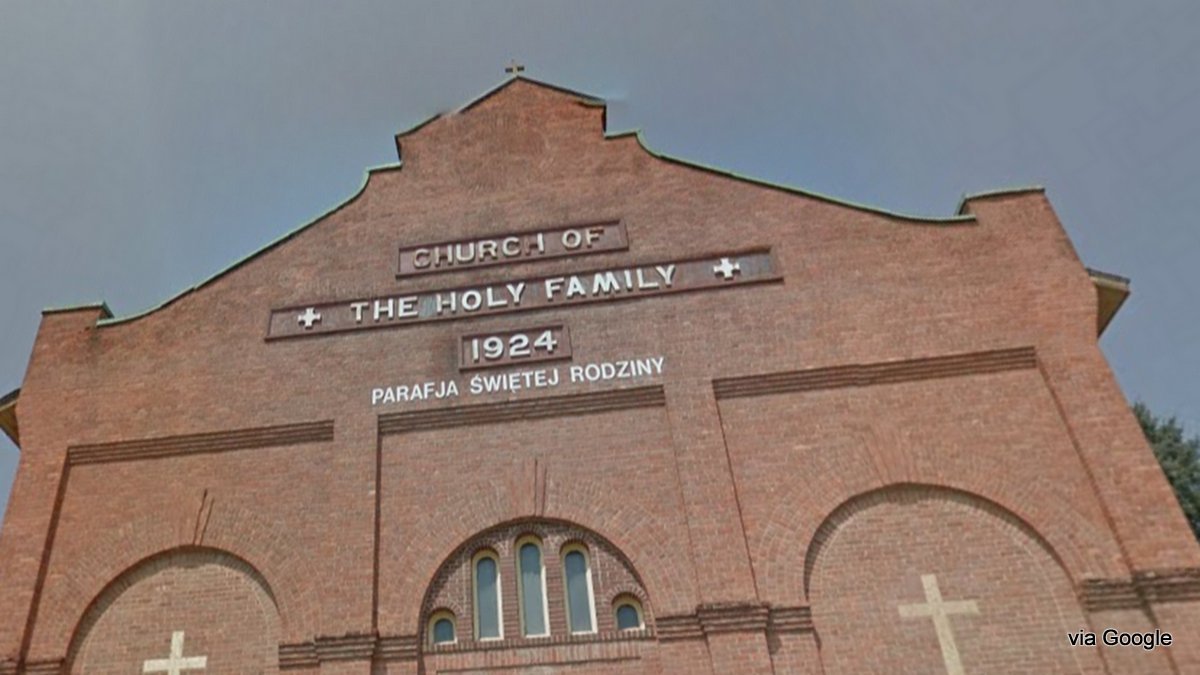
The church has been empty for some time now. It was first constructed in 1906 as a power house for the Housatonic Railway. That was moved in 1916 and it sat empty for eight years. In 1924, the Polish community in Pittsfield transformed the building into a church.
But, in 2008 it was part of a wave of six churches in Pittsfield closed by the diocese. It has sat vacant since.
"This is a building that may not be usable for other purposes. I think this is an opportunity to take a building that is sitting there vacant and turn it into something productive and provide revenue," Akerstrom said.
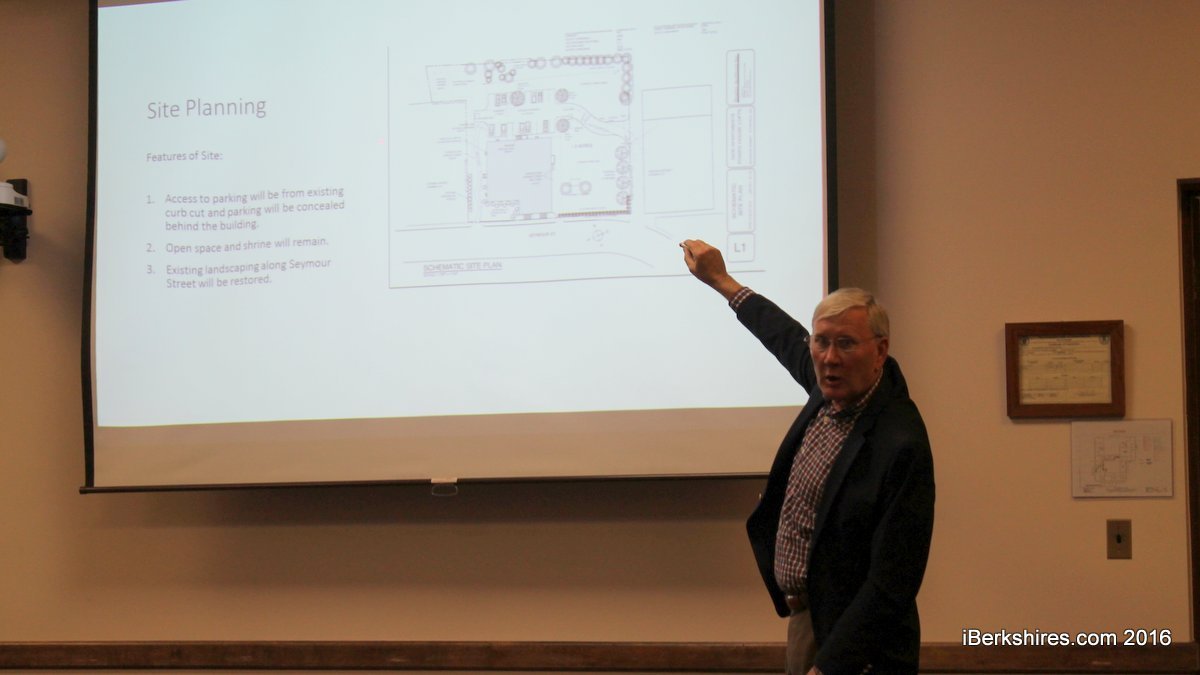
Carver hopes to transform the building into having six one-bedroom apartments; one four-bedroom apartment; and one three-bedroom apartment. He said the plans are to keep much of the historical pieces to the building — including keeping the shrine outside.
The project closely mirrors ones he has done with other former churches including creating eight apartments in the former St. Raphael's Church and its rectory in Williamstown. Williamstown helped fund that project through the Community Preservation Act, which the city just adopted on Tuesday.
Carver also renovated the former Notre Dame School on Melville into 11 market-rate housing units. And he renovated the former Holy Family Church in North Adams into four large apartments.
"I think this is a great project. It is in my ward and I think it is great for that section of the ward," Ward 7 Councilor Anthony Simonelli said.
Councilor at Large Peter White said those types of incentives are tools the city has to help encourage investment. He hopes to expand that opportunity to more people and to different areas of the city.
"This is exactly what we need to be attracting to Pittsfield. I hope we can expand this area," White said. "We need to have methods for homeowners to invest."
Carver hopes to start working on the building in December or January and construction is expected to take a year.
Tags: church reuse, housing, housing development, tax incentive,