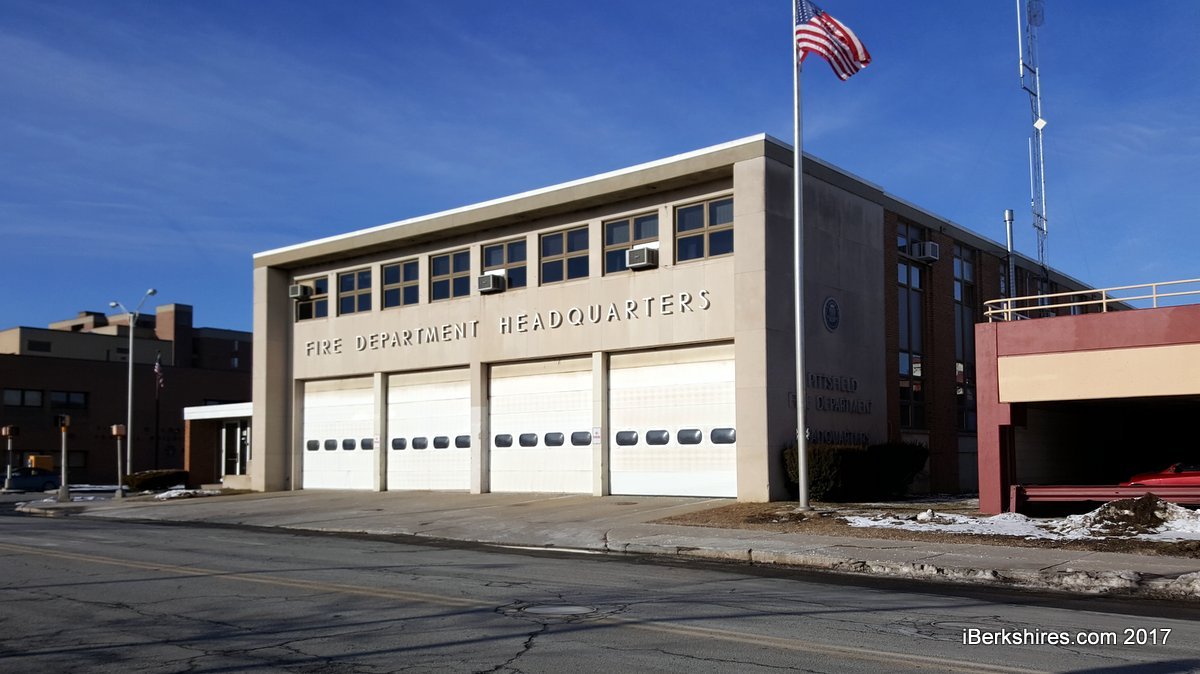
Pittsfield Fire Looking To Buy Used Ladder Truck
PITTSFIELD, Mass. — The need to call in ladder trucks from neighboring towns may soon come to an end.
On Tuesday the City Council will be asked to add $200,000 to a previously approved capital request to purchase a used 2014 truck. The Fire Department has been without a ladder truck for close to six weeks as both the front-line and the reserve trucks were taken out of service.
The council is now being asked to increase a capital request from $600,000 to $800,000 to purchase a 2014 Pierce Manufacturing Co. 100-foot aerial ladder truck, which the department had found available. The money is coming from a separate allocation for design work for a new police station, reducing that from $250,000 to $50,000.
"That amount includes a two-year warranty, paint and lettering of our choice, and miscellaneous equipment and ground ladders. Additional benefits include the almost immediate delivery of this unit and it shares many common components with our Tower-1," Fire Chief Robert Czerwinski wrote in a note to the council.
The city had two ladder trucks, Tower-1 and Truck-2. Truck-2 is a 1994 Spartan/Darley pumper and was the front-line vehicle for 15 years. In 2009 the city received a federal grant to purchase a brand new Pierce ladder truck - Tower-1. Truck-2 then became the backup and has been in and out of the shop for a while. Just short of two years ago it had failed an emissions test and needed repairs.
In February of last year consultants Emergency Vehicle Response Fire Protection Services called for Truck-2 to be fully removed from service in 2019 and Tower-1 would serve as the reserve.
"Truck 2 is twenty years old and in very poor condition and therefore is not a safe and reliable apparatus to be utilized as either a reserve or front line apparatus. In order to properly space out new apparatus purchases, this vehicle, unfortunately, must remain in the fleet for several more years until a new aerial ladder is placed into service during 2019," the consultants wrote.
It was then estimated that Truck-2 needed $150,000 worth of repair work to the ladder alone, not counting the cost to make repairs to body and engine. The department looked into refurbishing the vehicle but early last year it was decided that the truck would be replaced because the cost of the repairs would exceed the value of it. The City Council approved $600,000 for that purchase.
"For the past six months, fire department personnel have diligently searched, traveled and inspected a number of pre-owned ladder trucks. While some of these vehicles were clean, low mileage vehicles, their age was closing in on 20 years. Late model pre-owned fire trucks are not easy to find," Czerwinski wrote.
In November Tower-1 was sent out for inspection and Truck 2 was expected to be used on a limited basis. But as soon as Tower-1 was sent to Albany, N.Y. for the third-party inspection, staff found Truck-2's stabilizers would not retract and therefore the truck was useless. It was completely removed from service and will soon be disposed.
Tower-1's inspection showed "severe corrosion on the undercarriage" and additional repairs were needed. It's been in the shop for the last six weeks and ladder trucks from Dalton and Lenox have been called for support.
During the search for a replacement of Truck-2, the department did find the 2014 Pierce which has been used as a demonstration model for the company at traveling exhibits and trade shows. A brand new version of that truck would cost $1.2 million and would have to be built and delivered in a year. Pierce has agreed to sell the demonstration model for $780,000 and can deliver it quickly.
"Should this truck be purchased it would cause a slight deviation to the fleet replacement plan set by the consultants of EVR. They had recommended that Truck-2 be replaced in FY2019 and Engine 3 in FY2018. My recommendation would be to switch those two purchases,(Funds permitting) and continue with the suggested replacement plan," Czerwinski wrote.
The department's entire fleet has been aging but the fleet has been slowly getting upgrades. The City Council approved replacing two command vehicles and the city bought a replacement engine last year.
That new engine, however, didn't come without a fight. In 2014, former Mayor Daniel Bianchi did not fund the request for a new truck and instead wanted to purchase five rapid response vehicles. His logic was the vehicles were less costly to repair and maintain while the majority of the department's calls are for medical. But, the Fire Department prepared a comparison showing the cost per mile for maintenance and repairs for both types of vehicles is not drastically different. Instead, the department wanted an engine to be prepared for fires and not have to drive back and forth to the stations to switch vehicles.
The argument was a center piece in what led to a standoff between the City Council and the mayor and ultimately, no capital budget was passed that year. In 2015, Bianchi did place the replacement of the engine in the capital budget. In 2016, Mayor Linda Tyer put forth $705,000 to replace the ladder truck and two command vehicles. The city's five-year capital plan also calls for another engine replacement in 2018.