Berkshire County Getting $4M Toward Housing Improvements
GREAT BARRINGTON, Mass. — Millions of federal Community Development Block Grant funds are coming to Berkshire County for housing and economic development.
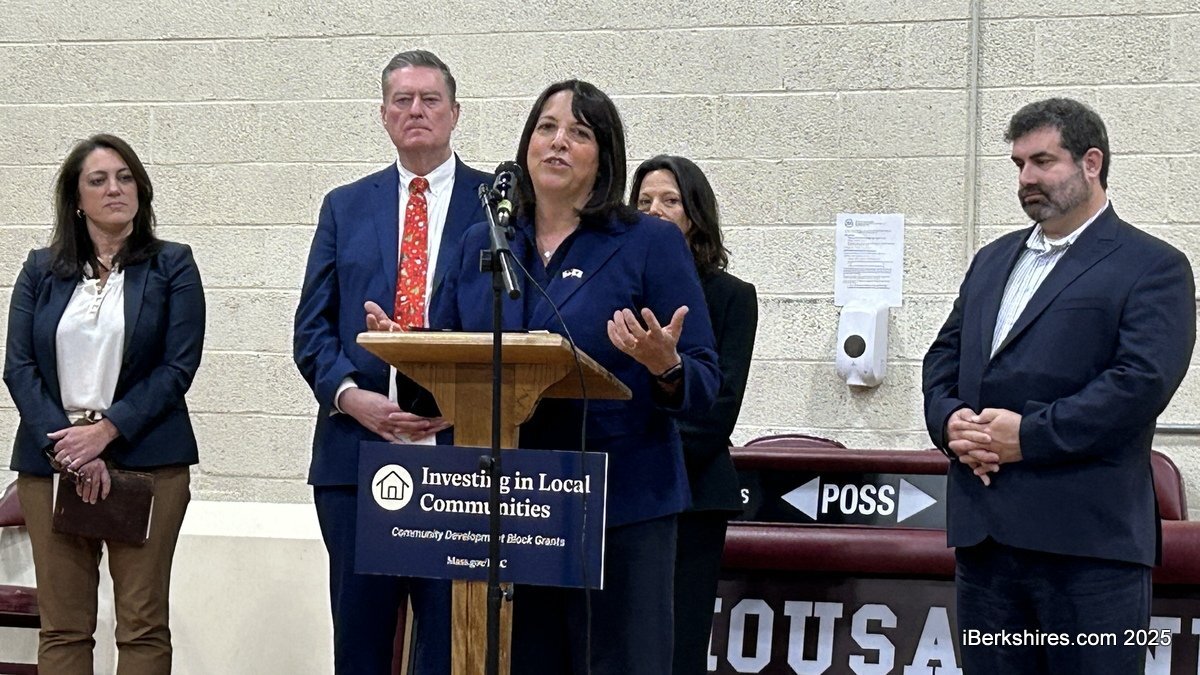
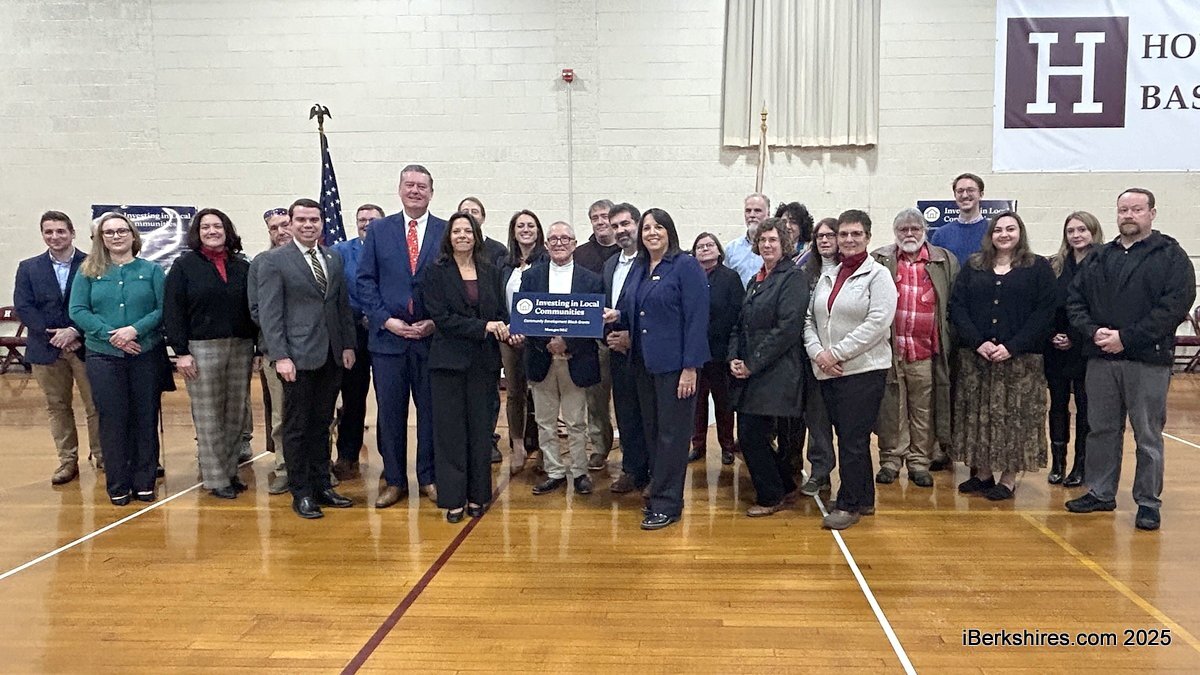
On Thursday, Lt. Gov. Kim Driscoll said announced $33.5 million in federal CDBG funds, of which $5.45 million will be coming to the county.
Great Barrington, in conjunction with Egremont and Stockbridge, has been allocated $1.25 million to rehabilitate approximately 14 housing units.
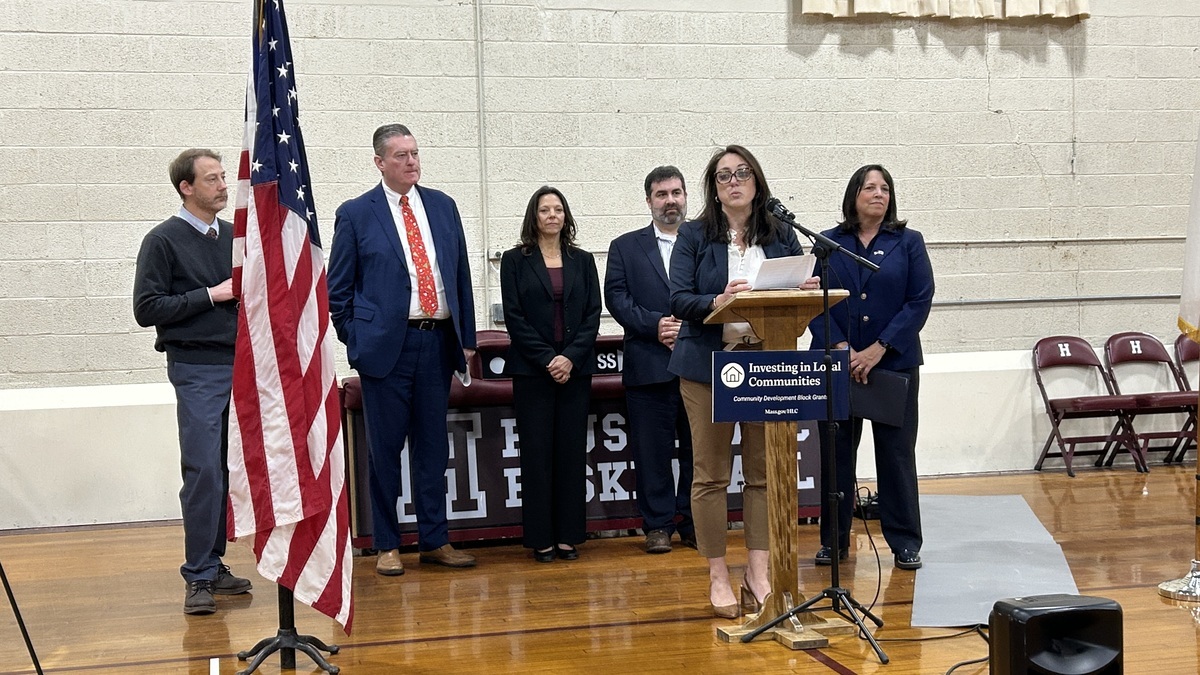
"We really recognize the importance of having strong local partners who are doing that hard work every day, educating our kids, keeping our neighborhoods safe, investing in the best of what makes our community special, places we make memories, places that drive the economy," said Driscoll at the Housatonic Community Center.
"These dollars in particular can help do all of that, along with helping cure older housing stock and meet the needs of community members who might find a desire to have a new roof or make a housing unit more accessible, but don't always have the resources to do it. These dollars are really special, and we're really grateful."
The federal fiscal 2025 CDBG awards, funded by the U.S. Department of Housing and Urban Development and administered by the state Executive Office of Housing and Livable Communities, help small cities and towns undertake projects that benefit low and moderate-income residents.
The more than $33 million will be dispersed to 52 communities across the commonwealth. Hinsdale and Florida will share a total of $950,000 to rehabilitate 11 housing units; Lenox and Sandisfield will share a total of $1,050,000 to rehabilitate 12 housing units, and New Marlborough, Mount Washington, and Otis will see a total of $1,250,000 to rehabilitate 15 housing units. North Adams is getting $950,000 for the second phase of senior center improvements and road repairs.
The funds can be used for projects involving housing rehabilitation, sidewalk and road improvements, planning studies, public facility upgrades, and social services such as food pantries, youth programming, and homelessness prevention.
Town Manager Liz Hartsgrove said this reflects what is possible when federal, state, and local governments work together, and that the public investment shares significance beyond dollars alone.
"These programs and projects become instruments of stability, equity, and trust. It allows the government to meet real needs, strengthen neighborhoods, and ensure residents can remain safely and securely in their homes. Places where lives are built, memories are formed, and community identity is shaped for generations to come," she said.
"Investments like CDBG reduce uncertainties for families, provide reassurance for seniors, and create pathways for households to remain rooted in the communities they contribute to every day. When individuals and families are supported in this way, they are better positioned to thrive, and when people thrive, communities grow stronger, more resilient, and more connected."
Assistant Town Manager Christopher Rembold explained that the town hopes to help about 14 households in Great Barrington, Egremont and Stockbridge make critical repairs to ensure their homes are healthy and livable.
There is very little affordable housing in the town, he added, with a median household income of about $57,000 and a median home costing about $564,000. A housing grant manager will handle funding applications.
The administration is also launching a new Rural and Small Town Housing Choice Community designation for its Housing Choice Initiative, first created in 2018 and updated in 2025, that recognizes municipalities producing housing and adopting local policies that support housing growth. There are 77 Housing Choice communities, and Great Barrington is one of the 15 rural ones.
Changing the designation makes close to 100 communities eligible.
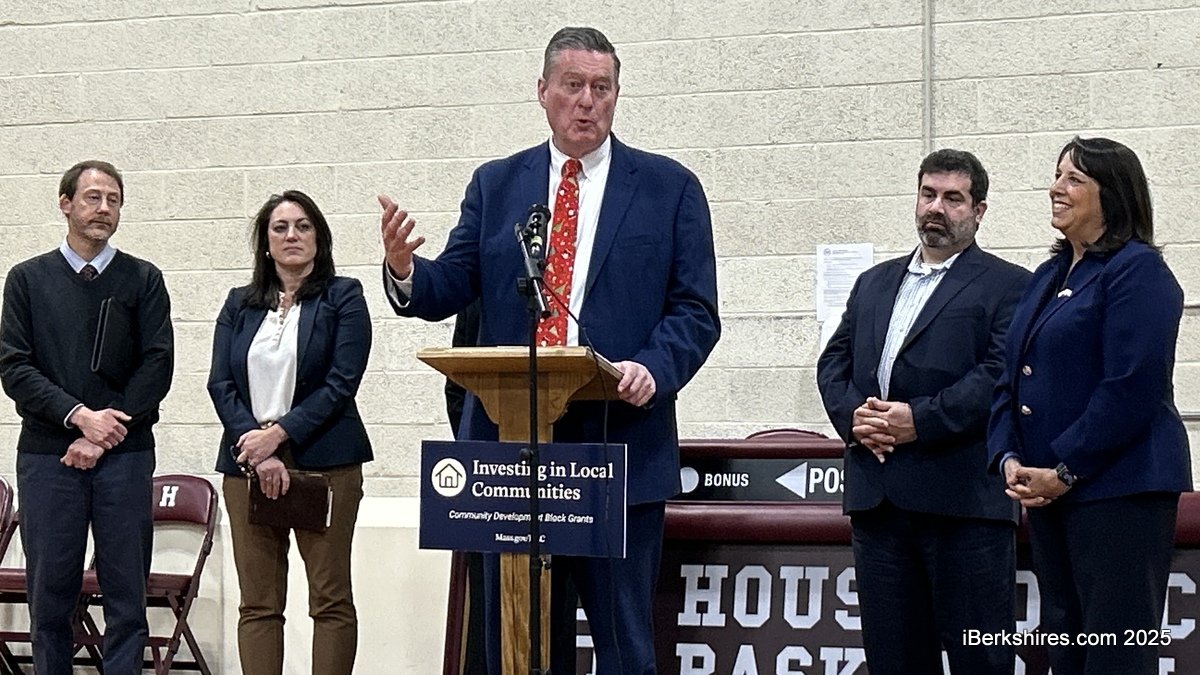
"The Housing Choice initiative is one of our key programs to encourage and reward communities that are increasing production," said Executive Office of Housing and Livable Communities Secretary Edward Augustus.
"Housing Choice communities have demonstrated housing growth and received access to exclusive grant funding and other assistance to help them maintain and expand their progress to build more homes and bring down prices."
He explained that rural towns are uniquely constrained when it comes to housing production because they confront a mismatch between their existing housing stock and the needs of their residents. This the housing secretary fourth visit to the region in the past year; he said this new designation is a result of ongoing conversations.
"Many homes are older and in need of repair; there are many larger homes with only one or two people living in them, there are often fewer opportunities for older adults to downsize and stay within those communities, and at the same time, families looking for larger homes often can't afford the high cost," Augustus said.
"That's why, beginning in January, communities with a population of 7,000 or less, or with less than 500 people per square mile, will be eligible for the new rural, small-town housing designation."
State Sen. Paul Mark pointed out that eight of the awards will benefit communities that he represents, amount to 22 percent of the allocations.
"I should only be getting 2.5 percent, and I think it means that, for once, the governor and the executive branch are really focusing on rural, really paying attention to Western Massachusetts, and I feel like we're actually receiving our fair share, which is what we try to prioritize in the Legislature," he said.
He feels that the support is a result of both advocacy and demonstrated need. There is a recognition that rural communities have been overlooked for a long time, he said, and having partners in the governor’s office ensures that when those arguments are made, they are actually heard.
Driscoll said it is powerful to be able to support community members, "and there are never enough resources when you think about our older, historic infrastructure."
"We want you to be able to stretch these dollars, this is one of the more flexible tools we have within local government to meet local needs, and we we really believe these dollars are going to provide meaningful differences to communities and play a critical role in helping low and moderate income residents meet the needs that they have to continue to lead a high quality of life," she said.
Tags: CDBG, housing,