Substance Abuse Prevention Part 1: The Data
.jpg)
Over the last 10 years, data collected from the Berkshire United Way is showing a decreasing percentage of county students using alcohol, marijuana, and tobacco products. However, compared to the national average, Berkshire students are still using those substances at a greater frequency than national averages.
The data is pulled from the biannual prevention needs assessment, which polls students with pointed questions designed to shed light on issues.
Since 2006, the percentage of eighth-graders using alcohol in the last 30 days dropped from 27.3 percent to 8.6 percent; marijuana dropped from 12.9 percent to 6.9; and cigarettes dropped from 11.9 percent to 2.2 percent (e-cigarettes were added to the survey this year at a rate of 8.1 percent but it is unclear the impact that has on the cigarette percentages).
In 10th grade, the alcohol numbers dropped from 50.2 percent to 28.4 percent; marijuana only a small decrease from 26.4 to 26.2; and cigarettes from 16.4 percent to 6.7. In 12th-grade, alcohol use dropped from 62.7 percent to 49.3 percent; marijuana actually increased to 39 percent; cigarette use dropped from 22.9 percent to 12.7 percent.
Those numbers show progress. But, the alcohol numbers for 12th graders is still 16 percent higher than national averages — 49.3 in the county to 33.2 nationally. Similar percentage differences can be shown in 10th grade and in both 10th and 12th grade for marijuana and e-cigarette usage. The county is on par with the rest of the nation for all eighth-grade categories and all cigarette categories.
The survey also looks at key environmental concerns and found good and bad there, too. The survey seeks information on "protective factors" helping the children succeed and "risk factors" which makes the students more likely to fall into using substances.
The good is that all grades are reporting that they have "protective factors" in school, community, home, and with peers. There is significant improvement in positive social involvement for the upper grades. And the number of youth with positive re-enforcement in all four aspects — school, community, home, and peers — has increased.
"For our eighth-graders, there has been an improvement in all of the protective factors, which is really fantastic. That means our eighth-graders are really supported and encouraged to succeed," Nataly Garzon, United Way's youth development coordinator.
More 10th- and 12th-graders are feeling like there are more ways to engage outside of the classroom through internships, volunteering, school clubs, or other opportunities.
But, all grades report a lower perception of community rewards for positive things the students do in the community. The students are feeling that the community doesn't notice the good things they do.
"The youth of the community feel they are not being rewarded for taking positive actions," Garzon said. "When that it true or not, that is the perception of it. That influences how they relate to the community."
For risk factors, the eighth grade and 10th-grade surveys report that the number of "high-risk youth" — or students with no protective factors in school, community, home, or with peers — is decreasing significantly. And there has been a significant reduction in all risk factors.
For the upper two grades, there have been reported reductions in poor family management, reductions in friend's drug use, declines in early initiation of drug use, and reductions in interactions with anti-social peers.
"Eighth-graders are being really protected and their outcomes are projected to be really strong. What you see in the 10th and 12th grade, unfortunately, there are risk factors increasing for drug abuse. You will see that for outcomes in youth use," Garzon said.
On the other side of the risk factor coin, however, is an increasing perception that parent attitudes favor drug use; an increased perception that it is "cool" to use drugs; more depressive symptoms in both 10th and 12th grades; and increasing rewards from peers to participate in anti-social behavior (specifically skipping school or breaking the law).
For eighth- and 10th-graders, more are not feeling drug use carries significant risk and for 12th-graders, more siblings are using drugs, more adults are using drugs, and there are more family conflicts.
"For 12th-graders, there is really high-risk factors for drug use. There has been increasing sibling drug use, increasing exposure to anti-social behavior among family — that means in their family there are actions that could be illegal or behaviors that encourage them to potentially go to substance use — and increasing family conflict," Garzon said.
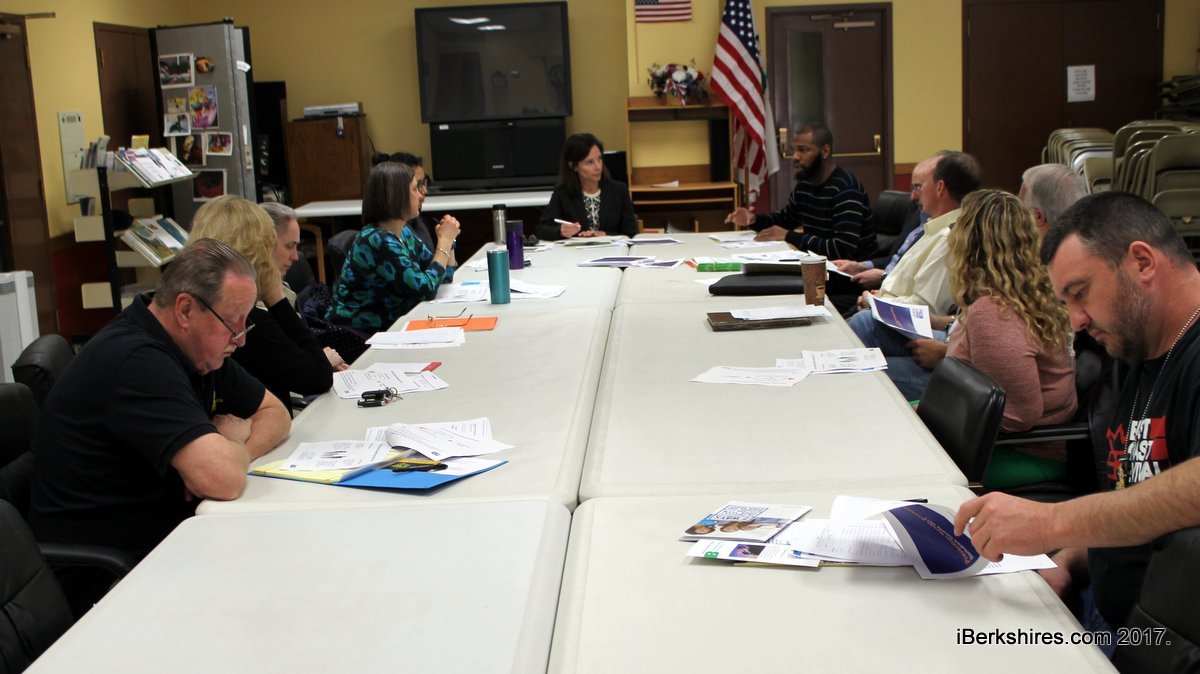
Garzon and Pittsfield Prevention Partnership Coordinator Rich Johnson presented that data to the Central County Rx/Heroin Work Group, a collaborative of agencies focused on tackling the substance abuse issues in the county. The United Way's data doesn't specifically tackle heroin use because the numbers are really low, Garzon said, but the use of other substances paves the way for those addiction problems.
"The brain pathways for addiction are formed very early on and obviously if you are using various substances you are more likely to go on to use heroin and prescription drugs," Garzon said.
The United Way doesn't just collect data but has a series of programs aimed at prevention. The district attorney's office has their own youth prevention programs and the Brien Center does, too. Those programs contribute toward the decreasing numbers.
In part two, iBerkshires will expand upon those efforts.
Prevention Needs Assessment Survey 2017 by iBerkshires.com on Scribd
Tags: Berkshire United Way, childrens health, drug abuse, teen survey, teenagers,