Local Woman's Murder Sparks Rally to Raise Transgender Awareness
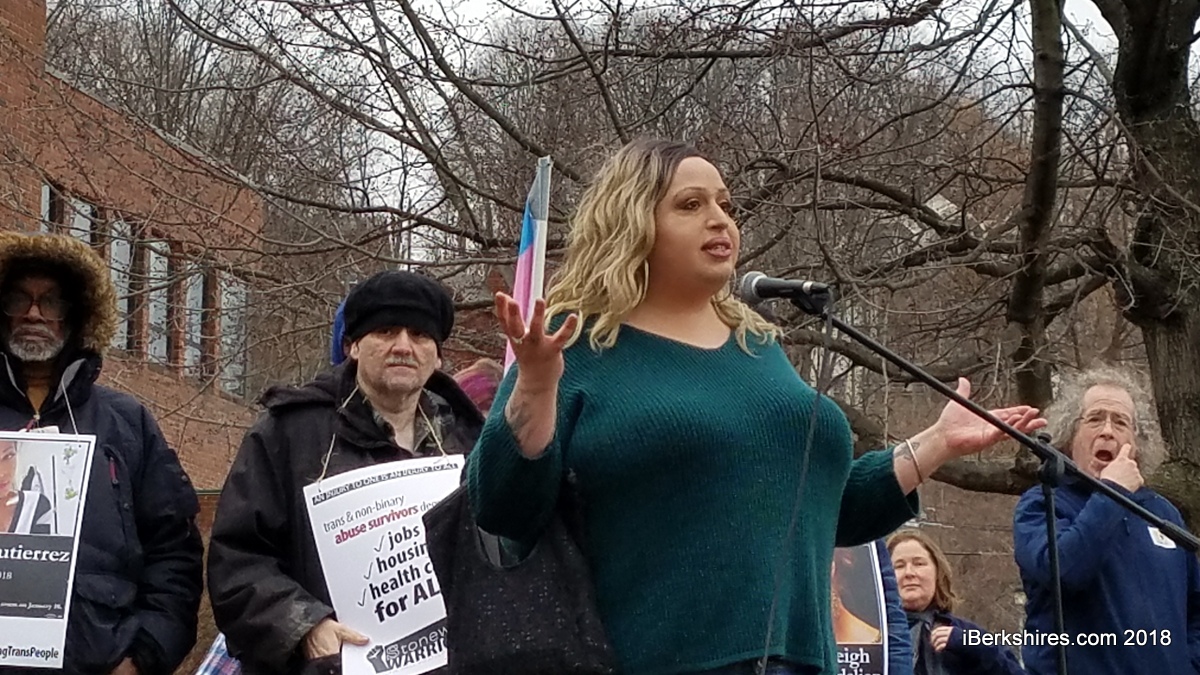
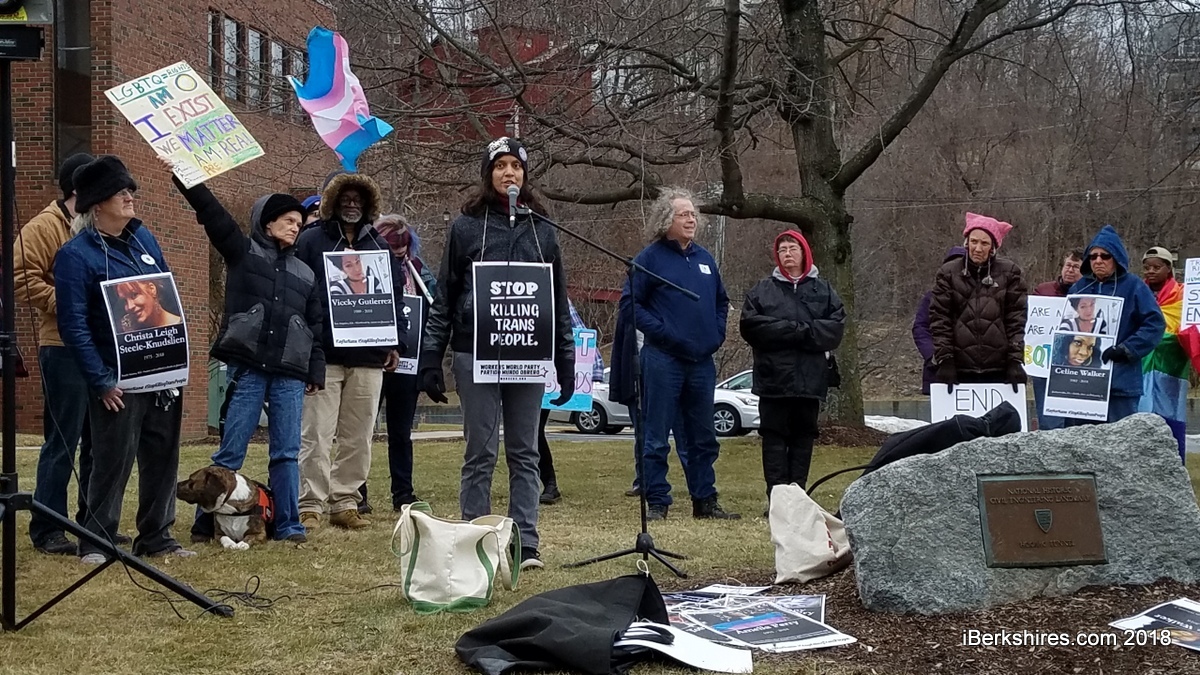
Jahaira DeAlto of Berkshire Pride speaks about the experience of transgender women of color and the likelihood of them being abused or killed.
No more murder of trans people. No more hate. No more suffering.
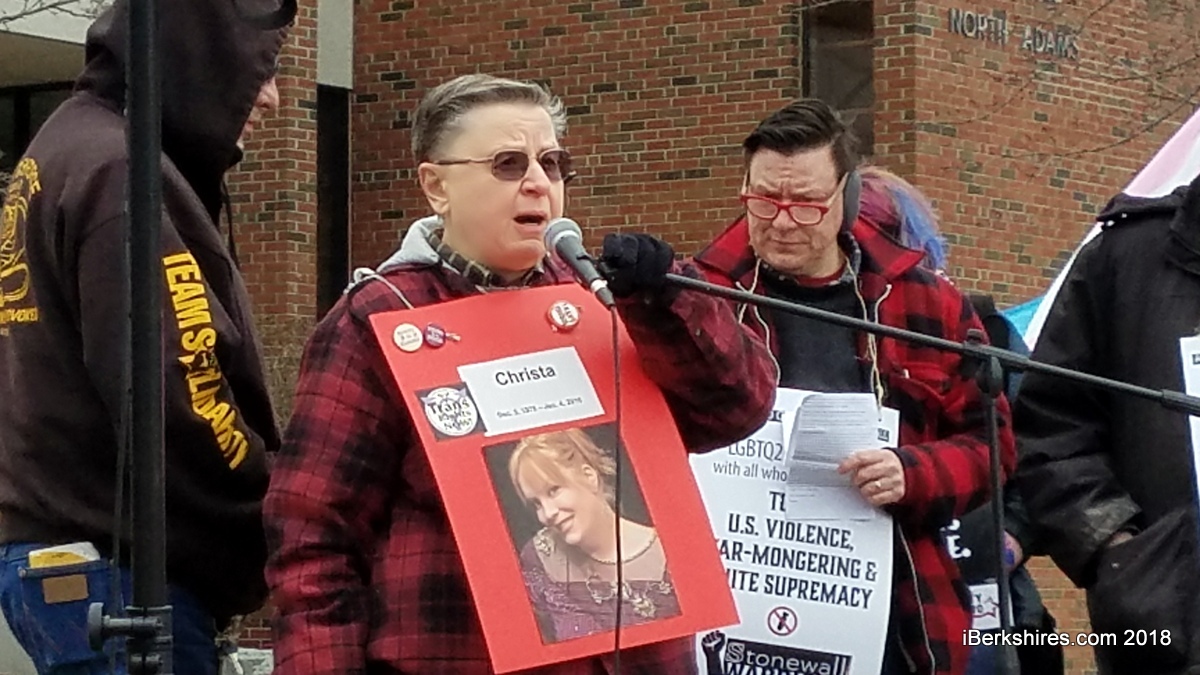
"I'm sick and tired of us being murdered," said Ben Power, a close friend of Steele-Knudslien who organized the Stop Killing Trans People! Rally and March, adding, "It's not enough to just read the names of our dead and mourn their loss. We must do something."
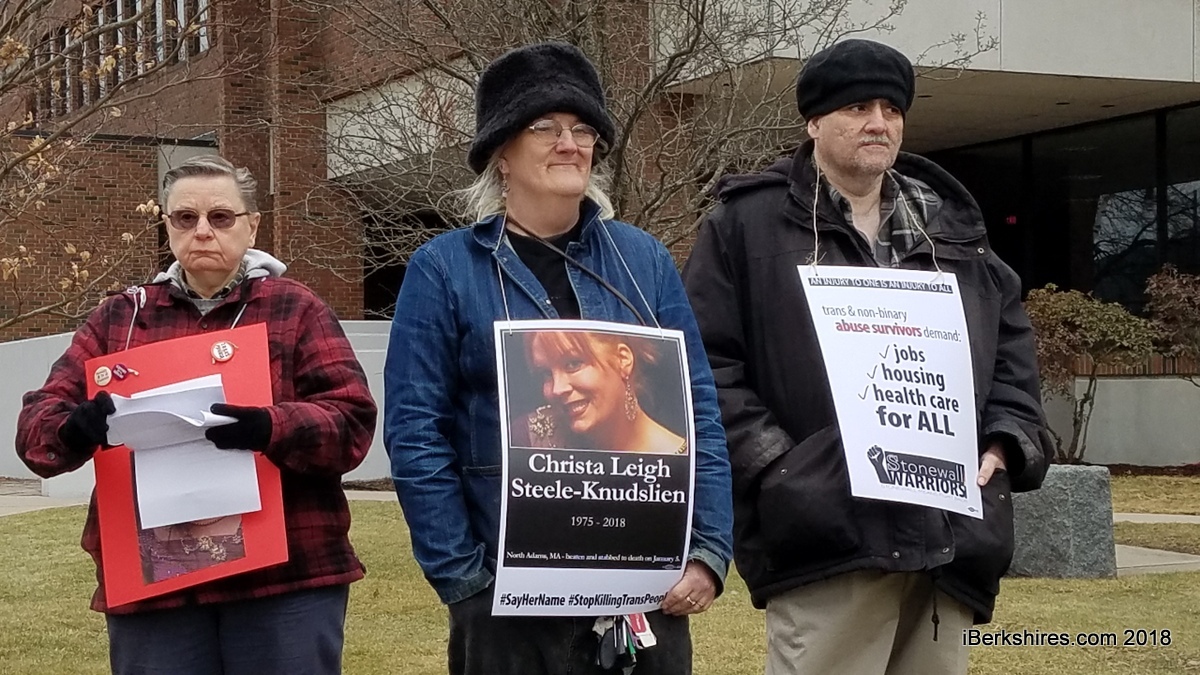
Steele-Knudslien, 42, was beaten and stabbed to death on Jan. 5 in her Veazie Street home. Her husband of less than a year is charged in her murder and made statements to police indicating his guilt.
She was the first transgender person killed in 2018; another four transgender women have been slain since.
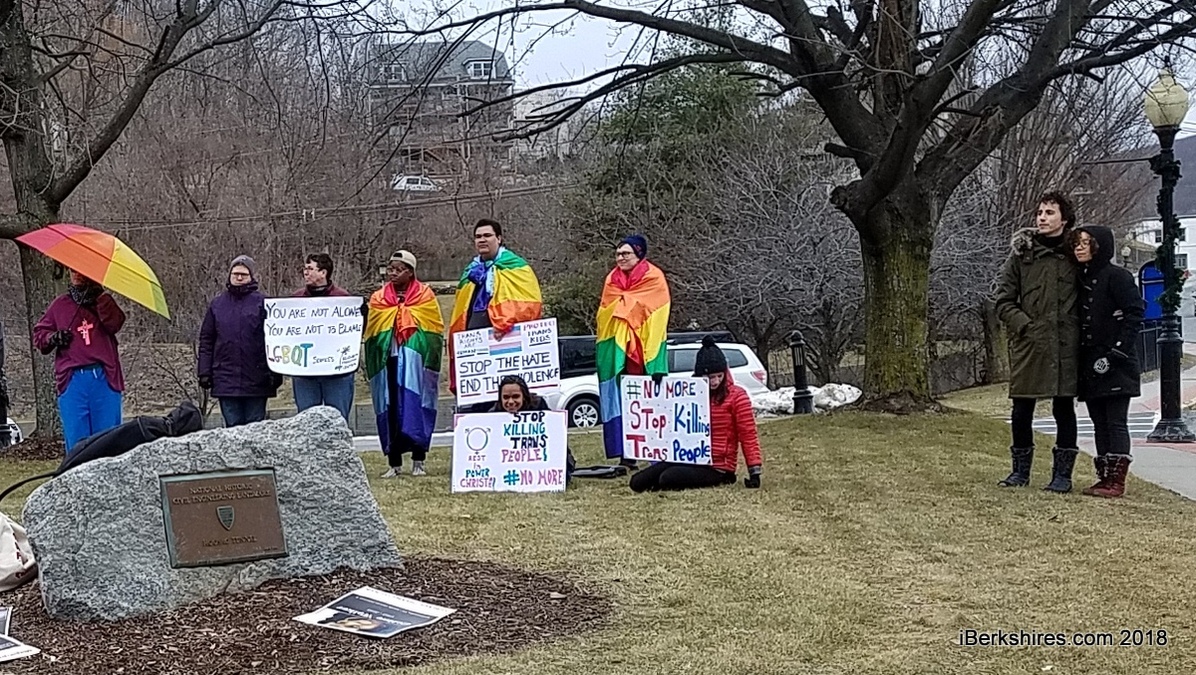
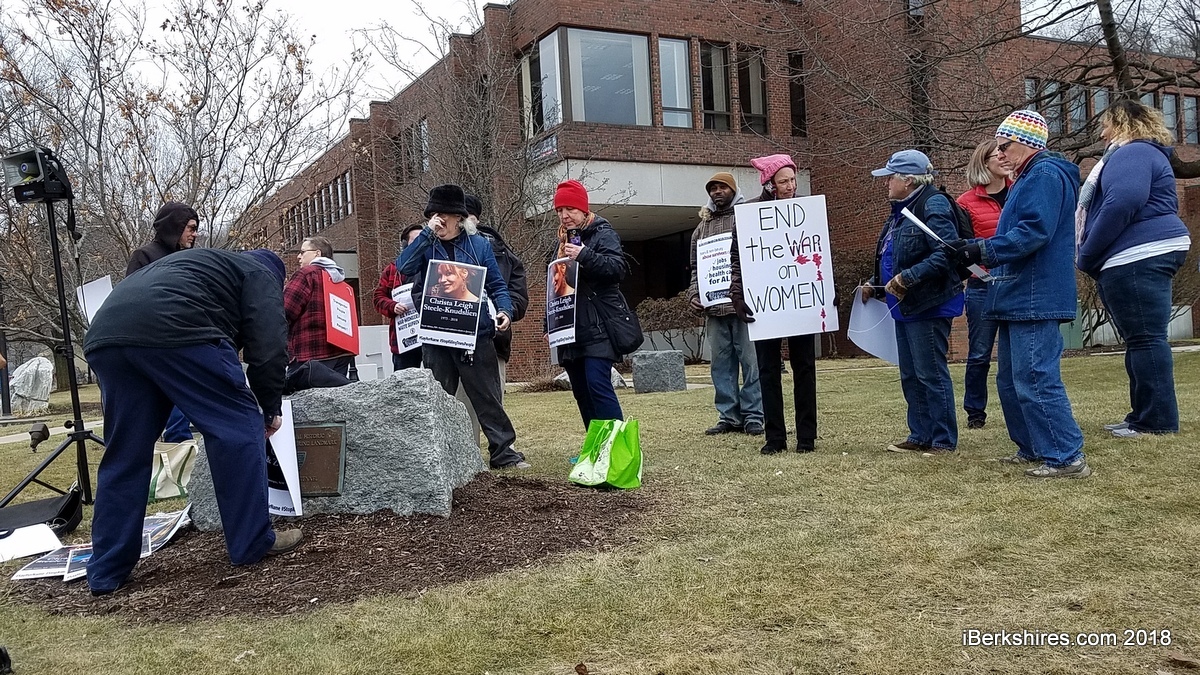
Some 40 people attended Saturday's rally, including Steele-Knudslien's friends from the Northampton/Springfield area, to raise awareness of the LGBTQ community. The event had initially been scheduled for Northern Berkshire District Court but removed to City Hall for better exposure.
"Part of the problem is that there is no awareness of how trans people are suffering," said Power, founder of the Sexual Minorities Educational Foundation and Archive in Holyoke. Steele-Knudslien, a transgender woman, had advocated for her community by working with groups and founding local and national transgender beauty pageants.
A number of speakers pointed to the isolation, rejection, poverty, addiction, police harassment, lack of health care and marginalization that plagues the LGBTQ community. Transgender people often lack support from families, have difficulty finding employment and are more susceptible to depression and suicide.
Transgender women of color are even more at risk for abuse and murder.
"I am 50 times more likely to experience intimate partner violence in my lifetime," said Jahaira DeAlto of Berkshire Pride. "I am 50 times more likely to experience sexual assault in my lifetime, in two weeks, when I turn 39 years old I will be 4 years past my life expectancy ... the murders of trans people are 80 percent more likely to occur among trans women of color."
Isolation and lack of support also can put them at risk for abuse by those closest to them.
"We don't want to admit the same rates of violence happen to us as happen to straight people," Jennifer Wahr of the Elizabeth Freeeman Center. "But no one deserves to be hurt especially by someone who loves them."
Wahr a counselor at the center, which provides support and services for victims of sexual and domestic violence, said abuse protection and harassment orders in Berkshire County are more than 20 percent above the state average, and 37 percent higher in North Adams.
"In the past year, the Elizabeth Freeman Center served 2,500 people just in this county, and 481 of them from this city, North Adams," she said. "What happened to Christa is not an anomaly but something that happens here."
Wahr pointed to discussions being taken at the local government level to address domestic violence in all its forms, an action pushed by Councilors Benjamin Lamb and Marie T. Harpin and endorsed by Mayor Thomas Bernard.
"There's a chance for real action now," she said. "Please don't let Christa's death be in vain."
.jpg)
"I want to suggest that we always make broad unity and the broadest possible solidarity with other people," he said. "The priority, the priority every time we set out to speak truth to power, we think building solidarity."
The speakers lasted just over an hour in the cold, windy weather before marching to Steele-Knudslien's home on Veazie Street. There were a few rude comments, including a man who yelled from across the street, but far more honking horns in support as the participants stood on City Hall's lawn with signs and flags.
"All of you here today, you have a right to be angry," said Kenneth Mercure of Berkshire Pride. "We should not be afraid to go out of our homes, we should not be afraid to walk on our streets, we should not be afraid to be ourselves. ...
"It's ridiculous that I should be afraid to present myself the way I like because I'm afraid that if I left my house, I might not come home."
Tags: awareness event, pride rally,