Hinds Secures Funding For Rural School Aid In State Budget
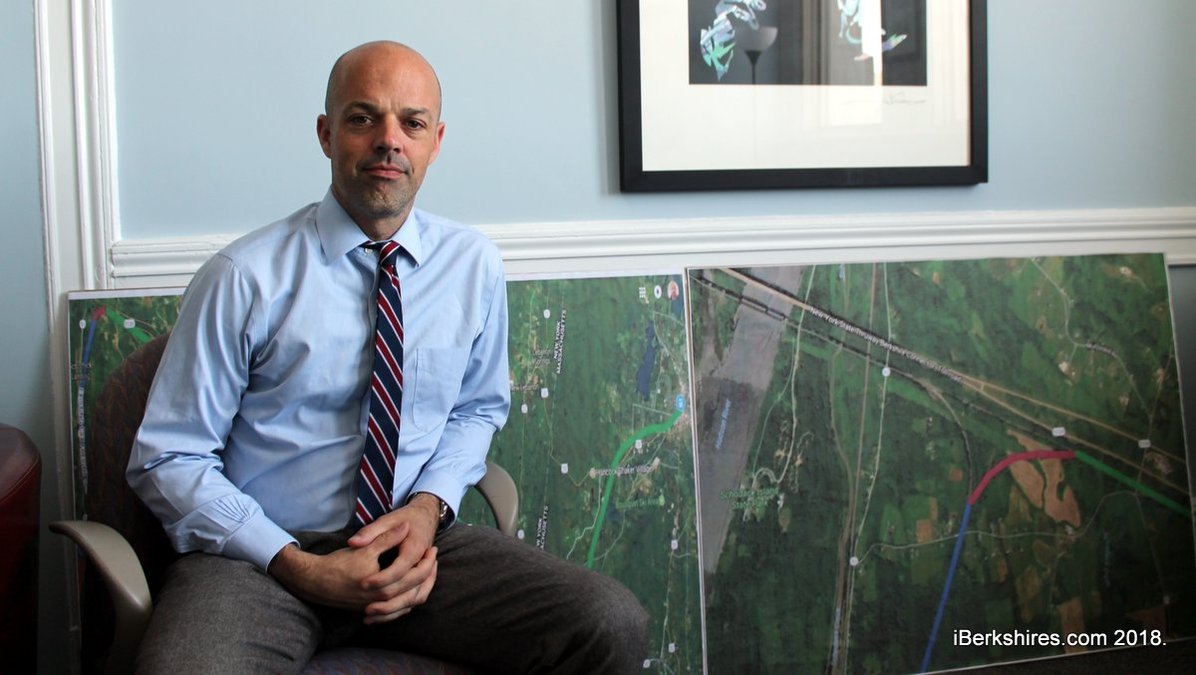
PITTSFIELD, Mass. — Nine rural Berkshire County schools will get a little extra state aid this year because of a new program introduced by state Sen. Adam Hinds.
Hinds secured $1.5 million to start a rural sparsity aid program in the state budget. For schools in towns with less than 10 students per square mile and a per capita income below the state average, the state will give an additional $100 per student. The Pittsfield Democrat sees that as only a start and hopes to expand the program next year.
"The overall line item is $1.5 million and we view that as a starting point because we are introducing the concept. We truly hope that it will expand to an amount so we can not only give more to each of these schools - there are 34 schools - but also expand to the original concept of 21 students per square mile and below," Hinds said.
Hinds had pitched the program at $300 per student and to have it for schools with 21 students per square mile but it had been scaled back in order to get enough support. The effort follows a report filed by the Department of Elementary and Secondary Education showing that rural schools have been struggling financially to maintain programming.
"We don't want a situation in Massachusetts where we are not providing equal education. We've seen the direct impact of that fiscal problem when we have a handful of schools closing in recent years," Hinds said.
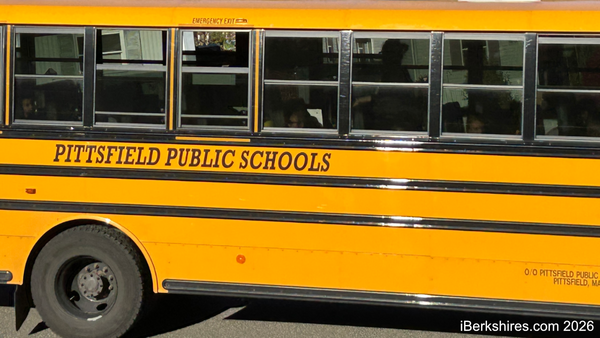
Central Berkshire Regional School District, which serves students from a number of small, rural towns, will see $162,000 extra in state aid because of the program. Others include Farmington River, Florida, Hancock, Lanesborough, Mount Greylock, Savoy, Southern Berkshire Regional School District, and Williamstown - all with various levels of additional support.
All schools across the state will also see increases in Chapter 70 funding and special education circuit breaker reimbursement. Hinds added that the state was able to increase its reimbursement for regional school transportation as well.
"It was a strong budget, I can say that confidently, in big areas that matter to us. There are different pots of money particularly in education that we really wanted to see movement in," Hinds said.
"We now have the highest Chapter 70 funding for education ever. We have fully funded special education circuit breaker money - it is only 75 percent reimbursement but it is huge for a lot of my schools. We have regional school transportation up to 80 percent, last year it was 73 percent."
The budget is not quite finalized. The state's $41.9 billion budget had just been released from the legislator's conference committee - a group which meshes the budget passed by the Senate and the budget from the House into a final document - but still needs to be signed by the governor. Gov. Charlie Baker is likely to cast a number of vetoes and then the legislator will go through a process to override those.
But, Hinds said he is optimistic that the current proposal is very close to the final version once all that is said and done.
The budget also includes $100,000 to plan out the pilot program for the Berkshire Flyer. The concept is to bring train rides from New York City to the Berkshires on the weekend during the summer months. The Department of Transportation previously determined that the program would be feasible and Hinds is now looking to craft a pilot program.
"This year will be spent essentially putting together a marketing plan, a finance plan, and finalizing the last mile of transportation - so what does somebody do once they land in Pittsfield," Hinds said.
Hinds said a working group consisting of MassDOT, Berkshire Regional Planning Commission, and 1Berkshire will now sort out the details.
Meanwhile, the budget also boosts funding for the regional transit authorities. The Berkshire Regional Transit Authority had been looking at raising fares and cutting services because of a proposal to level fund its budget. The BRTA will see an increased level of state support, but some of it is tied to having the BRTA look at creative ideas.
Once such idea is the creation of a transportation management authority, which would bring together a number of organizations that have transportation vehicles together to provide rides to the more rural areas. Hinds secured money in the budget to help that program develop further.
"Our BRTA is great but we also have to rethink how we are going to have ore service, later in the day, outside of the spine that it runs on. We hope this is the next step for essentially identifying a hybrid system with other vehicles that move around the county," Hinds said.
The budget also includes a study on culverts. Hinds said in one of his towns there is a culvert that is just four inches short of being considered a small bridge, and thus eligible for state support to repair. The town had to pay out some $800,000 for the project. Hinds hopes that study will lead to a large culvert program to give towns support for those projects too.
"Towns are stuck with huge expenditures that are just shy of that - we need to look at our current regulations explore creating a new culvert program," Hinds said.
Hinds was disappointed that his proposal to bolster local efforts to combat opioids fell somewhat short. He had asked for $250,000 which would go to the Sheriff's Department and include the Berkshire Opioid Abuse Prevention Coalition, Northern Berkshire Community Coalition, Railroad Street Youth Project, and the United Way to combat opioid abuse. But, the line was only funded at $150,000.
"We didn't get as much as we wanted," Hinds said. "But it is a start."
The budget also includes smaller local earmarks such as $75,000 for Gallery 51 in North Adams.
"It plays such a critical role in this effort, from a city planning perspective, that you have the college coming downtown and Mass MoCA coming downtown," Hinds said.