Williamstown Looking for Input on Uses for Spruces Property
WILLIAMSTOWN, Mass. — The town again is seeking input on how to reuse the Main Street parcel that formerly was the site of the Spruces Mobile Home Park.
To date, the feedback has been mixed and contradictory.
"Maybe not surprisingly, based on our user surveys, there's a general division around the off-leash versus on-leash [issue] and leash laws conversations," consultant Genevieve Lawlor of Greenfield's Regenerative Design Group told the Select Board last week. "To me, more than anything, that has indicated to us that there certainly seems to be a need for more outreach and assessment around the 'dog issue.' There seems to be very passionate responses across the spectrum there.
"Similarly, there's a divide around the inclusion of formal playing fields – again, a spectrum of, 'No playing fields. Why playing fields?' to 'Why not bigger and more varied playing fields for not just youth but all ages?'
"Those are the themes so far."
Regenerative Design is working with the town on a landscape resource plan for what is now known as the Spruces Park, a 50-acre public park in the floodway of the adjacent Hoosic River.
The consultant has created three potential concepts for how the more usable southern end of the park might be developed for recreation if allowed by the Federal Emergency Management Administration, which funded the town's acquisition of the land and the relocation of former Spruces residents after the Tropical Storm Irene rendered many of the park's trailers uninhabitable. The concepts are posted on the town's website along with a link to a comment form.
There have been no shortage of ideas over the years about how to reuse the land. And a number of critics inside and outside of town have used social media to accuse the town of a "land grab" in acquiring the property, purchased with proceeds from a $6.1 million FEMA Hazard Mitigation Grant; $1.4 million went toward relocating residents, $2.6 million went toward building the Highland Woods senior apartments off Southworth Street, $600,000 went to the mobile home park's last owner, Morgan Management; much of the remaining $1.5 million went toward removing mobile home pads, roads and other park infrastructure.
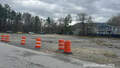
Nearly nine years after the Hazard Mitigation Grant was issued by FEMA, the park is largely open space with some signage, picnic tables and walking trails. It also has a pollinator garden in its southeast quadrant, and it has been the site of a few public events, like a well attended National Night Out fair last summer.
The Regenerative concepts for adding further amenities include areas like an off-leash dog park, youth playing fields and picnic areas.
"Out of the [survey] responses, I would say there's a general positivity about the balance of uses and management zones," Lawlor said. "And definitely positivity about access and circulation changes."
Members of the Select Board were concerned about the relatively low number of people providing feedback through the town website, and they brainstormed ways to help get the word out to more residents about the survey, which is open through March 18.
"To me, 163 people making a decision for what we want to do with anything is not in our best interest," Jeffrey Johnson said. "When I think of our youth, and I think of our elementary school and I think of our parents, I know they number well more than 163, and I know from my personal circles, this [survey] wasn't something we knew about."
Whatever the town decides to try to do with the Spruces property will face intense scrutiny from federal regulators, as evidenced by comments Community Development Director Andrew Groff made to the Select Board on Monday.
"‘The bike path is a 10-foot wide gravel path, essentially built on top of an existing farm road and some of the former mobile home park roads," Groff said. "It took FEMA over five years to approve that and it cost over six figures in design work. It's a tough process to get through.
"Our engineer on the bike path said it was the most difficult regulatory review he'd experienced in his professional career."
That said, Groff said there is value to knowing now what the town might want to someday develop on the property if regulators allow it.
"I think it's obvious who anyone who frequents the Spruces or even drives past it that we need to think more proactively about the management of the site," Groff said. "Even what [Lawlor] just mentioned about the trees. We have a lot of trees that hazards there, as one example. And this fall, we hope the bike path will be completed, and that will drive more activity.
"So having that schematic will help guide Chris Lemoine's folks at DPW to provide more active management of the site as well as thinking about how to take those next steps on some of the more detailed elements that come out of this planning process. Because there's a lot available funding for different buckets, and we don't even know how the federal infrastructure bill is going to play into this.
"We're doing the groundwork to be primed for success."
Monday's conversation about the Spruces dovetailed with another agenda item for the Select Board: the general perception that Williamstown lacks adequate playing facilities for both youth and adult sports.
Jane Patton said the town is "failing miserably" compared to similarly sized communities and that failure was highlighted by the COVID-19 pandemic.
"There is almost a complete void of town-owned recreational space for adults," Patton said. "Folks are able to use a lot of the [Williams] college stuff, but COVID showed us we have to follow college rules."
Access to some Williams facilities was curtailed or eliminated during the pandemic for people who were not part of the college community.
In addition to the potential for grass fields at Spruces Park, Johnson and Patton stressed the need for paved playing surfaces, like public basketball courts and racquet sport courts.
"There may not be a lot of adults who want a full blown soccer field, but I'm confident there are a lot of folks who would want more than one town-owned tennis court that has a 2-inch gap along the width of it," Patton said, referring to the court at Linear Park.
To generate some momentum on the issue, Chair Andrew Hogeland suggested that he and Patton reach out to interested parties in the community to talk about potential solutions, including what land may be available to create the kinds of facilities discussed.
"The Spruces, obviously, would be a candidate, but the town owns other locations, and there may be other privately-owned properties available," Hogeland said. "I'd like to propose we do a quick task force team effort toward doing the need and location assessment.
"In my view, hopefully, doing that within a couple of months shouldn't be too complicated. But that would set the stage toward hiring someone to look at the leading candidates – to spend money, if you will, to get the more detailed stuff to see if it's a suitable site. The Spruces, for example, looks great at the outset and might look great at the end, but an engineering firm will tell you whether that's true or not. And there are another dozen sites the town owns where that may or may not be possible."
Tags: public parks, Spruces,