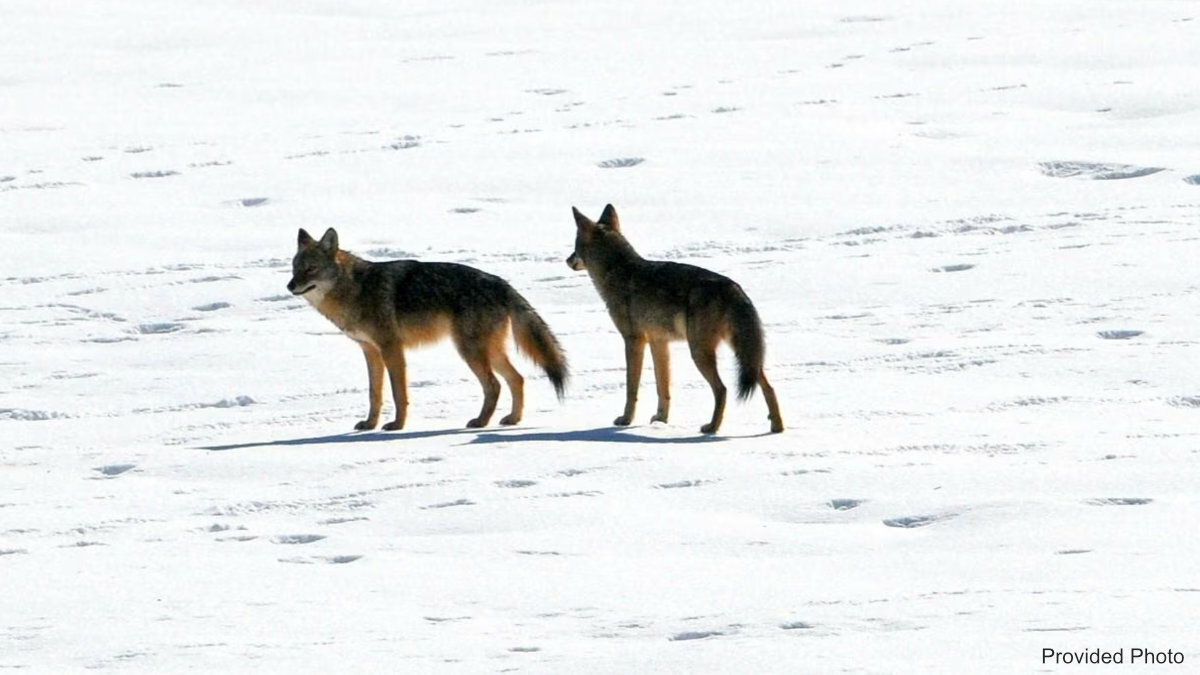
MassWildlife: Hearing coyotes? Here's why
Late January through early March is coyote mating season. Coyotes are very active during the winter while courting mates and defending their territory. Coyotes are in every city and town in mainland Massachusetts, meaning the opportunity for human-coyote interaction is high. The mere presence of a coyote is not a cause for concern. MassWildlife officials are reminding the public to take these 3 simple steps to prevent conflict with coyotes during the mating season:
1. Protect your pets
-
Pets should always be directly supervised on a leash when outdoors, especially during the coyote mating season.
-
Coyotes can't differentiate between their natural prey and small pets, so they will view unprotected outdoor cats and small dogs as a potential food source.
-
Coyotes can't distinguish your dog from an intruding coyote, causing the coyote to be more aggressive toward medium- and large-sized dogs as they will view them as potential competition for mates and territory.
-
Do not supervise your pet from a distance on your porch or at your backdoor. Most coyote attacks involve dogs that are unsupervised or being supervised from a distance in a backyard.
2. Remove human-associated food sources from your property
-
As opportunistic omnivores, coyotes will utilize naturally available food, like small mammals and birds, and human-associated foods, like bird seed, garbage, compost, pet food left outdoors, and backyard chickens.
-
Coyotes that find human-associated food sources will spend more time in yards and neighborhoods. It's essential for neighbors to work together to secure or remove all human-associated food sources in a community.
-
Coyotes that become dependent on human-associated food sources can start to exhibit bold behavior toward people. Never intentionally feed coyotes.
3. Haze coyotes
-
While coyotes are naturally wary of people, this fear can lessen over time when they spend a lot of time around people or when they are fed, intentionally or unintentionally, by people.
-
When you see a coyote in your yard, you should aggressively haze it. Hazing is a safe technique used to deter an animal from an area or to change its behavior. The intent of hazing is to frighten, not injure, the animal.
-
You can haze a coyote by creating loud noises by yelling or using a small air horn, waving a jacket overhead to look bigger, spraying a hose or throwing small objects in the coyote's direction, and physically chasing and driving the coyote off. Haze the animal until it has fully left the area.
-
Hazing will not be effective if it's done from inside a building, from behind a screen door, or from a car. Hazing is most effective when it's done repeatedly, when a variety of techniques are used, and when many people participate.
Negative encounters with coyotes are rare and human-coyote attacks are exceptionally rare. If you encounter a coyote that is exhibiting concerning behavior like approaching leashed pets, closely following people, or not running off when effectively hazed, you should contact your local Animal Control Officer or local MassWildlife office for assistance. If there is an immediate threat to public safety, call local law enforcement.
Learn more about coyotes at mass.gov/coyotes.
Tags: coyotes, MassWildlife,