image description

Designer Consigner Offers Upscale Consignment Shopping in Pittsfield
By Brittany PolitoiBerkshires Staff
Print Story | Email Story

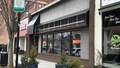
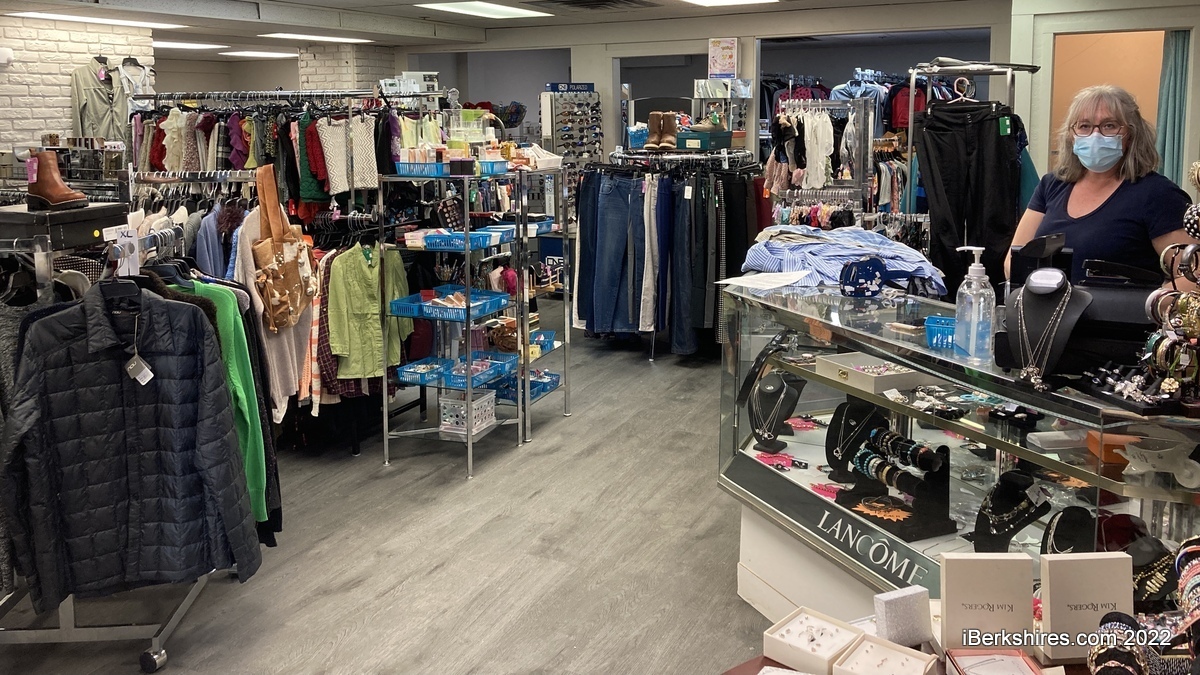
Amy Kotski moved her consignment shop to the Allendale Underground last year for more space and access to parking for customers. 

PITTSFIELD, Mass. — A local upscale consignment shop is coming up on its fifth year in business and one year in a new location.

Designer Consigner, owned by Pittsfield resident Amy Kotski, has provided stylish, sustainable, and affordable shopping since 2017. In March of last year, her shop moved from East Street to an expanded space in the Allendale Underground at 5 Cheshire Road.

"I felt there was a need for a women's consignment, and junior's, and so I just started small," she said about her business.

"I had small kids, I wanted to be able to be my own boss, so it just seemed to be a good fit."

In a society where fast fashion has dominated the accessible clothing industry, Kotski is providing another option.

The name says it all when it comes to her business model. Kotski sells new and used fashions for men, women, juniors, and children with a focus on brands and modern styles.

"It's just a great way to save money and save the environment." she said. "Because a lot of this stuff is like brand new, especially with online shopping, people get it home, it doesn't fit, they don't send it back and bring it in here."

Some of her favorite brands to stock are Free People, Anthropologie, LL Bean, and the popular workout wear brand LuLulemon. Only genuine labels are accepted.

Designer Consigner also carries shoes, new accessories and jewelry, toys, and gifts. Activewear and tops are reportedly the best-selling items.

Kotski accepts quality items, gently worn, that are no more than 3 years old. They should be clean, free of odors, freshly laundered, and ready to display.


She selects pieces based on current sales trends and sizes that are in demand.

Items are priced at her discretion and then kept on the sales floor for 90 days with a pricing schedule of the full price for the first 30 days, 25 percent off the next 30 days, and 50 percent off the final 30 days.  

Consignment splits, depending on the final selling price of an item, are 40 percent in cash or 50 percent in store credit if unsold items are donated and 30 percent in cash or 50 percent store credit if unsold items are returned.

If items are not sold at the end of a consignment period and a consignor requests leftovers, a courtesy call will be made. Any items not picked up within a week from the end of the consignment period are donated to a charity.

The shop was originally located at 81 East St. in the same block as Otto's Kitchen and Comfort. In 2018, it expanded to a space next door and, last year, Kotski decided to relocate.

"There was no parking," she said about her former location, which relied on street parking,

"A lot of my foot traffic was gone because nobody was up there working anymore, and we just moved down here, we have more room so it's more it's more socially distant, and there's parking."

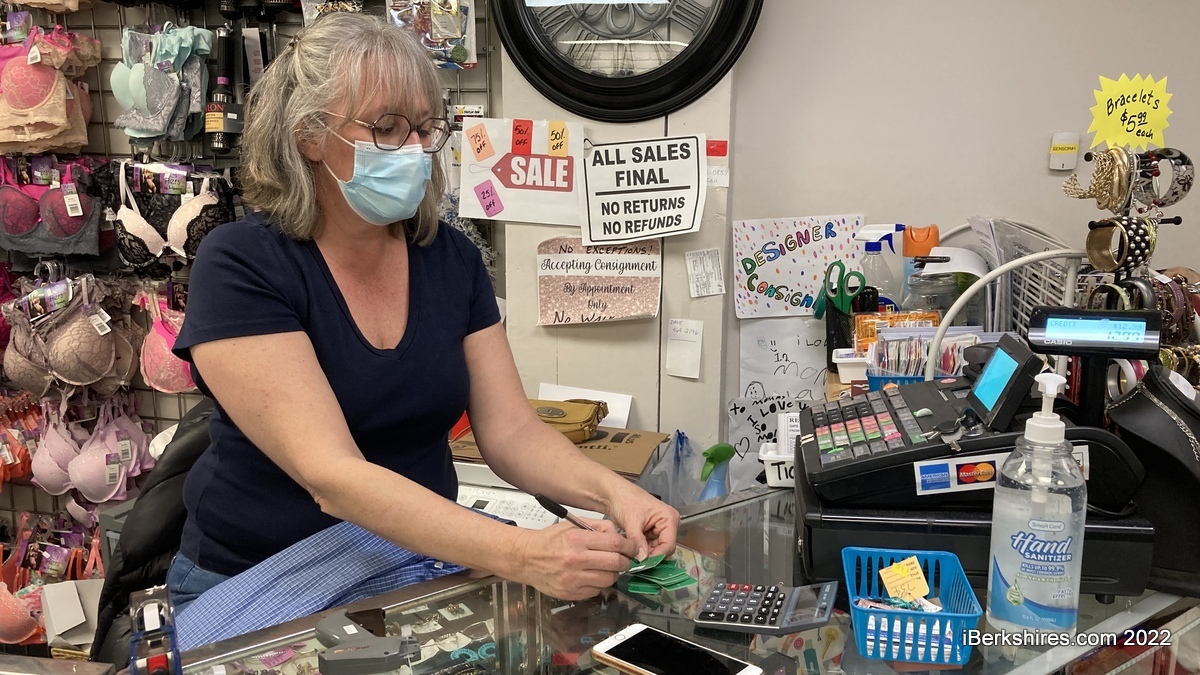
Kotski has one part-time employee but otherwise, runs the operation by herself. On Saturdays, she said, the shop sees an average of about 50 customers.

Designer Consigner is open on Tuesday, Wednesday, and Thursday from 10 to 5, Friday from 10 to 7, Saturday from 10 to 4, and Sunday from 10 to 3. More information can be found on the shop's Facebook page.


Tags: consignment,   thrift store,   
If you would like to contribute information on this article, contact us at info@iberkshires.com.

Social Service Organizations Highlight Challenges, Successes at Poverty Talk

By Brittany PolitoiBerkshires Staff

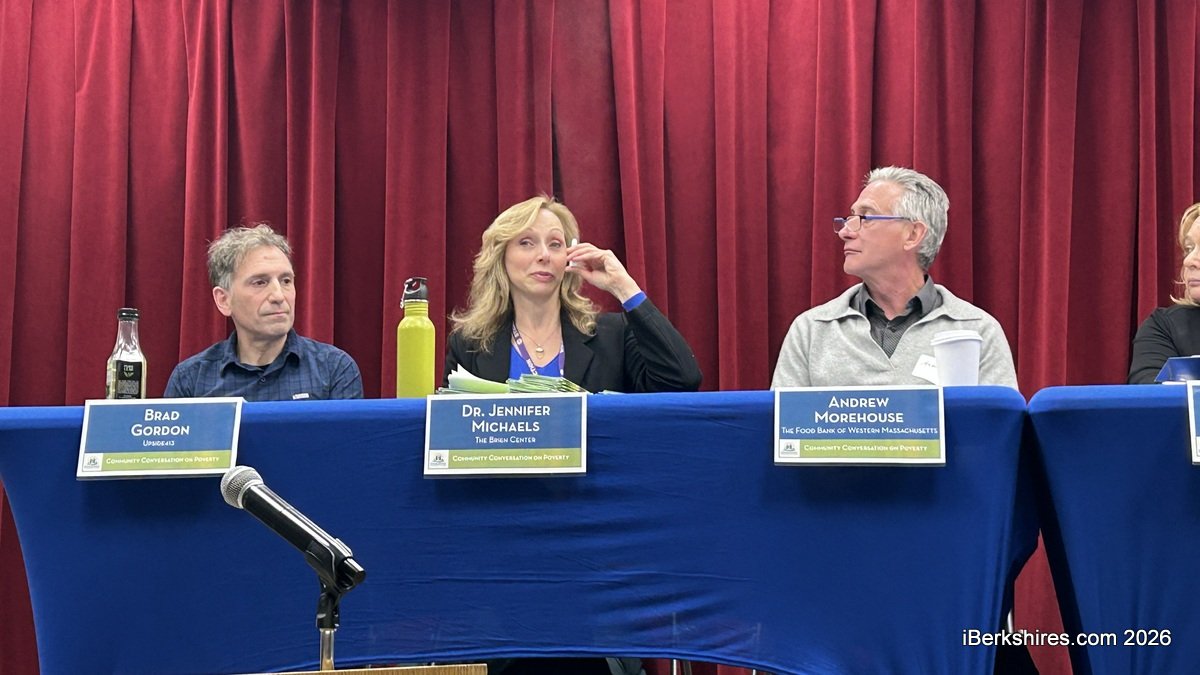
Dr. Jennifer Michaels of the Brien Center demonstrates how to use Narcan. Easy access to the drug has cut overdose deaths in the county by nearly half. 

PITTSFIELD, Mass. — Recent actions at the federal level are making it harder for people to climb out of poverty.

Brad Gordon, executive director of Upside413, said he felt like he was doing a disservice by not recognizing national challenges and how they draw a direct line from choices being made by the Trump administration and the challenges the United States is facing. 

"They more generally impact people's ability to work their way out of poverty, and that's really, that's really the overarching dynamic," he said. 

"Poverty is incredibly corrosive, and it impacts all the topics that we'll talk about today." 

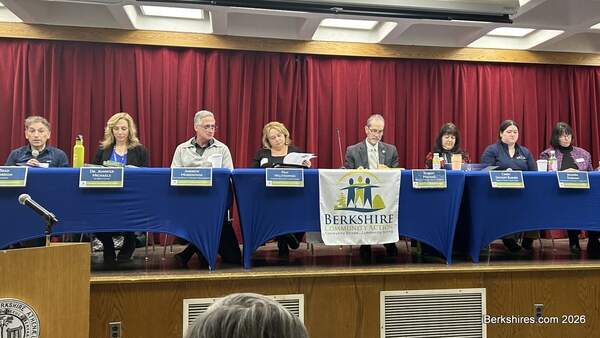
His comments came during a conversation on poverty hosted by Berkshire Community Action Council. Eight local service agency leaders detailed how they are supporting people during the current housing and affordability crisis, and the Berkshire state delegation spoke to their own efforts.

The event held on March 27 at the Berkshire Athenaeum included a working lunch and encouraged public feedback. 

"All of this information that we're going to gather today from both you and the panelists is going to drive our next three-year strategic plan," explained Deborah Leonczyk, BCAC's executive director. 

The conversation ranged from health care and housing production to financial literacy and child care.  Participating agencies included Upside 413, The Brien Center, The Food Bank of Western Massachusetts, MassHire Berkshire Career Center, Berkshire Regional Transit Authority, Greylock Federal Credit Union, Massachusetts College of Liberal Arts, and Child Care of the Berkshires. 

The federal choices Gordon spoke about included allocating $140 billion for the U.S. Immigration and Customs Enforcement, investing $38 billion to convert warehouses into detention centers, cutting $1 trillion from Medicaid over 10 years, a proposed 50 percent increase in the defense budget, and cutting federal funding for supportive housing programs. 

Gordon pointed to past comments about how the region can't build its way out of the housing crisis because of money. He withdrew that statement, explaining, "You know what? That's bullshit, actually."

"I'm going to be honest with you, that is absolute bullshit. I have just observed over the last year or so how we're spending our money and the amount of money that we're spending on the federal side, and I'm no longer saying in good conscience that we can't build our way out of this," he said. 

Upside 413 provided a "Housing Demand in Western Massachusetts" report that was done in collaboration with the University of Massachusetts at Amherst's Donahue Institute of Economic and Public Policy Research. It states that around 23,400 units are needed to meet current housing demand in Western Mass; 1,900 in Berkshire County in 2025. 

View Full Story

More Pittsfield Stories