Shoot if you must: Hunting survives

By John HitchcockPrint Story | Email Story
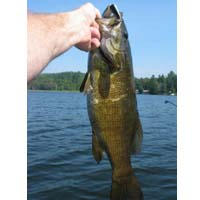
Fishing has also come under fire, and some activists would like to make it illegal to hook lunkers like this one, a 4-pound smallmouth taken from a remote pond in the region. this smallie was released back into the water. (Photo By Glenn Drohan)
Hunting in the Berkshires and Southwestern Vermont gets “no respect” among the persons and agencies boosting cultural events, leaf peeping, skiing, biking and water activities. You will not see billboards, posters or brochures bragging about the great hunting in The Advocate circulation region, which extends from Manchester, Vt, down to Great Barrington and over the Connecticut border. Even sporting-goods store operators are reluctant to talk to non-hunters, fearful of yet another attack on what was once a dominant activity. Each year sees fewer and older hunters, and more anti-hunting campaigns. Yet the Massachusetts Division of Fisheries and Wildlife lists the following mammals, which can be hunted during the appropriate season: black bears, bobcats, cottontail rabbits, coyotes, deer, red or gray foxes, gray squirrels, jackrabbits, opossums, raccoons and snowshoe hares. Vermont hunters have the same targets, plus moose. Wild turkeys, pheasant, quail, ruffled grouse, crows and a wide variety of migratory waterfowl abound in both states. There are innumerable beavers, but they are safe from hunters, and trappers are limited to basically non-injurious devices to capture the energetic dam builders — but that’s another story. In the Bay State, licensed hunters can shoot at anytime English sparrows, starlings, chipmunks, flying squirrels, red squirrels, weasels, porcupines, skunks and woodchucks. Fisherman, particularly those swishing $600 Orvis fly rods, are reasonably well received and even appear as models in fashion magazines, but hunters are apt to be depicted as unshaven, unkempt and menacing. In any event, numerous animal-rights groups and the Humane Society of the United States are campaigning to curb, if not eliminate, the hunting or trapping of animals — and some extremists call for an end to fishing. In 1996, Massachusetts voters overwhelmingly approved a statewide referendum banning the use of dogs and bait in bear hunting and also banning leg-hold traps. Maine voters will be asked to approve a similar referendum Nov. 2, and opponents of the ban have received support from hunting groups from throughout the nation, including the Vermont Federation of Sportsmen’s Clubs and the Vermont Bear Hounds Association. The bear hunters use the Massachusetts ban as proof that it will cause great damage and amazing problems. There were almost no bears in the Bay State until they became somewhat protected in the late ’60s. Until the 1996 curbs, only a few bears were shot during the brief hunting season. With the increased protection, nearly 150 bears have been killed annually in the past few years, with the state’s bear population estimated at 2,500 and growing by 10 percent a year. Bears are seen in most non-winter months throughout Berkshire and Vermont towns, rummaging for food in garbage cans and getting into mischief. In some cases, citizens have helped bears by stopping traffic so they can cross busy highways. Two men at Windsor Pond last year helped a bear get through weeds and onto the shore. The second and shorter bear season runs Nov. 15-20. The Vermont season started Sept. 1 and runs through mid-November, when the firearm deer season starts. Bow hunting is now underway in both states and for deer and also for bear in the Green Mountain State. The second wild turkey season in Massachusetts is short, Oct. 25 to Oct. 30, and is underway in some sections of Vermont now. Upland bird and game seasons are also running through the fall in both states. Although many private landowners have posted their land against hunting, Vermont has some 800,000 acres of public land for hunters. Massachusetts has 116 Wildlife Management Areas, and there are some 100,000 acres of state forests and parks in the Berkshires, all open to hunting, except on Sundays. The director of the Massachusetts Division of Fisheries and Wildlife, Wayne F. MacCallum, said that fishing, hunting and wildlife watching sees state residents spending more than $682 million a year on equipment, trips, meals and lodging. For information: contact Tom Keefe, Western Wildlife, 400 Hubbard Ave., Pittsfield, MA 01201, 447-9789. Vermont has 85 Wildlife Management Areas in 109 towns, totaling more than 118,000 acres, in addition to 38 state forests and the 350,000-acre Green Mountain National Forest. Contact the state Forest & Parks at 103 South Main St., 10 South, Waterbury, VT 05671, 802-241-3693 or Green Mountain National Forest, 2538 Depot St., Manchester Center, VT 05255, 802-362-2307. Why the decline in the number of hunters? First, hunting once was an important way to put food on the table, so it played a vital family role. Then, there was little else to do in many cases, before autos and TV for all, video games and other activities. Then the cost of firearm identification cards and hunting licenses have increased sharply, as has the cost of firearms and ammunition. Add the numerous agencies campaigning to ban hunting and trapping, and many potential hunters never get started. The Hunting and Sports Education Journal had a recent article indicating that sport hunting will “come to an end over the next two decades.” Efforts by hunting clubs and state wildlife agencies are directed at children, women and minorities, with special hunting days for newcomers as well as hunting training and safety courses. Hunting in rural Vermont was once a way of life, with kids bagging their first deer at 10, and deer hunting season practically a state holiday. But the hunting world is an alien world to the majority of urban dwellers, who see the forests and fields as places for peace and relaxing, or else for sports such as mountain biking, skiing and snowboarding. Avid hunters point out that the emphasis on protecting wildlife is beginning to yield bears roaming villages and even cities, and beavers turning farmlands into ponds. Regardless of viewpoints, this area could well be promoted as a “hunters’ mecca.” But don’t hold your breath. John Hitchcock of Williamstown writes frequently about the area sports scene.
If you would like to contribute information on this article, contact us at info@iberkshires.com.

Friends of Great Barrington Libraries Holiday Book Sale

GREAT BARRINGTON, Mass. — The Friends of Great Barrington Libraries invite the community to shop their annual Holiday Good-as-New Book Sale, happening now through the end of the year at the Mason Library, 231 Main Street. 
 
With hundreds of curated gently used books to choose from—fiction, nonfiction, children's favorites, gift-quality selections, cookbooks, and more—it's the perfect local stop for holiday gifting.
 
This year's sale is an addition to the Southern Berkshire Chamber of Commerce's Holiday Stroll on this Saturday, Dec. 13, 3–8 PM. Visitors can swing by the Mason Library for early parking, browse the sale until 3:00 PM, then meet Pete the Cat on the front lawn before heading downtown for the Stroll's shopping, music, and festive eats.
 
Can't make the Holiday Stroll? The book sale is open during regular Mason Library hours throughout December.
 
Proceeds support free library programming and events for all ages.
View Full Story

More Stories